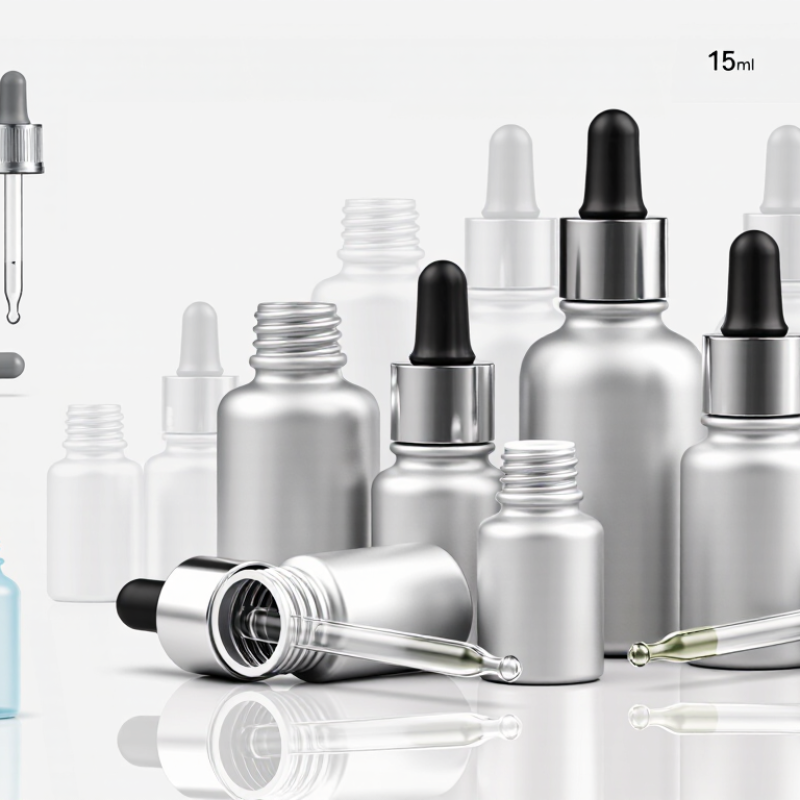
For global buyers, compliance begins with the formula, filling process, and destination market. Ask suppliers for current material declarations, coating specifications, and test reports covering the complete bottle-and-dropper assembly. An aluminum shell alone cannot confirm that its inner coating suits oils, serums, or acidic formulas. Request compatibility data from realistic storage conditions, including heat and repeated opening. Requirements differ by market.
Quality checks should include neck dimensions, closure fit, drop consistency, leakage after transit simulation, and coating condition around the shoulder. A polished prototype can still hide batch variation, so request production-lot samples and documented inspection limits. Appearance is not enough. Sustainability claims also need evidence. Aluminum is widely recyclable, but coatings, pipettes, bulbs, and mixed materials can complicate sorting. Ask for recycled-content documentation and local recycling guidance.
Tips: Keep a filled sample for a simple wear check. Record its weight, leakage, and drop behavior over several weeks. Compare results with the supplier’s specifications. No checklist catches every handling error, and that is worth admitting. A small, documented trial can reveal issues before a larger order.