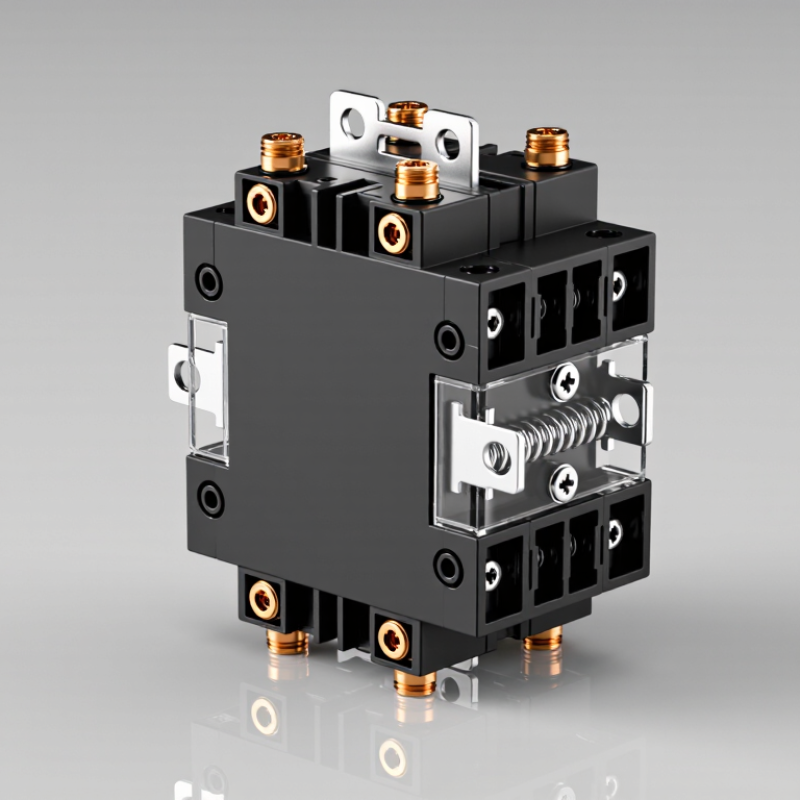
Selecting an air conditioner contactor starts with the motor, not the catalog title. The AC-3 rating must suit the compressor motor’s current and operating voltage. AC-3 covers starting, running, and switching off squirrel-cage motors. Do not match only the contactor’s resistive current. A compressor can draw a sharp inrush current. Check the motor’s rated current, power, duty cycle, and expected starts per hour. In practical panel reviews, undersized contacts often show pitting near the load terminals.
Coil voltage is a separate decision. Confirm the control circuit voltage, frequency, and current type before ordering. A 24 V DC coil cannot replace a 24 V AC coil without checking the control design. Measure the control voltage under load, not only at the transformer output. Small voltage drops matter. Coil suppression may also change response time. This detail is easy to miss.
For 690 V systems, verify the contactor’s rated operational voltage and insulation coordination. Check phase-to-phase clearances, terminal insulation, and the required number of poles. The AC-3 rating must remain valid at 690 V, not merely at 400 V. Coordinate the contactor with an overload relay, fuse, or circuit breaker. Confirm the prospective short-circuit current and the declared coordination type. Field conditions are rarely perfect. Dust, heat, frequent cycling, and loose terminals can reduce service life, so the selection should include realistic derating and a documented verification against local electrical requirements.