| Machine Connectivity | Real-time machine data capture | Injection molding machines, robots, dryers, temperature controllers, and material systems are connected to a centralized production-monitoring platform. | Live dashboards, machine-status history, alarm records, and documented data-integration architecture. | Essential |
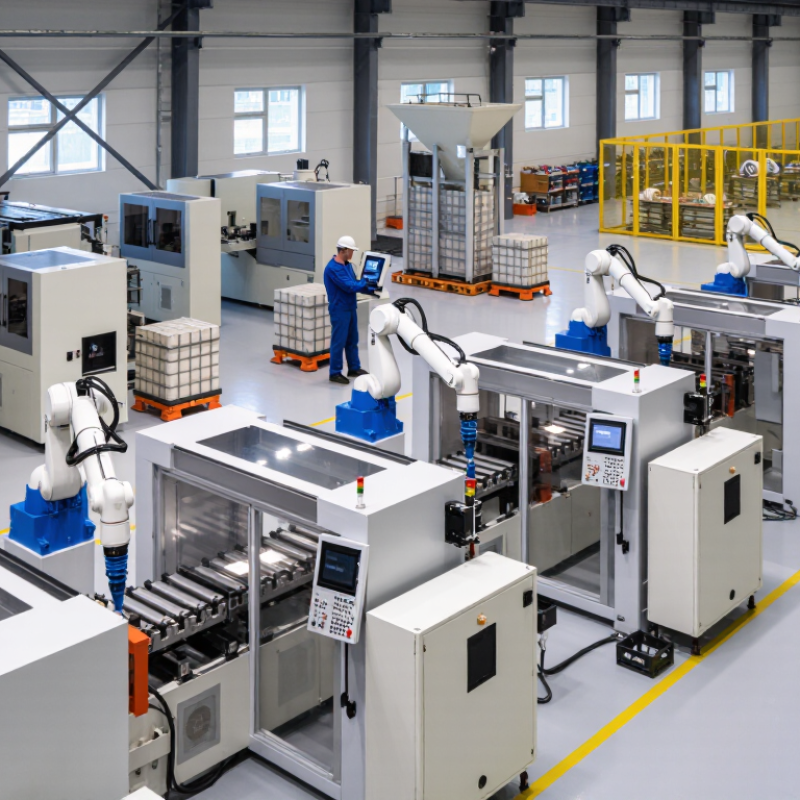
| Robotic Part Handling | Automated removal and transfer | Servo or articulated robots remove parts, control placement, separate runners, and transfer components to inspection or packaging stations. | Automation-cell layout, cycle-time study, robot payload information, and sample production video. | Essential |
| Automated Quality Inspection | In-line or near-line inspection | Vision systems, sensors, gauges, or coordinate-measurement equipment detect dimensional, cosmetic, assembly, and labeling defects. | Inspection plans, measurement-system records, defect images, control charts, and traceable inspection results. | Essential |
| Process Repeatability | Stable, validated process windows | Critical parameters such as fill time, pressure, temperature, cooling time, and screw position are monitored and controlled against approved limits. | Process-validation reports, capability studies, parameter recipes, and change-control records. | Essential |
| Overall Equipment Effectiveness | Measured OEE with improvement actions | Production teams track availability, performance, and quality separately rather than reporting output alone, with documented corrective actions for losses. | OEE reports, downtime Pareto charts, planned-maintenance records, and continuous-improvement logs. | High |
| Material Management | Closed-loop material traceability | Resin lots, drying conditions, regrind percentages, feeding parameters, and material movements are digitally recorded. | Lot-traceability records, dryer logs, barcode or RFID workflows, and material-certification files. | Essential |
| Mold Changeover | Standardized and repeatable setup | Quick-connect utilities, preset process recipes, digital setup instructions, and standardized work reduce manual changeover variation. | Changeover-time records, setup checklists, mold-maintenance history, and first-piece approval data. | High |
| Predictive Maintenance | Condition-based monitoring | Machine health, vibration, temperature, lubrication, cycle counts, and historical failures are used to schedule maintenance before breakdowns occur. | Maintenance-management-system reports, sensor alerts, spare-parts planning, and mean-time-between-failure records. | High |
| Production Traceability | Digital genealogy for every production lot | Finished parts can be linked to machine, mold, cavity, material lot, process recipe, operator or system event, inspection result, and shipment record. | Electronic batch records, barcode workflows, audit trails, and retrieval tests for historical lots. | Essential |
| Energy Management | Energy measured per machine or production cell | Electricity and, where applicable, compressed-air or cooling demand are monitored to identify high-consumption equipment and improvement opportunities. | Energy dashboards, kWh-per-kilogram or kWh-per-part metrics, efficiency projects, and utility-meter records. | High |
| Workforce Capability | Automation, process, and data skills | Technicians and engineers are trained to manage robots, machine interfaces, mold processes, statistical controls, troubleshooting, and cybersecurity procedures. | Training matrix, competency assessments, standard operating procedures, and escalation workflows. | High |
| Cybersecurity and Access Control | Controlled industrial-network access | Production systems use role-based permissions, backups, software-change controls, network segmentation, and incident-response procedures. | Access logs, backup tests, patch-management records, network diagrams, and cybersecurity policies. | High |
| Sustainability and Circularity | Documented resource and waste reduction | Manufacturers measure scrap, regrind, energy, water, packaging, and recycled-content usage while maintaining product-quality requirements. | Material-balance reports, waste records, recycled-content declarations, energy targets, and customer-specific sustainability data. | Medium |
| Scalability | Replicable automated production cells | Automation standards, modular equipment, common data structures, and validated recipes allow capacity to expand without rebuilding the entire operating model. | Capacity plans, automation standards, line-balancing studies, pilot-to-production records, and ramp-up results. | High |
| Customer Reporting | Transparent, data-based performance communication | Customers receive consistent information on delivery performance, quality trends, corrective actions, traceability, and engineering changes. | Sample quality reports, delivery dashboards, corrective-action reports, and engineering-change notifications. | High |