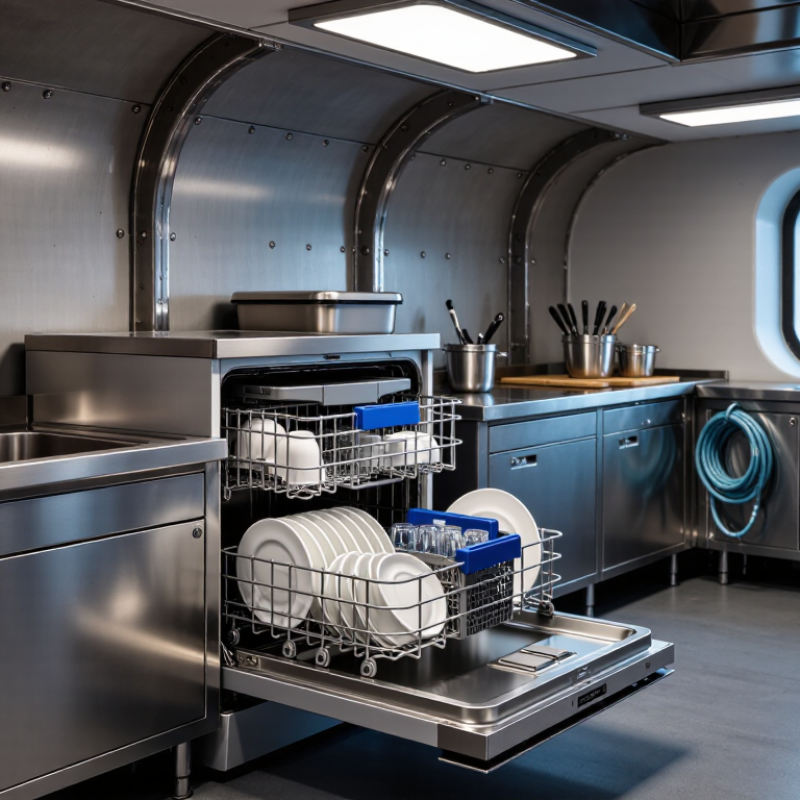
2026 Best Marine Dishwasher for Global Buyers?
Modern marine dishwashers must perform reliably in narrow, moving spaces. Their value depends on more than cleaning speed. A suitable unit should resist salt air, vibration, heat, and repeated daily use. Marine-grade stainless steel, sealed controls, and corrosion-resistant fasteners are practical requirements. I have seen ordinary kitchen equipment deteriorate quickly near exposed seawater.
Cleaning performance should remain stable when water pressure changes. Look for adjustable spray arms, strong filtration, and short commercial cycles. A high-temperature rinse can support better hygiene when the installation follows approved sanitation procedures. Temperature records and service logs also improve operational reliability. However, hotter water is not always better. It can increase energy use and damage delicate tableware.
Efficiency matters during long voyages. Freshwater consumption, cycle duration, electrical load, and wastewater drainage should match the vessel’s system. Global buyers must check voltage, frequency, inlet fittings, and local certification requirements before ordering. Incorrect electrical compatibility is an expensive mistake. Noise and vibration levels deserve attention too, especially near cabins or dining areas. A secure mounting frame can reduce movement, but it may not remove every vibration problem.
A dependable design allows easy access to filters, pumps, seals, and spray nozzles. Replacement parts should be available through documented channels. Remote diagnostics may help, yet crew members still need simple manual controls. In real operation, loading patterns often affect results more than advertised capacity. Operators should test several cycles with actual dish sizes. Performance claims need verification, not optimism.