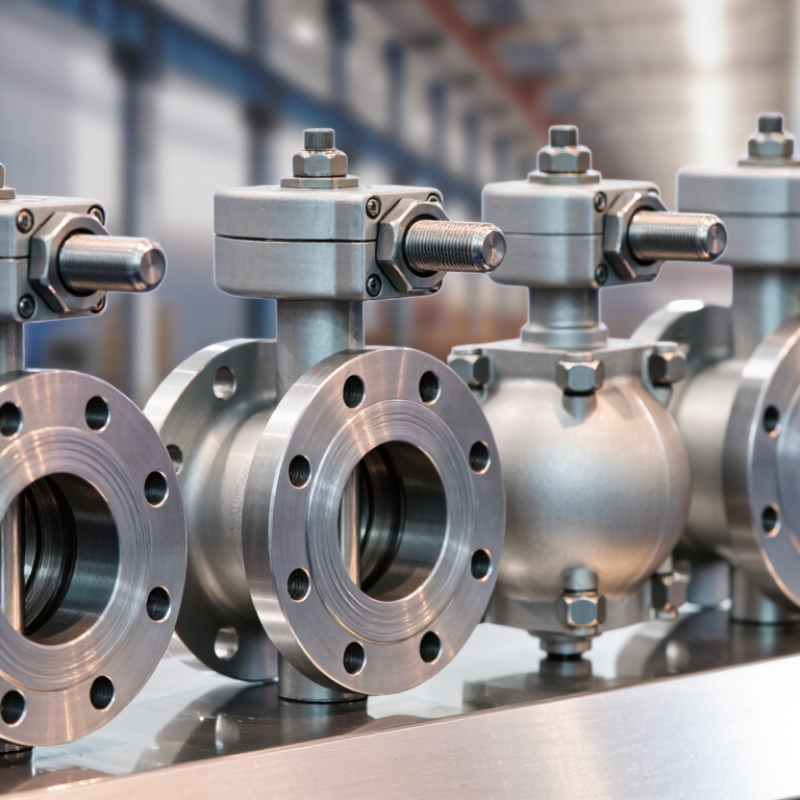
| Concentric, resilient-seated | The disc stem and seat share a common centerline. Common body styles include wafer, lug, and flanged designs. | Seats commonly include EPDM, NBR, or FKM, selected for the fluid and temperature. Bodies may be cast iron, ductile iron, or stainless steel; discs are commonly stainless steel, coated ductile iron, or bronze. | Commonly used for general-purpose water, HVAC, and compatible process services. Suitability depends on the exact pressure, temperature, fluid, and seat compound. | Often paired with rack-and-pinion actuators. Confirm actuator torque against the valve’s required torque over the full operating range, including the specified supply pressure. | API 609 or EN 593 may apply to valve design, depending on the product and specification. ISO 5211 is commonly used for actuator-mounting interfaces. |
| Double-offset, high-performance | Two stem or disc offsets reduce seat rubbing during operation compared with a concentric design. Construction and available body styles vary by product. | Metal bodies and discs are commonly offered in carbon steel, stainless steel, or other alloys. Seats may use PTFE-based materials or metal, depending on the design and service conditions. | Often selected when process conditions call for a higher-performance option than a basic resilient-seated valve. Temperature, pressure, and shutoff capability are model-specific. | Rack-and-pinion or scotch-yoke actuators may be used. Check torque data for the actual seat, differential pressure, flow direction, and fail position. | API 609 or EN 593 may be relevant. ISO 5211 may specify the mounting interface. Request applicable pressure-temperature and seat-leakage test documentation for the exact valve configuration. |
| Triple-offset, metal-seated | Three geometric offsets create a cam-like, low-friction closing action in many designs. The sealing geometry and permitted flow direction should be confirmed for each model. | Body and disc materials may include carbon steel, stainless steel, or specified alloys. Metal sealing surfaces may use hardened or hardfaced materials; exact combinations depend on the manufacturer’s design. | Considered for applications requiring metal seating or higher-temperature service than many soft-seated designs. It is not inherently suitable for every high-temperature or abrasive service. | Actuator sizing should use the supplier’s torque curves for the specified pressure differential and operating conditions. Confirm the required air supply, cycling duty, and spring-return or double-acting arrangement. | API 609 or EN 593 may apply to design. API 607 or ISO 10497 may be specified for fire testing where applicable. Verify that the tested configuration matches the offered valve. |