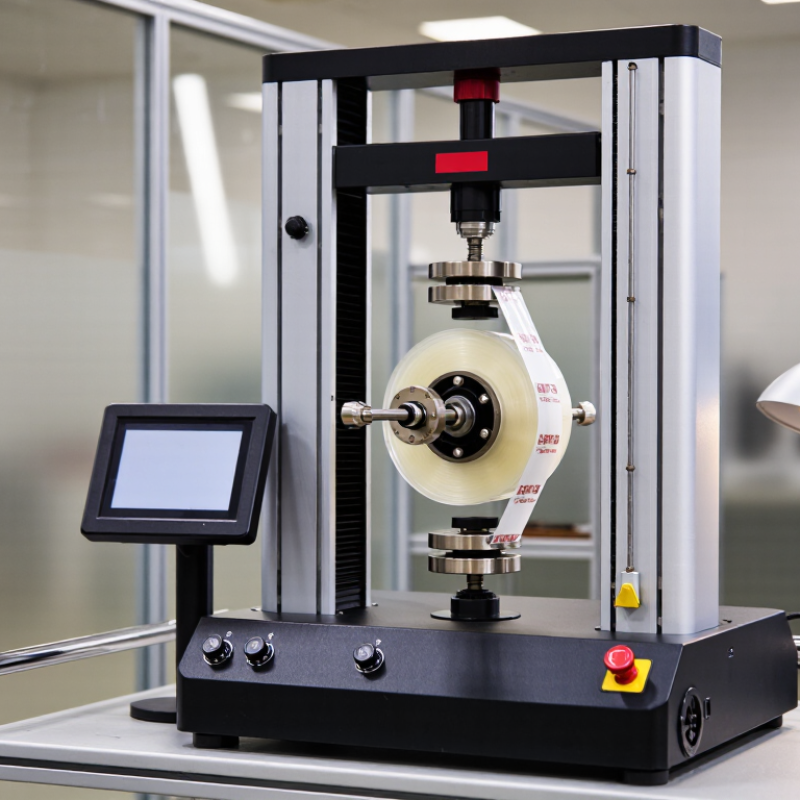
Choosing a peel tensile testing machine for 2026 requires more than checking maximum force. In daily laboratory work, small setup errors can distort a clean-looking result. Confirm calibration records, load-cell range, displacement accuracy, and peel-angle control. Ask whether calibration is traceable to recognized standards. A certificate alone is not enough. Review the stated uncertainty.
The software should record force, travel, speed, specimen ID, operator, and environmental conditions. Look for protected audit trails and clear raw-data export. Automatic calculations save time, but they can hide a wrong gauge length. Run a known reference specimen before accepting a new method. Then inspect the graph. A smooth curve may still be wrong. Safety also deserves close attention, including guarded moving parts, emergency stops, overload protection, and practical operator training.
For an ISO/IEC 17025-oriented laboratory, procedures must link equipment, methods, personnel competence, and records. ISO/IEC 17025 does not make a machine compliant by itself. Ask how deviations are handled, not only how reports are printed. Keep maintenance history beside calibration and verification results. During an assessment, evidence matters more than confident claims. Teams sometimes trust software defaults too quickly. That habit deserves correction. A useful purchase leaves enough evidence for another technician to repeat the test, question the settings, and find an inconvenient error.