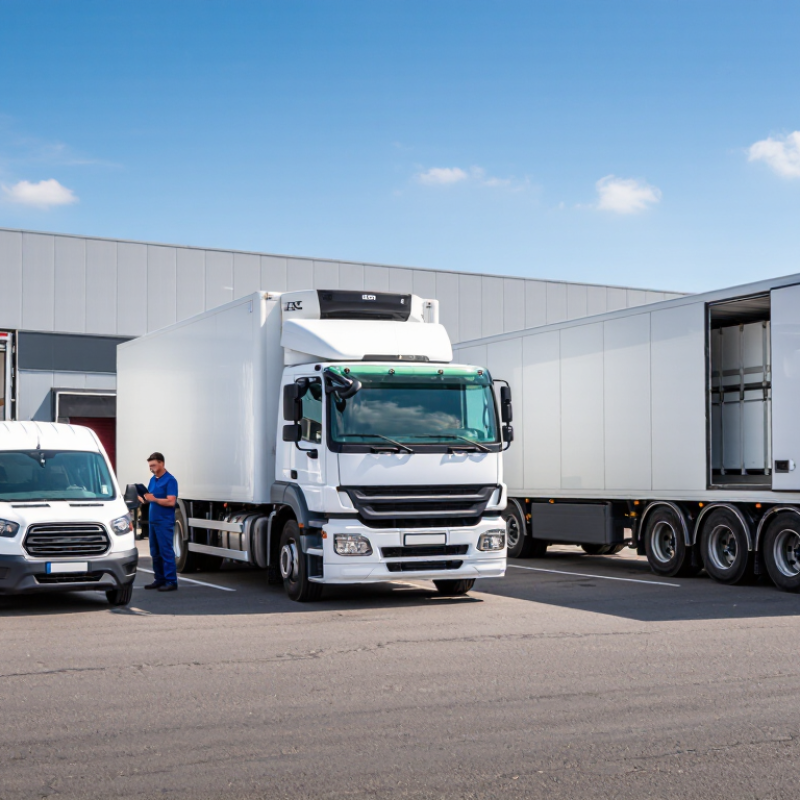
| Compact Refrigerated Van | Small van with insulated cargo compartment and refrigeration unit | 2.3–3.5 m × 1.5–1.8 m × 1.3–1.9 m | Approximately 2.5–3.5 t GVW | Approximately 0.4–1.2 t | Urban food delivery, catering supplies, and small chilled or frozen consignments |
| Large Refrigerated Van | Long-wheelbase or high-roof van; body dimensions depend on the base vehicle | 3.2–4.5 m × 1.7–2.0 m × 1.7–2.1 m | Approximately 3.5–5.0 t GVW | Approximately 0.8–1.8 t | City and regional distribution, groceries, meal delivery, and temperature-sensitive parcels |
| Light Refrigerated Rigid Truck | Two-axle rigid truck with a compact insulated box body | 3.5–5.2 m × 1.9–2.2 m × 1.8–2.3 m | Approximately 5–7.5 t GVW | Approximately 1.5–3.5 t | Local supermarket replenishment, restaurant supply, and regional fresh-food delivery |
| Medium Refrigerated Rigid Truck | Two- or three-axle rigid truck, often with a multi-compartment body | 5.0–7.2 m × 2.1–2.45 m × 2.0–2.5 m | Approximately 7.5–12 t GVW | Approximately 2.5–6 t | Regional distribution of dairy, meat, produce, and other temperature-controlled goods |
| Heavy Refrigerated Rigid Truck | Three- or four-axle rigid truck with a large insulated body | 6.0–9.5 m × 2.3–2.5 m × 2.1–2.6 m | Approximately 12–26 t GVW | Approximately 5–15 t | High-volume regional deliveries, wholesale distribution, and multi-drop transport |
| Refrigerated Semi-Trailer Combination | Tractor unit pulling a refrigerated semi-trailer | Trailer body: approximately 13.3–13.6 m × 2.45–2.5 m × 2.5–2.7 m | Combination limits commonly fall around 33–40 t in many markets; local rules vary | Approximately 18–27 t | Long-distance and cross-border transport of large chilled or frozen loads |