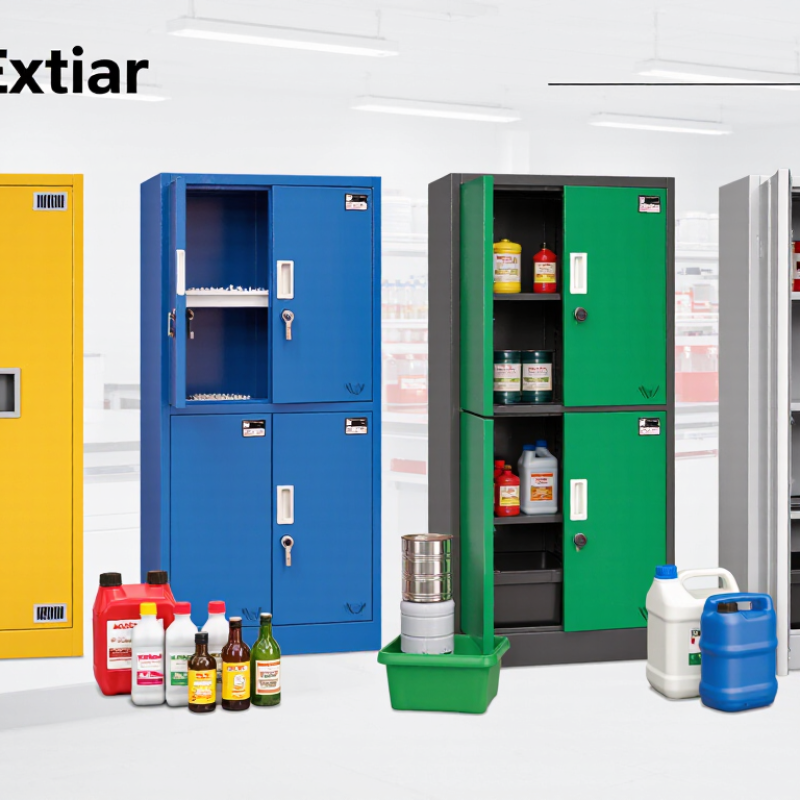
2026 Top Chemical Storage Cabinet Types for Global Buyers

A Chemical Storage Cabinet is not simply a steel box with a bright label. It is a risk-control tool, chosen to match the stored chemical, container size, and work area. Buyers comparing flammable-liquid, corrosive, pesticide, and general-purpose cabinets should check construction, shelf loading, spill containment, door operation, and ventilation needs. Small details matter.

Authoritative references help turn specifications into safer purchasing decisions. U.S. OSHA standard 29 CFR 1910.106 limits cabinet storage to 60 gallons of Category 1, 2, or 3 flammable liquids, or 120 gallons of Category 4 liquids. These are U.S. limits, not global purchasing targets. NFPA 30 and FM Global Data Sheet 7-29 provide further fire-protection guidance, while EN 14470-1 sets a separate European framework for fire-resistant safety cabinets. Buyers should confirm current editions and applicable local requirements.

Process-safety expert Trevor Kletz is widely associated with the maxim, “What you don’t have, can’t leak.” It is a useful reminder to store only necessary quantities and select cabinets around real handling practices. A cabinet beside a laboratory bench faces different demands from one in a warehouse aisle. Compare fire resistance, chemical compatibility, capacity, and service access—not price alone. Standards vary. So do site conditions. A careful specification can prevent a costly mismatch, though no cabinet replaces sound procedures, training, and routine inspection.

2026 Top Chemical Storage Cabinet Types for Global Buyers

How Chemical Storage Cabinets Are Classified by Hazard and Function

Chemical storage cabinets are classified by hazard before appearance. Flammable-liquid cabinets use fire-resistant steel, self-closing doors, and raised leak-retaining sills. OSHA 29 CFR 1910.106 permits cabinets to hold up to 60 gallons of Class I or II liquids, or 120 gallons of Class III liquids. Local rules may differ. Verify them.

Choose by chemical compatibility
Corrosive cabinets focus on chemical compatibility, not fire rating. Polypropylene or coated interiors resist acid and alkali damage. Oxidizer cabinets require separation from fuels, solvents, and organic materials. Toxic-substance cabinets need controlled access, clear labeling, and spill containment.

The Globally Harmonized System classifies hazards through pictograms and signal words, giving buyers a practical starting point. Read every Safety Data Sheet, especially Sections 7 and 10.

Function, ventilation, and fire protection

Function creates another classification layer. Fire-rated cabinets protect flammable liquids during early fire growth. Ventilated cabinets manage vapors, but ventilation is not automatically safer. Poor ducting can spread hazardous vapor.

FM Global Data Sheet 7-88 emphasizes ignition control, segregation, and housekeeping around flammable-liquid storage. NFPA 30 also links cabinet selection to liquid class, quantity, and room arrangement. A useful cabinet has adjustable shelves, grounded metal parts where required, and a sump that can catch a small bottle leak.

Avoid incompatible storage: Mistakes still happen: one cabinet may be convenient, but mixed hazards can create an avoidable incompatibility.

Flammable-Liquid Cabinets for Solvents and Fuels

For global buyers in 2026, flammable-liquid cabinets remain essential for solvents, fuels, and other combustible liquids. The right cabinet reduces ignition exposure, limits spills, and makes daily handling more predictable. Look for double-wall steel construction, a raised leak-resistant sill, adjustable shelves, and self-closing doors. A bright hazard label helps workers identify contents quickly. Cabinet capacity matters. Overfilled shelves can block access and increase container damage.

Choose models according to local fire codes, workplace rules, recognized safety standards, and each liquid’s safety data sheet. Requirements differ between regions, so a familiar design may not satisfy every inspection. Keep cabinets away from heat sources, electrical sparks, exits, and incompatible chemicals. Store containers upright, sealed, and below the recommended load limit. Do not treat the cabinet as a replacement for ventilation, spill planning, or staff training. In practice, teams sometimes buy large cabinets and use them poorly.

Tips: Check door operation each shift, inspect shelves for corrosion, and remove damaged containers immediately. Keep an updated inventory with liquid names, quantities, and purchase dates. Ground and bond containers during transfers, following site procedures and qualified guidance. A small absorbent kit nearby can reduce response time, but it cannot replace emergency planning. Review cabinet placement after renovations or equipment changes.

2026 Top Chemical Storage Cabinet Types for Global Buyers - Flammable-Liquid Cabinets for Solvents and Fuels

Cabinet Type Typical Use Common Configuration Key Buyer Checks Standards and Selection Notes
Under-counter cabinet Small quantities of solvents, cleaning liquids, or fuels needed at a workbench or process station. Compact cabinet designed to fit below a counter; commonly has shelves, a liquid-tight sump, and manual or self-closing doors depending on the model. Measure available clearance; check shelf load ratings, door swing, sump capacity, and whether the cabinet can be securely anchored. Confirm that the cabinet is approved for flammable-liquid storage under the applicable local rules. A compact size does not remove workplace storage limits.
Benchtop cabinet Small containers of frequently used flammable liquids in laboratories, maintenance areas, and production workspaces. Small footprint for placement on a stable work surface; often includes a shelf and a liquid-retaining base. Check total loaded weight against the bench rating, container compatibility, stability, and protection from heat, impact, and ignition sources. Use only where permitted by the site’s fire and occupational-safety requirements. Keep containers closed when not in use.
Standard upright cabinet General storage of approved solvent and fuel containers in workshops, laboratories, and industrial facilities. Vertical enclosure with one or more adjustable shelves, a spill-containment sump, and doors suited to the required access pattern. Verify usable internal space, shelf capacity, sump design, door operation, ventilation-opening provisions, and the cabinet’s listed or certified configuration. For U.S. workplaces, review applicable OSHA requirements and fire codes, including NFPA 30 where adopted. Requirements vary by jurisdiction and liquid classification.
Wide or double-door cabinet Storage of a larger number of compatible containers where frequent access or wider shelf space is useful. Broad cabinet body with two doors; may include adjustable shelves and manual or self-closing door options. Check doorway and installation access, door-clearance space, shelf loading, door-closing performance, and permitted aggregate storage quantities. Do not assume a wider cabinet allows unlimited storage. Confirm quantity limits, cabinet spacing, and storage-area rules with the authority having jurisdiction.
Drum-storage cabinet Approved larger containers, such as drums, containing flammable liquids used in industrial operations. Large-format enclosure with reinforced floor or drum supports and a containment area designed for the intended container arrangement. Confirm drum dimensions, loaded floor capacity, handling access, spill-containment capacity, and compatibility with dispensing equipment. Check whether the applicable code permits the proposed drum size and quantity inside a cabinet. Bulk-storage rules may apply separately.
Outdoor weather-resistant cabinet Flammable-liquid storage outside a building when outdoor placement is allowed by site and fire-code requirements. Weather-resistant enclosure, typically with a protected finish, secure doors, and a liquid-retaining base. Assess weather exposure, corrosion resistance, anchoring, drainage and spill control, access control, and separation from buildings, exits, and ignition sources. Outdoor placement does not automatically make storage compliant. Check local fire-code limits, separation distances, security, and environmental requirements.
Fire-tested cabinet with a specified rating Facilities that require documented fire-resistance performance under a particular national or regional standard. Cabinet tested and certified to a stated standard and performance class; construction and door-closing features depend on the tested model. Request current test or certification documentation and verify that the exact cabinet configuration, accessories, and installation conditions are covered. In Europe, EN 14470-1 includes fire-resistance classes of 15, 30, 60, and 90 minutes. These classes are not interchangeable with requirements in other jurisdictions.

Buyer note: Select a cabinet for the specific liquid, container, quantity, workplace, and jurisdiction. Confirm chemical compatibility and the applicable fire, building, and occupational-safety requirements before purchase. Cabinet vents, if provided, should be handled only as directed by the manufacturer and local code; an improvised connection can compromise the intended protection.

Corrosive-Chemical Cabinets for Acids and Alkalis

Corrosive-Chemical Cabinets for Acids and Alkalis

Acid and alkali cabinets need more than a bright hazard label. Their lining, seams, shelves, and catch tray must resist the specific chemicals stored inside. A cabinet suitable for dilute acetic acid may not withstand concentrated nitric acid. Check each product’s safety data sheet, especially Sections 7 and 10, for handling, storage, and reactivity guidance. OSHA’s Hazard Communication Standard specifies a 16-section SDS format, giving buyers a consistent reference across suppliers.

Choose construction by chemical compatibility, not by appearance alone. Polyethylene cabinets can suit many corrosives, while coated steel may work for other chemical groups; neither material is universal. The Canadian Centre for Occupational Health and Safety advises separating incompatible substances and storing corrosives below eye level. That detail matters when a bottle leaks or a worker reaches for it. Separate acids from alkalis, and keep chemicals that react dangerously apart. Small shelves can make separation difficult. That is a real limitation.

Before ordering, confirm the cabinet’s intended chemical range, ventilation guidance, load capacity, and spill-containment design. OSHA’s standard also requires accessible safety data sheets, so storage decisions can be checked against documented hazards rather than memory. Inspect shelf corners and door seals regularly; corrosion can begin where pooled liquid is easy to miss. There is no perfect cabinet for every laboratory or warehouse. Buyers should document what is stored, review compatibility when products change, and avoid treating a general-purpose corrosive cabinet as suitable for every acid and alkali.

Specialty Cabinets for Toxic, Reactive, and Temperature-Sensitive Chemicals

2026 Top Chemical Storage Cabinet Types for Global Buyers

Specialty cabinets for toxic, reactive, and temperature-sensitive chemicals require more than thick steel and a reliable lock. Toxic chemical cabinets should limit access, control spills, and support clear inventory checks. Adjustable shelves with raised edges can contain small leaks before they spread across the floor. Door seals may also reduce vapor movement, but they are not a substitute for suitable ventilation.

Reactive chemicals need careful separation. Cabinets should prevent contact between incompatible groups, such as oxidizing and combustible materials. Non-sparking hardware, corrosion-resistant surfaces, and grounded components may be important for specific storage conditions. Temperature-sensitive chemicals require stable surroundings, insulation, or monitored cooling. A display is useful, but sensor accuracy still needs regular verification. Small errors matter.

Tips: Match cabinet construction to the chemical’s safety data sheet, not only its label. Check shelf load ratings, spill capacity, ventilation requirements, and emergency access before purchase. Keep incompatible substances in separate compartments or cabinets. Global buyers should ask suppliers for material specifications, test records, and maintenance guidance. Local requirements can differ, and assuming one design fits every facility is a common mistake. Experienced operators should review actual storage habits, because the planned arrangement often changes after installation.

How Global Buyers Compare Capacity, Materials, and Safety Standards

Global buyers now compare chemical cabinets by risk, not appearance. UNEP’s Global Chemicals Outlook II projects chemical production will nearly triple by 2050 from 2017 levels. Storage demand will grow with it. Capacity matters, but a larger cabinet is not automatically safer.

For flammable liquids, steel cabinets remain common because they resist impact and support fire-rated construction. Buyers should check EN 14470-1 or equivalent test evidence, not rely on painted steel alone. In the United States, OSHA 29 CFR 1910.106 limits cabinet storage quantities for flammable and combustible liquids. Local adoption still varies. That detail is easy to miss.

Corrosive chemicals need different protection. Polyethylene cabinets resist many acids and alkalis, while stainless steel can suit selected environments. Compatibility charts are essential. One material cannot safely handle every chemical. Check cabinet capacity, shelf load ratings, spill containment, ventilation guidance, and door-closing performance. NFPA 30 remains a key reference for flammable-liquid storage, but buyers must verify the current edition and local authority requirements. EN 16121 and EN 16122 may support quality evaluation for non-domestic storage furniture, although they do not replace chemical-specific requirements. Certification paperwork matters more than marketing language. Sometimes, the cheapest cabinet creates the most expensive mistake.

2026 Top Chemical Storage Cabinet Types for Global Buyers

Compare common cabinet types by the principal safety standards buyers may need to verify. A marked bar indicates a standard relevant to that cabinet category; it does not certify a specific product.

Buyer note: Capacity and construction materials vary by model. Check the manufacturer’s stated usable capacity and material compatibility—for example, steel for many flammable-liquid cabinets and suitable corrosion-resistant linings or materials for corrosives. Confirm applicable local regulations and product test documentation before purchase. OSHA 29 CFR 1910.106 and NFPA 30 address flammable-liquid storage; EN 14470-1 covers fire-resistant safety storage cabinets, while EN 14470-2 covers pressurized gas-cylinder cabinets.

Top