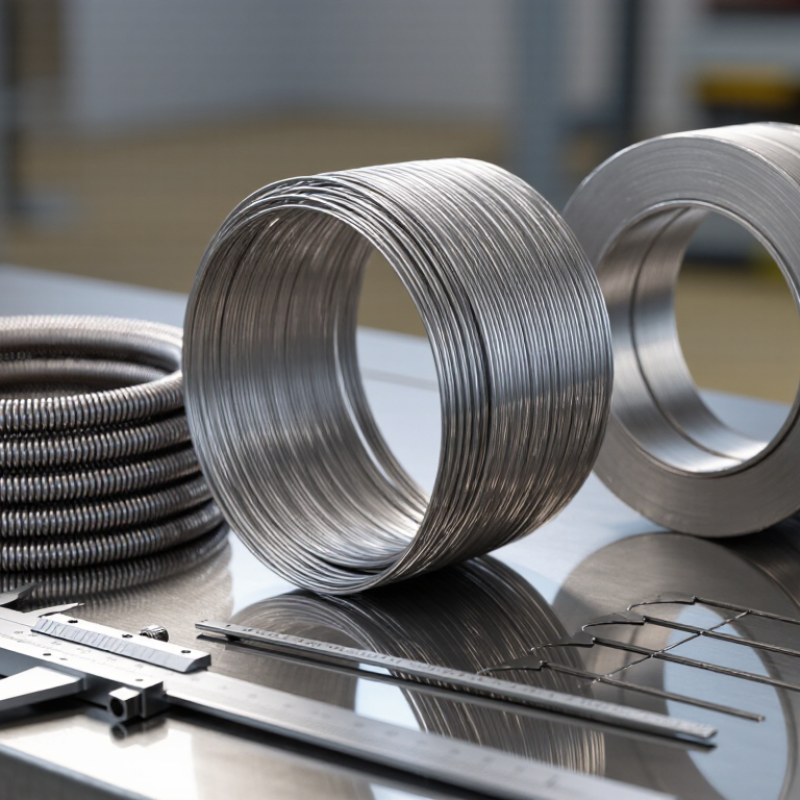
| FeCrAl resistance-alloy coil | Iron base; typically about 20–23% chromium and 4–6% aluminum, with minor additions varying by grade. | Up to approximately 1,400°C for suitable grades and designs. | Forms a protective alumina-rich surface scale at high temperature; generally offers high electrical resistivity and good oxidation resistance in air. | Industrial furnaces, kilns, heat-treatment equipment, and high-temperature air-heating systems. | Can be relatively brittle after high-temperature service. Check cold-working limits, coil support, and start-up procedures. |
| NiCr 80/20 resistance-alloy coil | Typically about 80% nickel and 20% chromium; exact limits depend on the applicable specification. | Up to approximately 1,200°C for common heating-element grades. | Good oxidation resistance and ductility; widely used for formed resistance wire and coils. | Appliances, laboratory equipment, industrial heaters, and furnace elements operating below the highest FeCrAl temperature range. | Usually costs more than iron-based resistance alloys. Confirm the permitted surface load and service temperature for the chosen wire size. |
| NiCr 60/15 resistance-alloy coil | Typically about 60% nickel and 15% chromium, with iron and other constituents making up the balance; composition varies by grade. | Up to approximately 1,150°C for common heating-element grades. | A nickel-chromium-iron option used where its electrical and mechanical properties meet the design requirements. | General-purpose industrial heating elements and equipment with moderate-to-high operating temperatures. | Compare resistivity, oxidation behavior, and allowable operating temperature against the specific alloy datasheet rather than relying on alloy-family names alone. |
| Molybdenum or tungsten coil | High-purity molybdenum or tungsten; purity and minor constituents depend on product specification. | No single air-service limit applies: these coils are generally used in vacuum or controlled, non-oxidizing atmospheres, not hot air. | Refractory metals with very high melting points, but they oxidize readily at elevated temperatures in air. | Vacuum furnaces, controlled-atmosphere furnaces, and specialized high-temperature processing equipment. | Atmosphere control is essential. Specify the operating atmosphere, temperature cycle, coil geometry, and support materials. |