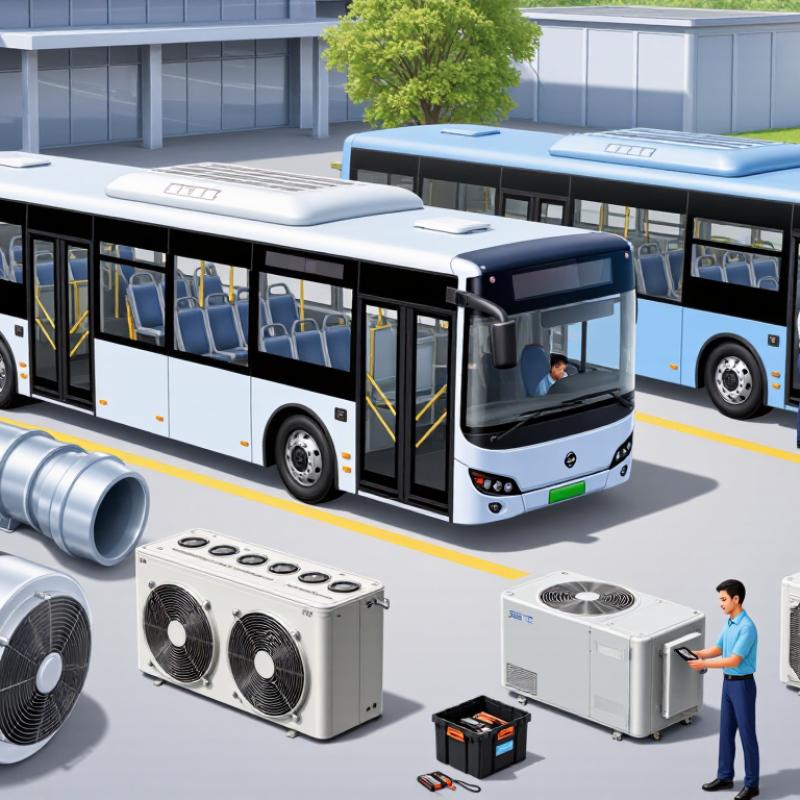
| Engine-driven system | A belt or mechanical drive transfers power from the combustion engine to the compressor. | Cooling is available while the engine is running. Cooling may stop when the engine is off unless an auxiliary system is fitted. | Familiar architecture; can use established vehicle-service practices and components. | Engine-off stops may interrupt cooling. Compressor output is linked to engine operation and speed. | Hybrid buses that spend most of their service time with the engine operating. |
| High-voltage electric system | An electric motor drives the compressor independently of engine speed. | The compressor can operate when the engine is stopped, provided the high-voltage battery and control system allow it. | Supports engine-off operation and allows compressor speed to be controlled independently of engine speed. | Requires compatible high-voltage components, battery capacity, electrical protection, and trained service procedures. | Hybrid buses with frequent engine-off periods or stop-and-go operation. |
| Dual-drive or hybrid compressor system | Depending on the design, the compressor can receive mechanical drive, electric drive, or both through a switching or integrated arrangement. | Control logic selects an available drive mode according to engine state, electrical-system limits, and cooling demand. | Can provide operating flexibility across engine-on and engine-off conditions. | More complex integration and servicing; the exact drive arrangement and changeover strategy vary by vehicle. | Duty cycles that combine sustained road operation with frequent stops. |
| Heat-pump system | Usually uses an electrically driven refrigerant compressor; reversing the refrigerant cycle enables heating as well as cooling. | Can provide cabin cooling and, within its operating limits, heating. Supplemental heating may be needed in demanding cold conditions. | One refrigerant circuit can serve both cooling and heating functions, subject to system design and ambient conditions. | Heating capacity and efficiency depend on outdoor temperature, defrost needs, and system design; confirm cold-weather performance for the route. | Hybrid buses needing electrically managed cabin cooling and heating. |
| Electric AC with auxiliary heater | An electric motor drives the refrigerant compressor; a separate heater supplies cabin heat. | Cooling and heating are controlled by separate subsystems. The heater may use electrical energy or another vehicle-approved heat source. | Allows cooling and heating systems to be selected or sized for their respective operating needs. | Check auxiliary-heater energy demand, battery capacity, controls, and applicable emissions or safety requirements. | Routes with significant heating demand or where a heat pump alone may not meet cold-weather requirements. |
| Roof-mounted packaged HVAC | The compressor may be engine-driven, electrically driven, or part of a dual-drive arrangement. | Cooling and, where fitted, heating are delivered through a roof-mounted unit and cabin ducting. | Packages major air-conditioning components together and can simplify vehicle-body integration. | Check roof load, available installation space, air distribution, noise, condensate drainage, and maintenance access. | City and intercity buses designed for roof-mounted climate-control equipment. |