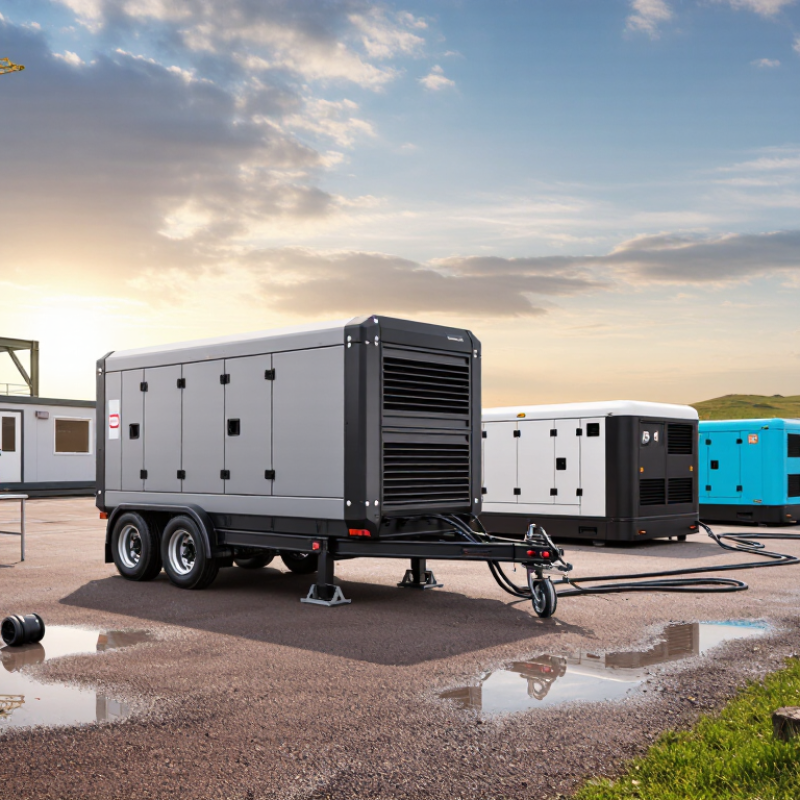
The 2026 Top Mobile Generator Suppliers for Global Buyers guide examines suppliers that combine dependable equipment, responsive service, and practical international support. A Mobile Generator must perform beyond factory testing. It may operate beside a construction site, through heavy rain, or across remote logistics routes. Buyers therefore need more than attractive pricing.
Important comparisons include rated and standby power, fuel consumption, noise control, emissions performance, mobility, and control systems. Suppliers should also provide clear manuals, spare parts access, warranty terms, and trained technicians. These details become critical when a generator supports a hospital extension, a temporary event, or a mine without stable grid access. Small gaps matter.
As Caterpillar energy specialist Ed Walsh has stated, “Power is only valuable when it is available where and when it is needed.” This principle remains central for global purchasing decisions. The strongest suppliers understand local voltage standards, climate conditions, transport restrictions, and after-sales expectations. They do not sell one configuration to every market.
This overview will assess leading manufacturers and distributors through an experience-based lens. It will consider product durability, digital monitoring, rental compatibility, delivery capability, and lifecycle cost. Some rankings may remain imperfect. Supplier data changes, and published specifications do not always reflect field conditions. Buyers should verify performance records independently. A careful shortlist is better than a rushed decision.
2026 Top Mobile Generator Suppliers for Global Buyers
Mobile generators are transportable power units designed for temporary or remote electricity supply. They usually combine an engine, alternator, control panel, fuel system, and protective enclosure. Trailer-mounted models suit construction sites, while compact wheeled units serve smaller facilities. Skid-mounted systems work well when equipment must be moved by forklift.
Common types include diesel, natural gas, gasoline, battery-hybrid, and dual-fuel generators. Diesel models often support heavy loads and long operating hours. Gas units can produce fewer local emissions where suitable fuel infrastructure exists. Battery-hybrid systems reduce noise during low-demand periods. They are not automatically better. Capacity, charging access, and weather conditions still matter.
Global buyers use mobile generators at hospitals, data centers, farms, mines, outdoor events, and emergency response locations. A hospital may require stable three-phase power for imaging equipment and refrigeration. A construction contractor may prioritize rugged frames, easy towing, and rapid refueling. Telecom teams often need quiet operation and remote monitoring near residential areas. Procurement should verify voltage, frequency, load profile, duty cycle, noise limits, emissions rules, and local service capability. Small details matter.
A generator that starts every time is ideal, but no specification guarantees it. Preventive maintenance, clean fuel, correct grounding, and realistic load planning remain essential. Buyers should request test records, warranty terms, spare-parts access, and clear documentation before shipment. Supplier claims deserve careful checking.