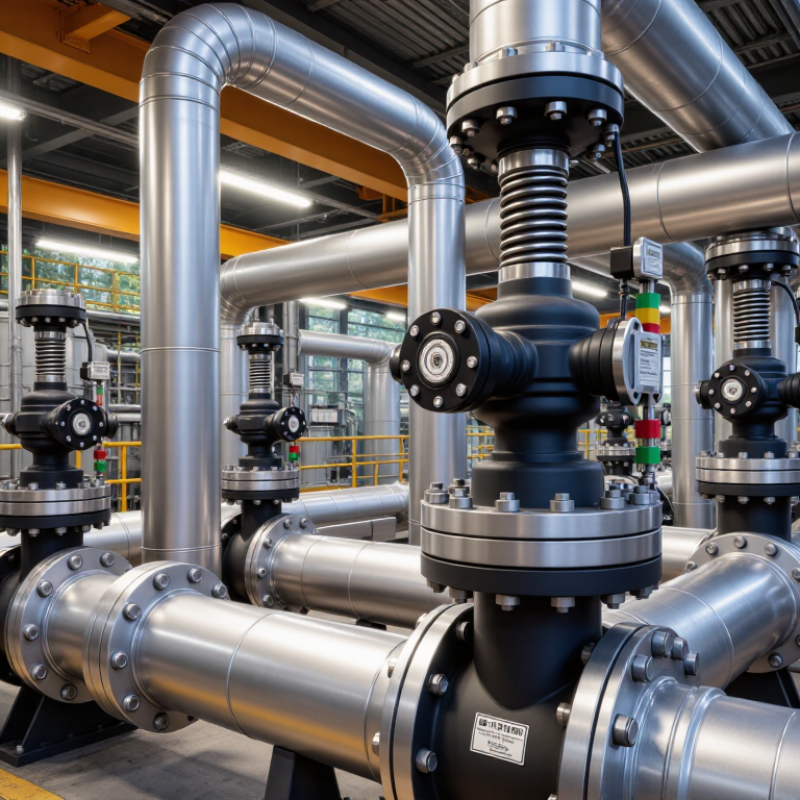
| Spring-Loaded Safety Valve | A spring holds the disc against the seat. When inlet pressure reaches the set pressure, the disc lifts and releases the protected fluid. | Steam, hot water, air, and other compressible gases or vapors. | Set pressure is established by spring force; blowdown controls reseating pressure. | Carbon steel, stainless steel, alloy steel, and corrosion-resistant trim. | ASME BPVC Section VIII, API 520, API 526, and ISO 4126. |
| Safety Relief Valve | The valve opens at a predetermined pressure and may open progressively or rapidly, depending on the fluid and design. | Boilers, pressure vessels, process piping, and mixed liquid–vapor systems. | Protects against overpressure caused by blocked outlets, fire exposure, thermal expansion, or control failure. | Steel, stainless steel, nickel alloys, and elastomers selected for the process fluid. | ASME BPVC Section VIII, API 520, API 521, and ISO 4126. |
| Pilot-Operated Relief Valve | A small pilot valve senses system pressure and controls the main valve, allowing the main disc to remain tightly seated until relief is required. | High-pressure gas systems, transmission pipelines, and applications requiring low leakage. | Uses system pressure and pilot control to improve seat tightness and capacity at high pressures. | Carbon steel bodies, stainless steel pilots, and corrosion-resistant internal components. | API 520, API 521, ISO 4126, and applicable pipeline or pressure-equipment rules. |
| Pressure Vacuum Relief Valve | Separate pressure and vacuum settings allow the device to vent excess internal pressure or admit air when internal pressure falls below atmospheric pressure. | Low-pressure storage tanks containing liquids or vapors. | Controls both positive pressure and vacuum to prevent tank overpressure or collapse. | Aluminum, carbon steel, stainless steel, and fluoropolymer seating materials. | API 2000 and applicable atmospheric or low-pressure tank standards. |
| Thermal Relief Valve | It relieves pressure produced when a trapped liquid expands because of temperature increase. | Blocked-in liquid pipelines, heat exchangers, pumps, and isolated piping sections. | Uses a relatively small relieving capacity because the protected liquid volume is limited. | Brass, bronze, stainless steel, carbon steel, and compatible soft-seat materials. | System-specific engineering practice, ASME requirements, and applicable local codes. |
| Rupture Disc Assembly | A thin metallic or composite membrane bursts at a specified differential pressure and provides a non-reclosing relief path. | Corrosive, viscous, polymerizing, or rapidly reacting services. | Provides rapid, full-opening pressure relief with no moving parts. | Stainless steel, nickel alloys, tantalum, graphite, and fluoropolymer linings. | ASME BPVC Section VIII, ISO 4126, and manufacturer-certified burst-pressure requirements. |
| Pressure Relief Valve with Rupture Disc | A rupture disc is installed upstream or downstream of a re-closing relief valve to isolate the valve from corrosive or fouling process media. | Chemical processing, pharmaceutical production, and services with severe corrosion or contamination risks. | Combines non-reclosing emergency protection with re-closing pressure control. | Materials are selected according to chemical compatibility, temperature, and burst-pressure requirements. | ASME BPVC Section VIII, API 520, API 521, and ISO 4126. |