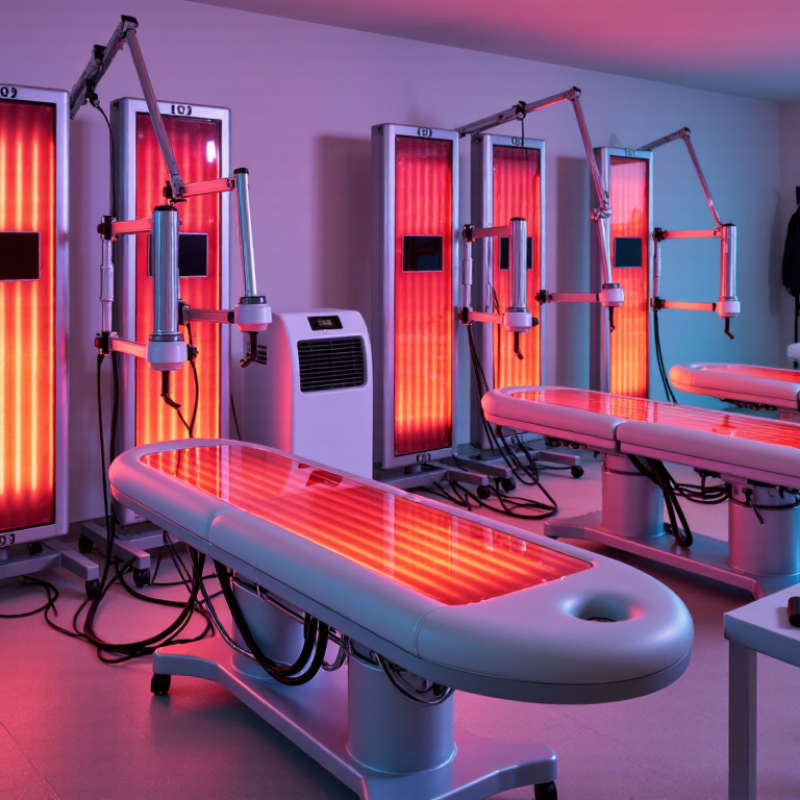
Installation, maintenance, and operating costs often determine whether red light therapy equipment remains profitable after launch. A ceiling-mounted system may require reinforced supports, dedicated circuits, ventilation checks, and professional commissioning. A freestanding unit usually needs less construction. That difference can reduce opening delays and contractor fees.
Energy use is measurable. The U.S. Energy Information Administration reported average commercial electricity prices near 13 cents per kilowatt-hour in 2024. A 2.4-kilowatt system operating eight hours daily would consume about 19.2 kilowatt-hours, costing roughly 2.50 dollars per day at that rate.
Actual costs vary by country, tariffs, duty cycles, and standby power. The estimate is useful, but imperfect. The U.S. Department of Energy also reports that LED systems can use at least 75% less energy than incandescent lighting, although therapy equipment includes controls and cooling components.
Maintenance deserves closer attention. ASHRAE Standard 180 emphasizes scheduled inspection, cleaning, airflow checks, and documented servicing for commercial HVAC-related environments.
Operators should inspect lenses, cooling fans, cables, and timers weekly. Filters may need more frequent replacement in dusty rooms.
The International Facility Management Association consistently identifies labor as a major operating expense, so cleaning time and technician access should enter the budget. A practical reserve is sensible: set aside funds for cooling-fan replacement, calibration checks, and unexpected downtime.
Many buyers underprice labor. That mistake is common. A detailed service log, trained staff, and accessible components can protect uptime better than a lower purchase price.