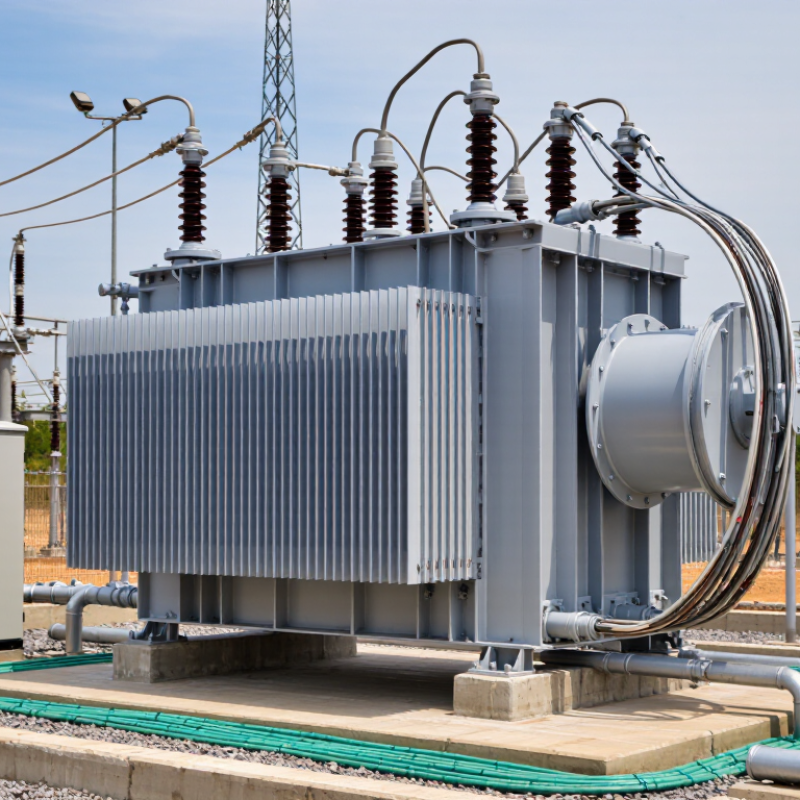
For a 480V-to-13.8kV step-up transformer, efficiency must be verified at the actual operating load. A claim above 98% is incomplete without no-load and load-loss data. Request certified test results, temperature-rise values, and the guaranteed loss curve. The U.S. Department of Energy’s 2024 distribution-transformer rule projects about 3.6 quadrillion Btu in energy savings over 30 years, showing why small loss reductions matter across large fleets. Field conditions still differ from laboratory ratings.
Cooling deserves equal attention. Confirm whether the design uses ONAN or ONAF cooling, and check the rated temperature rise at the site’s ambient temperature. Blocked radiators, dust, and frequent overloads can quietly shorten insulation life. The IEEE C57.12.00 standard establishes general requirements for liquid-immersed transformers, including insulation, temperature, and dielectric performance. However, compliance should include routine and design-test documentation, not only a statement on the datasheet. That is easy to overlook.
Grounding requires a system study. Confirm the winding connection, neutral availability, ground-fault current, and any neutral grounding resistor before selecting protection settings. A grounded-wye high-voltage winding may be appropriate, but it is not automatically correct. Verify clearances, bushing insulation levels, surge protection, and the site grounding grid. One practical weakness remains: many specifications emphasize voltage ratio while treating grounding as installation detail. That can create expensive revisions later.