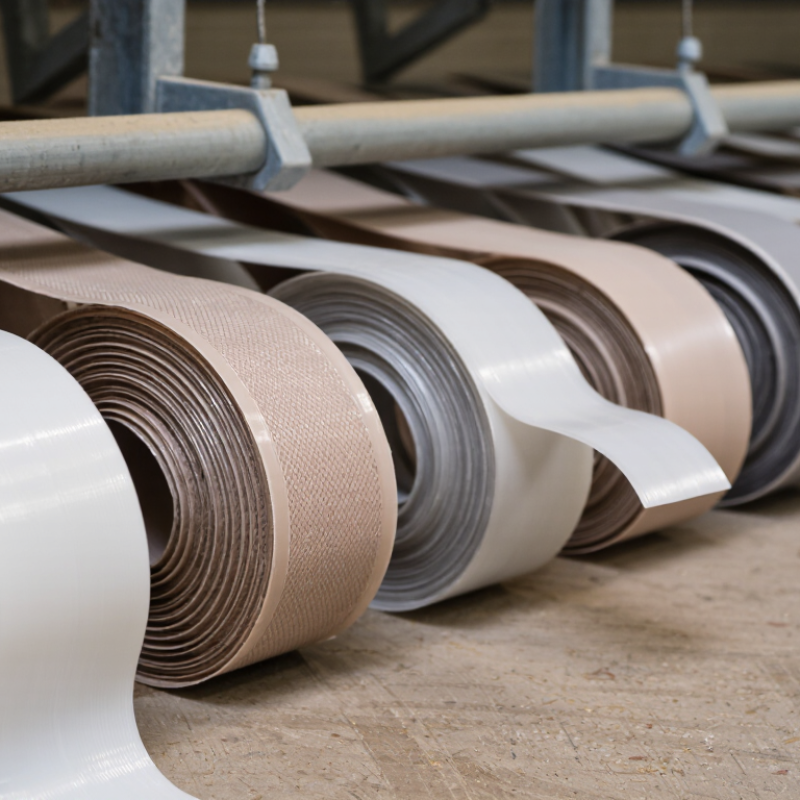
| 1. Standard smooth PP belt | Flat polypropylene belt with a smooth surface for manure collection and scraper cleaning. | Standard duty; commonly specified around 1.0–1.2 mm, subject to the manufacturer’s construction. | Width is matched to the manure conveyor and cage system; length is made to suit the installation. | Routine use in poultry houses where the conveyor layout and manure load are within the equipment design limits. | Confirm belt width, splice method, tracking requirements, scraper compatibility, and the conveyor’s tension settings. |
| 2. Light-duty PP belt | Thinner, flexible PP belt intended for systems with lower loads and suitable support spacing. | Light duty; often specified around 0.8–1.0 mm, depending on the belt design. | Cut or supplied to the measured conveyor path; available width depends on the equipment. | Existing systems designed for a lighter belt, or installations where the manufacturer permits a thinner specification. | Check support-roller spacing, belt tension, expected manure loading, and whether the thinner belt is approved for the system. |
| 3. Heavy-duty PP belt | Heavier-gauge belt construction intended to provide additional material for demanding operating conditions. | Heavy duty; may be specified above 1.2 mm, but thickness alone does not determine strength. | Made to the required conveyor width and loop length; measure the installed path rather than estimating. | Systems with heavier loading or frequent use, provided the drive and conveyor are designed for the selected belt. | Request tensile and elongation data, check drive capacity, and confirm the thicker belt will fit the rollers and scraper assembly. |
| 4. Reinforced-edge PP belt | PP belt with strengthened or finished edges to help limit edge damage and fraying during operation. | Selected to match the belt body and conveyor specification; edge treatment varies by construction. | Width must include any edge treatment when checking clearance inside the conveyor frame. | Installations where belt edges are exposed to rubbing, misalignment, or repeated handling during maintenance. | Ask how the edges are reinforced, inspect frame clearance, and correct tracking problems rather than relying on edge reinforcement alone. |
| 5. High-strength reinforced PP belt | PP belt incorporating reinforcement or a specified higher-strength construction, depending on the product design. | Specified by rated tensile strength and elongation rather than thickness alone. | Manufactured to the conveyor’s measured width and required loop or roll length. | Longer conveyor runs or applications where the equipment design calls for a belt with defined mechanical properties. | Obtain written strength and elongation specifications, verify splice strength, and ensure the drive and tensioning system are compatible. |
| 6. UV-stabilized PP belt | PP material formulated with UV stabilizers; availability and protection level depend on the product specification. | Thickness is chosen for the application; UV resistance is a separate material specification. | Ordered to the conveyor dimensions; measure the installation and confirm the required belt length. | Areas where the belt or stored rolls may receive more sunlight or UV exposure than in a fully enclosed installation. | Ask for the stated UV-resistance information and storage guidance; do not assume every PP belt has the same UV protection. |
| 7. Replacement belt matched to an existing system | PP belt selected to match the installed conveyor’s material, surface, edges, splice, and operating requirements. | Match the existing specification where known; do not select by thickness alone. | Measure the existing belt or conveyor path, including width and required loop length, before ordering. | Repairs and replacements where keeping the existing conveyor configuration is a priority. | Record belt width, thickness, splice type, conveyor model or drawing, scraper arrangement, and any wear or tracking issues. |