7 Tips for Buying Aluminium Patio Doors?
Buying aluminium patio doors can transform a dark room into a brighter, more connected living space. However, attractive frames alone do not guarantee a good purchase. Door size, glass performance, drainage, security, and installation quality all influence daily comfort.
Fenestration specialist John Knight says, “A patio door should be judged by its performance, not its showroom appearance.” That practical warning deserves attention. A slim frame may look elegant, yet poor sealing can bring cold air, rainwater, or difficult operation. The cheapest quotation may also exclude preparation work, delivery, or internal finishing.
Small details matter.
This guide explores seven practical tips for choosing aluminium patio doors with greater confidence. It considers thermal breaks, glazing specifications, threshold design, opening styles, hardware, security features, and installer experience. Each point connects the product with real household conditions, such as muddy garden paths, strong afternoon sunlight, limited interior space, and frequent family use.
A careful buyer should request clear U-values, warranty terms, maintenance requirements, and installation details. Asking questions may feel slow, but replacing a poorly fitted door is far more disruptive. No checklist is perfect. Existing walls can hide problems, and product ratings may not reflect every local climate.
I have also left room for that uncomfortable truth: the most impressive specification is not always the most suitable choice. A large folding system may reduce furniture space, while a sliding design may provide better everyday access. The right decision balances appearance, performance, budget, and the way people actually use the room.
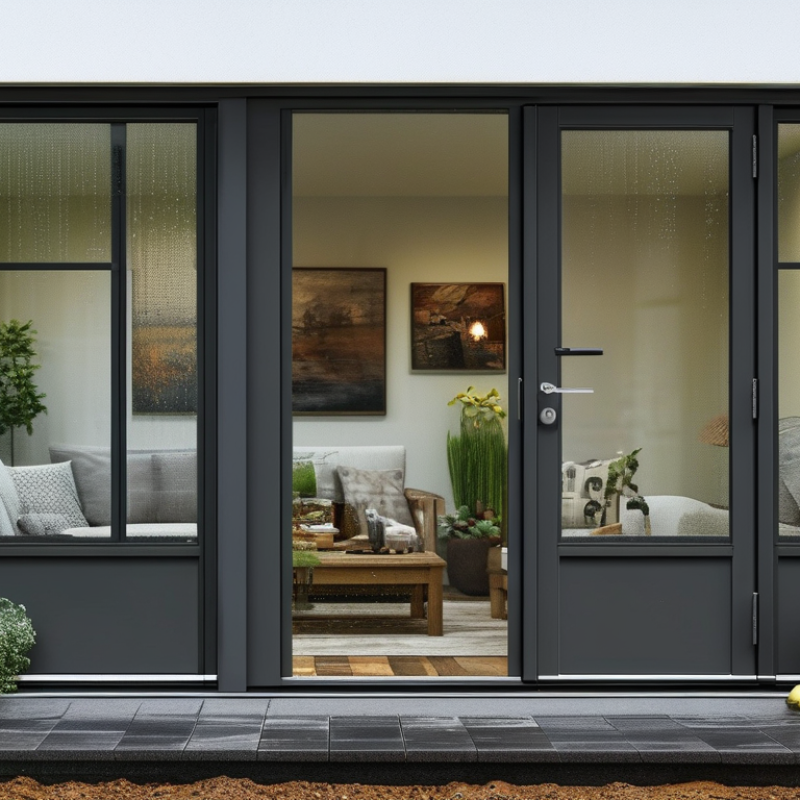
Understanding Aluminium Patio Door Types and Configurations
Aluminium patio doors offer more than one opening style. The best configuration depends on space, traffic, and daily habits. Sliding doors move along tracks and save interior floor space. They suit compact rooms and wide garden views. A slim frame can bring in more daylight. For very wide openings, bi-fold doors fold into stacked panels. They create a broad connection between indoors and outdoors. However, folding systems need clear wall space beside the opening. Measure twice.
Hinged or French-style doors open inward or outward. They provide a familiar entrance and strong ventilation. Their swing area must remain free of furniture. Pocket configurations slide into the wall cavity and nearly disappear when open. This looks elegant, but the wall must allow enough depth. Existing plumbing or wiring may restrict this option. Not every room can support it. Check the structure carefully.
Configuration also includes glazing, threshold height, and panel direction. A low threshold improves access, but it needs effective drainage. Ask how rainwater leaves the track. Look for double glazing, thermal breaks, secure multipoint locking, and weather-resistant seals. Site measurements should include floor levels, brickwork, and handle reach. In colder or windy locations, poor installation can reduce comfort, even with quality aluminium. Do not judge doors by appearance alone. On paper, a layout may seem perfect. I would recheck the opening path during real furniture use, because beautiful doors can still become awkward.
Checking Warranties, Supplier Quality, and Building Regulations
7 Tips for Buying Aluminium Patio Doors?
Checking Warranties, Supplier Quality, and Building Regulations
Tip 1: Read the warranty closely. Check coverage for frames, glass, seals, hardware, and powder coating. Ask whether labour and replacement parts are included. Tip 2: Confirm the warranty period and exclusions. A long warranty sounds reassuring, but it does not prove quality. I would still check installation requirements and transfer conditions. Read every clause. Tip 3: Request evidence from the supplier. Look for independent tests covering air leakage, water resistance, wind pressure, security, and thermal performance. Reports should match the exact door configuration, not a similar sample.
Tip 4: Examine supplier consistency. Ask for manufacturing tolerances, quality-control procedures, and recent installation references. ISO 9001 certification can support confidence, but it cannot replace physical inspection. Visit a completed project if possible. Small details matter, such as even gaps, smooth rollers, and correctly sealed corners. Tip 5: Compare thermal figures carefully. The U.S. Department of Energy states that windows can cause 25–30% of household heating and cooling energy use. Poorly specified patio doors may add to that loss.
Tip 6: Check local building regulations before ordering. Confirm required U-values, safety glazing, threshold details, drainage, ventilation, and escape-route rules. Requirements vary by location. Ask building control or a qualified installer for written guidance. Tip 7: Verify the supplier’s conformity documents and installation method. The IEA’s Buildings 2023 report says buildings consume about 30% of global final energy. Better doors help, but weak installation can undermine performance. Measure twice. Mistakes are expensive.