7 Tips for Buying Takeaway Food Containers

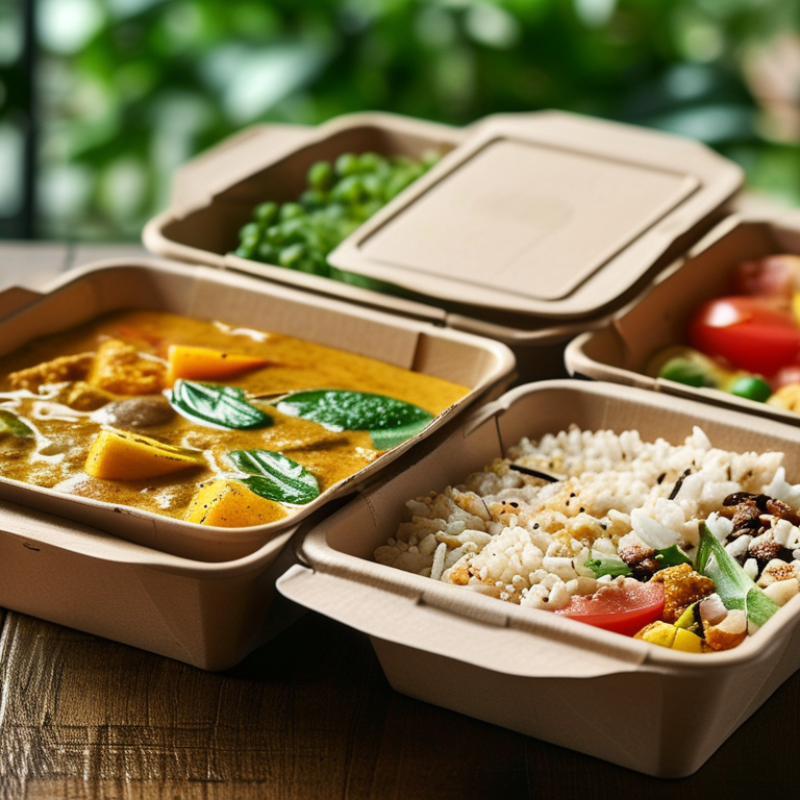
Choosing Takeaway Food Containers is no longer a simple question of price and appearance. A leaking curry box, softened paper lid, or warped plastic tray can damage customer trust within minutes. The right container must protect food, preserve temperature, support transport, and fit the brand’s environmental goals.

The United Nations Environment Programme reported in Turning off the Tap that packaging represents approximately 40% of global plastic use. Meanwhile, McKinsey’s 2023 packaging research found that many consumers value recyclability, although convenience and food protection still strongly influence purchasing decisions. These findings reveal an uncomfortable truth: sustainable packaging is important, but a container that fails during delivery is not a responsible choice either.

Tom Szaky, founder of TerraCycle, offers a useful principle: “The most sustainable product is the one that already exists.” His statement encourages businesses to examine reuse, material efficiency, local recycling systems, and actual customer behavior. A compostable container may sound ideal, yet it can create confusion when suitable collection facilities are unavailable. Nothing is perfect.

This guide explores seven practical tips for selecting Takeaway Food Containers. It considers material performance, leak resistance, ventilation, portion size, stacking, branding, and end-of-life disposal. Some choices may need improvement after real-world testing. That is acceptable. Testing a container with hot noodles, oily sauces, and a thirty-minute delivery is more valuable than trusting a marketing claim.

7 Tips for Buying Takeaway Food Containers

Identify Your Food, Portion, and Packaging Requirements

7 Tips for Buying Takeaway Food Containers

Identify your food, portion, and packaging requirements before comparing prices. Soup needs a rigid, leak-resistant container and a secure lid. Fried food needs ventilation, or the crust quickly becomes soft. Sauces may require separate cups.

According to the UNEP Food Waste Index Report 2024, households wasted 631 million tonnes of food in 2022. Correct portions and dependable packaging can help prevent avoidable waste. Small details matter.

Measure the usual serving size, not the maximum possible portion. A 500-millilitre container may suit noodles, but it can look excessive for a small salad. Check whether the container remains stable during stacking and delivery.

The U.S. Environmental Protection Agency reported that containers and packaging represented 28.1% of municipal solid waste generation in its 2018 national data. Material choices therefore deserve careful attention. Recyclability also depends on local collection systems.

I once selected a cheap container that looked practical. Its lid loosened when the food was hot. That mistake changed my buying checklist.

Test containers with real food, sauces, heat, and a short delivery journey. Check temperature tolerance, sealing performance, storage space, and portion visibility. Avoid choosing only by appearance. The perfect container does not exist. A slightly stronger option may reduce spills, complaints, and replacement costs. Evaluate the full use case.

Compare Container Materials for Safety and Durability

7 Tips for Buying Takeaway Food Containers

Material choice affects safety, heat resistance, leakage, and waste. The OECD’s Global Plastics Outlook reports that packaging created about 142 million tonnes of plastic waste in 2019. That figure makes material selection more than a cost decision. Polypropylene usually handles hot food well, but check the container’s temperature rating. Do not assume every plastic box is microwave-safe. A practical test is simple: fill it with warm soup, close the lid, and tilt it over a tray. Small leaks matter.

Paper and fiber containers feel lighter and often suit dry foods, sandwiches, and pastries. However, moisture can soften their walls, while grease may weaken seams. Look for a verified food-contact lining and strong folded edges. Aluminum offers excellent heat tolerance and stiffness, but it may react with highly acidic foods. It also cannot be used in a microwave. These details are easy to miss.

The FDA Food Code 2022 emphasizes cleanable, durable, and non-toxic food-contact surfaces. That supports checking smooth interiors, secure lids, and clear usage instructions. Recycled content can reduce environmental pressure, but recycled material is not automatically suitable for direct food contact. Certification and supplier documentation still matter. My first assumption was wrong: the thickest container was not always the safest. A loose lid caused more trouble than a thin wall. Test the full package, not just the material.

7 Tips for Buying Takeaway Food Containers: Safety and Durability

Typical maximum food-contact temperatures vary by material and product grade. Use packaging within the temperature limits stated by the supplier, especially for hot, acidic, or oily foods.

Buying tip: Polypropylene is commonly suited to hot foods and reheating, aluminum tolerates very high temperatures but should not be used in a microwave, while paperboard, bagasse, and PET are generally better for moderate-temperature applications.

Choose the Right Size, Shape, and Closure Design

7 Tips for Buying Takeaway Food Containers

Choose the right size before choosing a cheaper price. Tip one: match capacity to the meal. A container that is too large lets food slide and lose heat. A tight fit looks better and reduces wasted material. Tip two: check the base dimensions, not only the stated volume. A tall curry container needs different shelf space than a shallow noodle box. Tip three: select shapes that suit delivery bags and storage shelves. Square containers often use space efficiently, but round containers can protect delicate foods. Tip four: test stacking with real portions. It is easy to underestimate sauce movement.

Closure design deserves equal attention. Tip five: inspect the lid seal around the corners. A weak corner may leak when a driver turns sharply. Tip six: choose vents for fried or hot foods, but do not assume every vent works. Steam needs an escape route, while soups need stronger leak resistance. Tip seven: test opening by hand. Customers should not need a knife or excessive force. That detail affects their experience.

The National Restaurant Association’s 2024 industry report states that 47% of American adults order takeout weekly. Packaging therefore faces repeated, practical use. The Foodservice Packaging Institute also highlights fit, leak resistance, and heat performance as core selection factors. In my own testing, a perfect-looking box can still fail after fifteen minutes in a delivery bag. Recheck the seal, portion, and stacking pattern. Small mistakes become expensive quickly.

7 Tips for Buying Takeaway Food Containers - Choose the Right Size, Shape, and Closure Design

Tip Selection Dimension Recommended Specification Typical Capacity Suitable Food and Use Practical Buying Check
1 Match the container to the portion size Choose a container that leaves a small amount of headspace without allowing food to move excessively during transport. 250–500 mL for snacks, side dishes, sauces, and small portions Desserts, fruit, fries, salads, dips, and individual side dishes Compare internal capacity rather than relying only on external dimensions.
2 Select a size for main meals Use medium or large containers with enough width and depth for complete meals. 700–1,200 mL for standard takeaway meals Rice dishes, pasta, noodles, curries, stir-fries, and combination meals Check whether the container can hold the meal without compressing toppings or side items.
3 Choose a shape that suits the food Rectangular containers maximize stacking and compartmentalization; round containers work well for soups and liquid foods. 500–1,000 mL, depending on the menu item Rectangular: meals and sides; round: soups, stews, sauces, and salads Consider portion presentation, storage space, and compatibility with delivery bags.
4 Use compartments when separation matters Select two- or three-compartment designs for foods that should remain separate. 700–1,000 mL total capacity Main course with vegetables, rice with curry, salads with toppings, and combo meals Make sure dividers are high enough to reduce mixing and liquid transfer.
5 Choose the right closure design Use snap-lock lids for general meals, tight-fitting lids for liquids, and tamper-evident closures for delivery security. 250–1,200 mL All takeaway categories, with leak-resistant designs preferred for wet foods Test the lid on a filled container and check all corners or locking tabs.
6 Match the material to temperature and food type Choose food-contact packaging rated for the intended hot, cold, greasy, or acidic foods. Available across snack, meal, and catering sizes Hot meals, chilled salads, oily foods, soups, and refrigerated products Review temperature limits, microwave or freezer suitability, and applicable food-contact compliance.
7 Check stacking, transport, and storage efficiency Prefer stable, stackable containers with consistent footprints and lids that do not slip during delivery. 500–1,200 mL for most delivery orders High-volume takeaway service, catering, meal delivery, and food preparation Measure storage shelves, delivery bags, and cartons before placing a bulk order.

Capacity ranges are common foodservice planning guidelines; actual usable volume varies by container shape, wall thickness, lid design, and the amount of headspace required.

Check Heat Resistance, Leak Prevention, and Food Compliance

7 Tips for Buying Takeaway Food Containers

Tip 1: Check heat resistance. A container should match the food temperature, not merely feel thick. Fill it with hot soup, then inspect warping, soft corners, or lid distortion.

Tip 2: Test the seal. Turn the closed container upside down for 30 seconds. A tiny gap is easy to miss, but oily sauces expose weak seals quickly.

Tip 3: Confirm material limits. Microwave, freezer, and oven suitability must be clearly stated. The FDA Food Code 2022 emphasizes preventing contamination through safe food-contact practices.

Tip 4: Request food-contact documentation. Look for migration testing, declarations of compliance, and traceable material information. EU Regulation (EC) No. 1935/2004 requires food-contact materials to avoid transferring harmful substances under intended use.

Tip 5: Examine recycled content carefully. It can support sustainability, but not every recycled material is suitable for direct food contact. UNEP’s 2023 Turning off the Tap report states that packaging uses about 40% of global plastic production, making material choices significant. The detail matters.

Tip 6: Consider ventilation. Small steam vents can protect fried food from becoming soggy, while large openings may cause spills.

Tip 7: Review transport performance. The U.S. EPA reported 14.5 million tons of plastic containers and packaging in municipal solid waste in 2018. Reducing damage and unnecessary disposal requires practical testing, not attractive photographs. Stack several filled containers, shake them gently, and check the bottom seams. No test is perfect. Supplier claims still need verification.

Evaluate Sustainability, Cost, Storage, and Supplier Reliability

7 Tips for Buying Takeaway Food Containers

Tip 1: Check the material’s full life cycle. A container is not truly sustainable because it says “eco-friendly.” Ask about recycled content, disposal guidance, and local recycling access. Some compostable products fail when nearby facilities cannot process them.

Tip 2: Test heat, oil, and moisture resistance. Fill samples with soup, fried food, and sauces for 30 minutes. Leaks create waste and damage customer trust.

Tip 3: Compare the total cost, not only the unit price. Include lids, delivery fees, storage space, and damaged stock. A cheaper container may need extra wrapping. That is an avoidable expense.

Tip 4: Measure your shelves before ordering. I once underestimated lid height and lost useful storage space. Leave room for airflow and safe handling.

Tip 5: Choose sizes that match real portions. Too much empty space makes meals shift during delivery.

Tip 6: Review the supplier’s reliability through samples and small trial orders. Check response times, production details, quality records, and replacement policies. Ask how shortages are handled. Vague answers deserve caution.

Tip 7: Keep a simple inspection routine. Check ten containers from each delivery for cracks, warped lids, and poor seals. Record the results with dates and photos. Perfect quality is unlikely, so clear evidence matters. Reconsider suppliers when defects repeat, even if their prices remain attractive.

Top