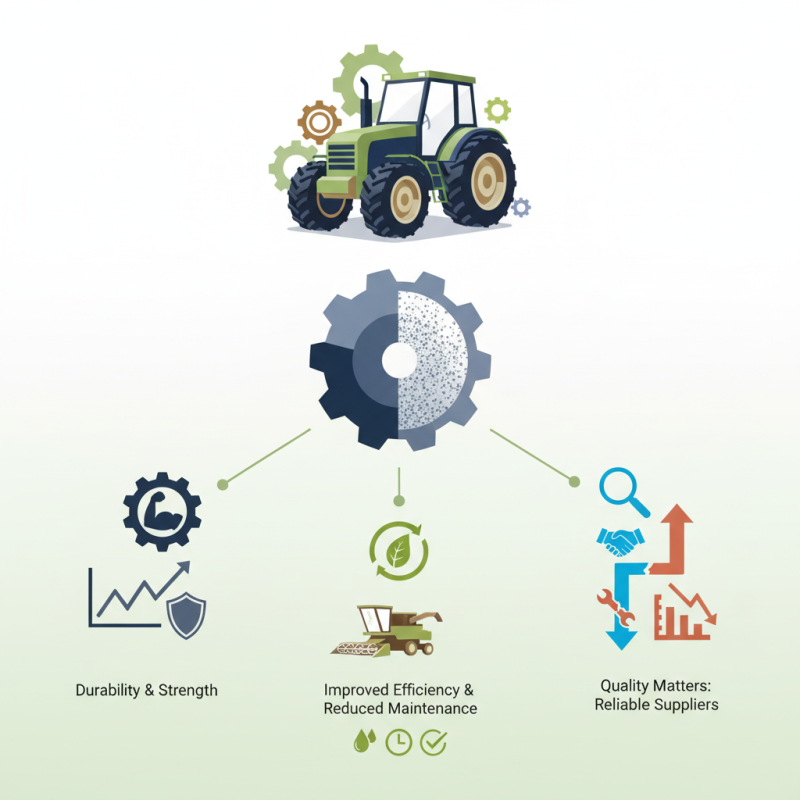
The process of producing sintered parts in agricultural machinery starts with raw materials. Typically, metal powders, like iron and steel, are mixed with additives. This mixture is then compacted into a desired shape using high pressure. The compacted part is called a green part, which retains the shape but lacks strength.
Next, the green part undergoes sintering. This process involves heating the part to a temperature below its melting point. During sintering, the metal particles bond together, increasing strength and density. The result is a durable and reliable component for agricultural machinery. This method reduces waste and allows for complex shapes that are difficult to achieve with traditional machining.
However, the sintering process is not without challenges. Temperature control is crucial. If too high, it can cause distortion. Too low, and the bonding will be insufficient. Monitoring these parameters requires expertise. Even small variations can lead to significant quality issues. Therefore, continuous refinement of the sintering process is essential for ensuring optimal performance in agricultural applications.