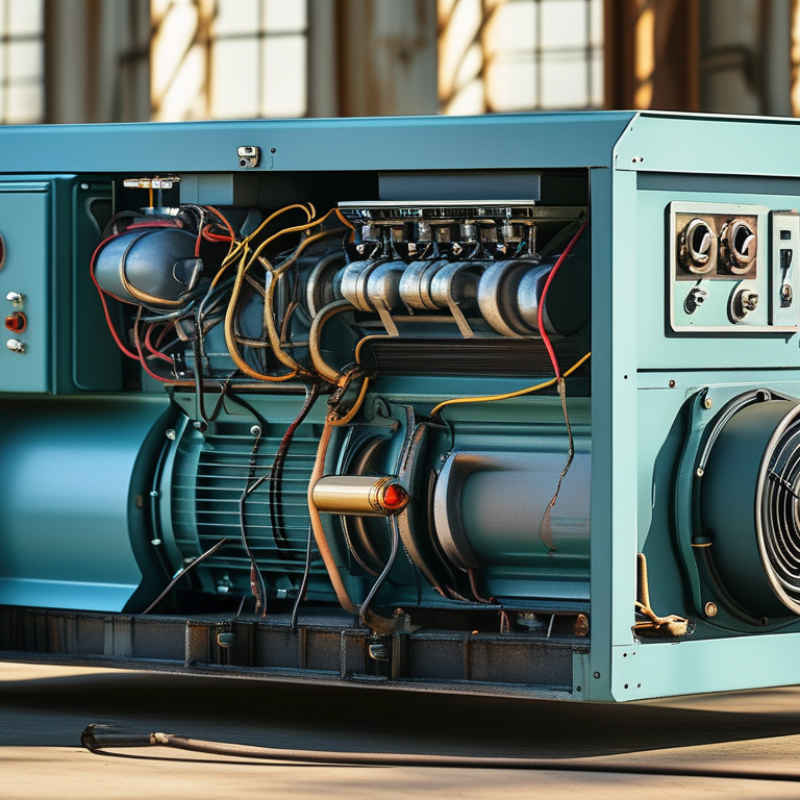
| Backup Generator | An engine-driven generator set that produces electrical power when the normal utility supply is unavailable. | Common configurations use diesel, natural gas, or liquid propane engines connected to an alternator. | Supplies standby or emergency loads after receiving a start command and reaching acceptable operating conditions. |
| Normal Power Source | The utility or primary electrical service used during normal operating conditions. | The automatic transfer switch continuously monitors voltage, frequency, and phase-related conditions as applicable. | Provides power to the connected load until an unacceptable outage or disturbance is detected. |
| Automatic Transfer Switch (ATS) | A switching device that transfers designated electrical loads between normal and alternate power sources. | An ATS typically includes source monitoring, control logic, electrically operated switching equipment, and mechanical or electrical interlocking. | Starts the generator when needed, transfers the load to the alternate source, and returns the load after normal power is stable. |
| Utility Failure Detection | The ATS identifies when the normal source falls outside programmed voltage, frequency, or phase limits. | Detection settings and time delays are adjustable according to the system design and equipment requirements. | Prevents unnecessary generator starts caused by brief voltage disturbances or momentary interruptions. |
| Engine Start Signal | A control signal sent by the ATS to the generator controller after a qualifying normal-power failure. | The generator controller initiates cranking, fuel delivery, ignition or combustion, and engine acceleration. | Begins the emergency power sequence without requiring manual intervention. |
| Generator Stabilization | The period during which the engine and alternator reach acceptable voltage and frequency before load transfer. | The required time depends on generator size, engine type, starting conditions, load characteristics, and control settings. | Ensures the alternate source is suitable for connection and reduces the risk of transferring loads to unstable power. |
| NFPA 110 Classification | NFPA 110 classifies emergency and standby power systems by performance and installation requirements. | Level 1 systems are used where failure of the equipment could result in loss of human life or serious injury; Level 2 systems support less critical applications. | Defines the level of reliability, maintenance, testing, and performance expected from the emergency power system. |
| NFPA 110 Type 10 Requirement | Type 10 identifies an emergency power supply system intended to restore power within the specified maximum time. | For applicable Level 1 emergency systems, power is required to be available at the transfer switch load terminals within 10 seconds after loss of the normal source, subject to the adopted edition and applicable requirements. | Sets the performance target for the complete emergency power sequence, not merely the engine’s start time. |
| Load Transfer | The ATS disconnects the designated load from the normal source and connects it to the generator source. | Most transfer switches use an open-transition sequence, while closed-transition designs briefly parallel sources only when permitted and properly engineered. | Restores power to emergency circuits such as life-safety, critical equipment, communications, or legally required standby loads. |
| Emergency Loads | Electrical loads selected to remain operational during a normal-source failure. | Examples may include emergency lighting, fire alarm systems, smoke control equipment, medical equipment, elevators, pumps, or communications systems, depending on the facility. | Allows essential functions to continue while nonessential loads remain disconnected or are connected through separate controls. |
| Generator Capacity | The maximum electrical output the generator can provide under specified operating conditions. | Capacity is commonly expressed in kilowatts (kW) or kilovolt-amperes (kVA), with ratings selected for continuous, prime, or standby operation. | Determines which loads can be supported and how the generator responds to motor starting, inrush current, and load additions. |
| Return to Normal Power | The ATS transfers the load back after the normal source returns and remains stable for the programmed retransfer delay. | A retransfer delay helps avoid repeated switching during unstable utility restoration. | Allows the generator to run without load for a cool-down period before the controller stops the engine. |
| Testing and Maintenance | Routine inspection, exercising, load testing, fuel-system checks, battery checks, and ATS testing verify system readiness. | Testing frequency and procedures depend on the applicable NFPA requirements, local regulations, facility risk category, and equipment instructions. | Helps confirm that the generator can start, stabilize, transfer loads, carry the required demand, and retransfer correctly during an actual outage. |