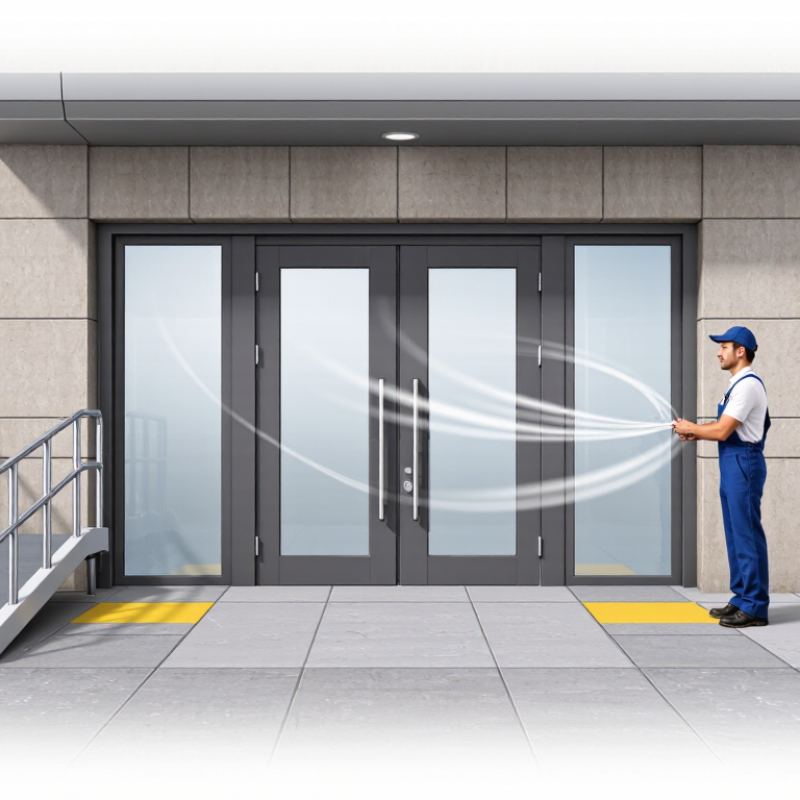
| Basic configuration | A double door has two door leaves installed in one opening and frame. The leaves may be equal or unequal in width. | It can provide a wider passage than a single-leaf door when both leaves are opened. | Confirm the clear opening with the intended leaves, hardware, and frame in place; the nominal overall width is not the usable passage width. |
| Active and inactive leaves | In many pairs, the active leaf is used for routine passage, while the inactive leaf is secured with bolts or other approved hardware. | This arrangement supports everyday access while allowing the full opening to be used when needed. | Choose hardware and operating arrangements that suit the building’s traffic, accessibility, and applicable egress requirements. |
| Wider movement of people and goods | Opening both leaves creates more passage space than using only one leaf. | Useful where occupants move carts, furniture, deliveries, or equipment through an opening. | Check the largest items and turning space involved, as well as corridor width and door-swing clearance. |
| High-traffic circulation | Both leaves can be opened to accommodate movement in or out of a space. | May help manage busy routes in areas such as assembly spaces, service areas, and larger interior openings. | Door closers, hold-open devices, and access-control equipment must be selected and installed for the intended use. |
| Meeting stiles and seals | The meeting stiles are the vertical edges where the two leaves come together. Astragals or seals may be used depending on the design. | These details can affect weather resistance, smoke control, sound separation, and the way the doors latch. | Use a tested, compatible door assembly when a rated or controlled opening is required; individual components do not establish an assembly rating. |
| Emergency egress | A paired opening may form part of an exit route when designed and equipped to meet applicable codes. | Suitable door arrangements can support occupant movement during an emergency. | Required clear width, direction of swing, latching, panic hardware, and accessible operation depend on the building, occupancy, and local regulations. |
| Space and swing clearance | Each hinged leaf needs space to swing, unless another permitted operating type is used. | A wider opening can improve access but may take up more floor area when the leaves are open. | Coordinate the swing with furniture, queues, adjacent doors, and accessible routes before choosing the configuration. |
| Unequal leaf widths | A pair can use one wider active leaf and one narrower secondary leaf. | This can provide a convenient everyday passage while keeping an additional opening available when required. | Verify that the active leaf alone provides the required clear width and that the secondary leaf can be released easily when needed. |
| Materials and durability | Commercial pairs are available in materials such as steel, aluminum, wood, and glazed constructions. | Material and construction affect durability, maintenance, appearance, and suitability for the environment. | Consider traffic frequency, exposure to weather, cleaning needs, security, and any fire or performance requirements. |
| When a double door is a good choice | It is most useful when a building needs a broad opening, flexible access, or regular movement of large items. | It can offer greater passage flexibility than a single door where the opening is used in different ways. | Compare the benefits with the extra hardware, coordination, maintenance, and floor space required for two leaves. |