Best Active Optical Cable Manufacturers in China?
Choosing the best Active Optical Cable manufacturers in China takes more than comparing prices or product catalogs. Buyers need to match each cable to the actual link: data rate, reach, connector type, device compatibility, and installation conditions. A 100-meter connection between switches has different needs from a short rack-to-rack link. Details matter. Clear specifications help prevent costly mismatches, but specifications alone cannot confirm consistent production quality.
This guide introduces practical ways to assess Chinese manufacturers, including product range, engineering support, customization, quality controls, and export experience. Look for current datasheets, defined test procedures, traceable production records, and sample cables that can be checked with your own equipment. Ask how the supplier handles compatibility questions, firmware requirements, and failures during operation. A polished website is not proof of dependable performance. Nor does a low quotation tell the whole story. Some useful information may be difficult to verify before ordering, so buyers should compare evidence and document their requirements carefully. The right choice depends on the application, not a universal ranking. These points offer a grounded starting place for finding a manufacturer that can support reliable links over time.
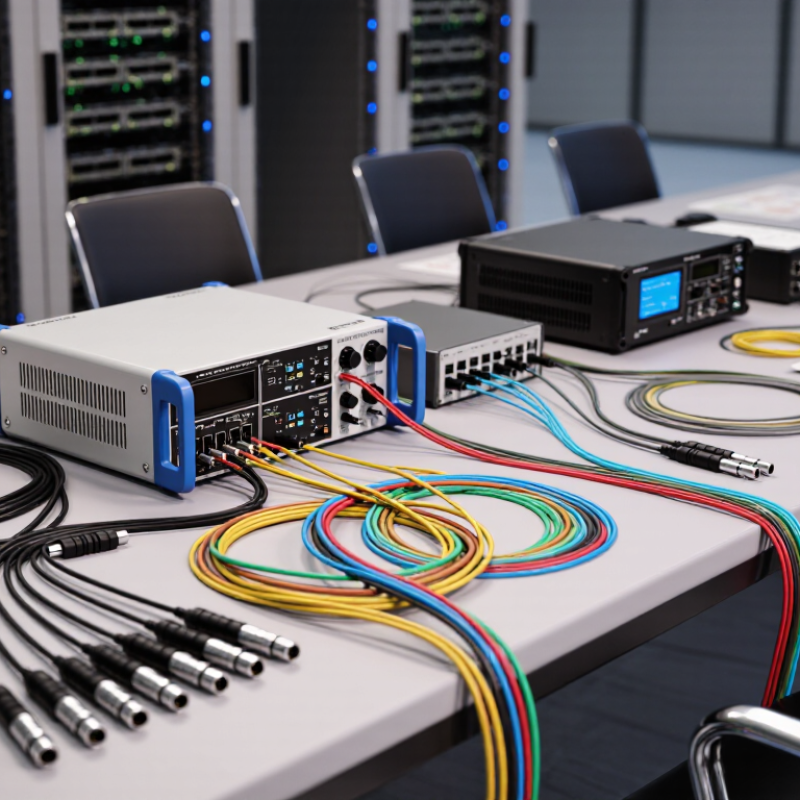
Active Optical Cables Explained: Fiber Links, Transceivers, and Cable Reach
An active optical cable combines optical fiber with transceiver circuitry built into both ends. Each end converts electrical signals into light, then converts received light back into electrical signals. The fiber carries data between them. No separate optical modules are needed. This integrated design can reduce cable weight and simplify dense connections between switches, servers, and storage equipment.
Reach depends on data rate, cable construction, and the equipment interface, so a single distance figure rarely tells the whole story. Check the cable’s specified length and compatibility before ordering. A cable that fits the port may still fail to link if its interface or supported speed is wrong. Watch the bend radius, too. A tight coil behind a rack door can strain the cable or affect performance. Small detail. Leave room for airflow and service access. For longer runs, compare the manufacturer’s reach rating at your exact speed, rather than assuming one rating applies to every configuration. It’s easy to overlook the host system’s requirements; I would verify them against the equipment documentation before deployment.
Active Optical Cable Reach: A Multimode Fiber Reference
Standardized maximum link reach over OM4 multimode fiber varies with Ethernet data rate and optical interface. AOC product lengths depend on the specific design and should be checked against its datasheet.
Values show standardized Ethernet optical-link reach on OM4 multimode fiber; they are reference points, not guaranteed lengths for every active optical cable.
USB4 40 Gbps and HDMI 2.1 48 Gbps: Key AOC Market Benchmarks
USB4 at 40 Gbps and HDMI 2.1 at 48 Gbps are useful benchmarks when comparing active optical cables (AOCs). They describe different interfaces, so the figures are not directly interchangeable. A cable rated for one standard may not support every device feature or display mode. Check the exact resolution, refresh rate, and signal format required. Numbers matter.
For long runs through a meeting room or control space, fiber can reduce signal loss and cable bulk. Yet AOC performance depends on its electronics, construction, and compatibility at both ends. A directional cable must be installed with its source and display connectors correctly placed. This detail is easy to miss. Manufacturer evaluation should include documented test conditions, supported formats, connector quality, and stable operation at the intended length. A specification sheet alone cannot prove reliable performance.
Tips: Test the actual source, display, and cable length together. Confirm USB4 data needs separately from HDMI video needs. Check bend limits before installation, and leave a little slack near connectors. Retest after routing; a tidy cable path can still introduce a tight bend.
400GbE AOCs and IEEE 802.3bs: Data-Center Applications and Requirements
For 400GbE data-center links, active optical cables can connect switches, servers, and storage across racks. They combine optical transmission with integrated electrical-to-optical conversion, reducing the need for separate transceivers. IEEE 802.3bs defines 400GbE physical-layer options and signaling requirements; an AOC must match the relevant interface, not just the headline speed. Short sentences matter. So does the fine print.
Before evaluating manufacturers in China, confirm the cable’s supported reach, connector type, lane configuration, and interoperability with your equipment. Ask for test data covering bit-error performance, power consumption, and operation across the intended temperature range. Check bend-radius guidance too: tight cable paths behind a rack can cause avoidable installation problems. A product that performs well on a bench may need further validation in a crowded, warm cabinet. That distinction is easy to miss.
Tips: Request samples and verify link stability under your own switch settings and airflow conditions. Review test reports, production controls, and traceability. If documentation is vague, pause and ask for evidence. One overlooked detail can become a costly service call.
How to Assess Chinese AOC Manufacturers: Testing, Compliance, and Capacity
When assessing Chinese active optical cable manufacturers, ask for test evidence tied to the exact cable length, data rate, and connector type you plan to buy. AOC samples should pass bit-error-rate testing, eye-diagram checks, and operation across the stated temperature range. Request raw results, not only a pass certificate. The Ethernet Alliance’s 2024 Ethernet Roadmap tracks 400GbE, 800GbE, and emerging 1.6TbE links, showing why test plans must match the intended generation. A cable that works on a short bench run may fail in a crowded rack. Small details matter.
Check compliance documents for model numbers, test dates, and issuing laboratories. Optical safety, restricted-substance declarations, and connector inspection records should be traceable to the shipped product. LightCounting’s 2024 optical transceiver market forecast highlights 800G and 1.6T as growth areas; buyers should ask whether a supplier’s equipment can validate those rates, rather than relying on future capacity claims. Then inspect the factory’s production controls: burn-in racks, calibrated test instruments, lot-level traceability, and documented yield trends. Ask for a capacity plan during peak demand. A large floor can still hide a bottleneck. I would also request a small pilot lot before scaling up; it costs time, but datasheets cannot reveal every compatibility issue.
Best Active Optical Cable Manufacturers in China: Compare Products and Support
When comparing active optical cable manufacturers in China, match the cable to the actual rack layout, not just the headline speed. Cisco’s Annual Internet Report forecast global IP traffic would reach 396 exabytes per month by 2022. That forecast is dated, but it illustrates why data-center links need careful capacity planning. Bigger numbers alone do not guarantee a better fit.
Compare supported data rates, available lengths, connector types, power consumption, and operating-temperature ranges. Ask for test results, including bit-error-rate measurements, and confirm compatibility with your switches and network interface cards. IEEE 802.3 specifications help define Ethernet interfaces, but they do not prove that every cable works with every host. Check the details.
Support matters just as much. Request a written warranty, a clear replacement process, and guidance for diagnosing link failures. Ask whether the supplier can provide sample testing and traceable production records. A quick response is useful; a documented answer is better. No scorecard catches every rack. One gap remains: published test conditions may not match your installation. Before a volume order, test sample cables at the intended length, data rate, and temperature, then record the results.
