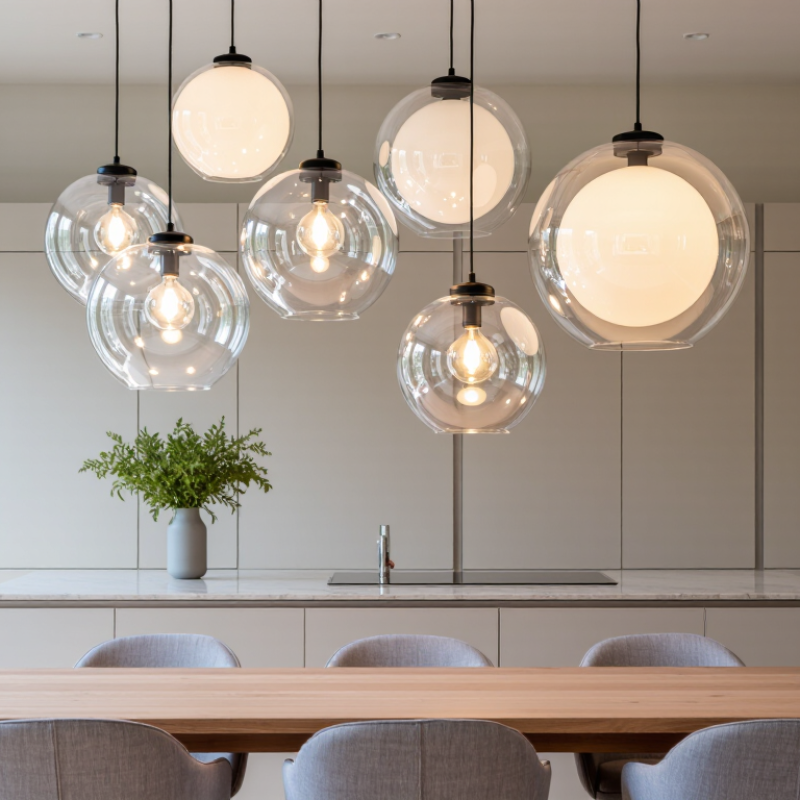
A bubble pendant is defined less by a single style than by its glass, rounded form, and the way it spreads light. Clear glass keeps the bulb visible and creates crisp reflections on nearby walls. Opal or lightly frosted glass softens the source, which can feel easier on the eyes above a dining table. Glass thickness and small surface variations also affect the result. They are not always flaws, but uneven bubbles may look distracting when lit.
Shape changes where the light goes. A round globe sends light in several directions, while a wider, shallow shade can cast more light across a tabletop. Clustered globes add visual depth, but they may create overlapping highlights. In a room with glossy cabinets or a polished table, that sparkle can become busy. I still find this easy to underestimate when judging a fixture in a showroom.
Light distribution depends on the bulb as well as the glass. A clear shade may reveal a bare bulb, so a dimmable, warm-toned bulb can make evening light gentler. Check the pendant from seated eye level, not only from across the room. Small details matter. A bubble pendant can look airy overhead, yet feel glaring if it hangs too low or shines directly into the usual line of sight.