| Gravity Filler | Small and medium cans; commonly 200–1,000 mL | Product flows into the can under gravity from an elevated tank. | Approximately 10–40 cans/minute | About ±1–3%, depending on product and can design | Low-viscosity liquids such as water, juice, edible oil, sauces and liquid detergents | Cans are positioned below filling nozzles. Valves open for a timed period, allowing the liquid level to rise before the valves close. | Simple and economical, but filling speed and accuracy are affected by product viscosity and foaming. |
| Volumetric Piston Filler | Small, medium and large cans; commonly 100 mL–5 L | A piston draws a measured volume and discharges it into each can. | Approximately 10–60 cans/minute | About ±0.5–1% | Thick products such as tomato paste, honey, cream, sauces and some personal-care products | The piston retracts to load a preset volume, then moves forward to push the product through the filling nozzle. | Provides accurate volumetric dosing; piston size and valve design must match the product viscosity. |
| Overflow Filler | Usually narrow-neck cans or containers requiring a uniform visible level | Excess product returns to a supply tank after the target level is reached. | Approximately 10–50 cans/minute | Very consistent visual fill level; actual volume varies with container dimensions | Foamy or low-to-medium-viscosity liquids, including beverages, shampoos and cleaning liquids | A sealing nozzle enters the can. Product is pumped in while excess liquid flows back through a return passage. | Produces an attractive, even liquid level but is not the best option when exact volume by mass is the primary requirement. |
| Counter-Pressure Filler | Aluminum or steel beverage cans, commonly 200–500 mL | The can is pressurized with gas before carbonated liquid is introduced. | Approximately 20–200 cans/minute | Typically around ±1–2% in a controlled process | Carbonated water, soft drinks, beer and other gas-sensitive beverages | The can is sealed against the valve, flushed or pressurized with carbon dioxide, filled at balanced pressure, and then depressurized in a controlled manner. | Pressure, temperature and dissolved-gas control are essential to reduce foaming and product loss. |
| Isobaric Filler | Standard beverage cans, commonly 250–500 mL | Filling takes place at nearly equal pressure in the tank and can. | Approximately 30–300 cans/minute | Typically around ±1–2% in a properly adjusted system | Beer, sparkling water, carbonated soft drinks and other pressurized beverages | The can is lifted to the filling valve, pressurized to match the product tank, filled through a liquid passage, and vented after filling. | Maintains carbonation better than atmospheric filling, but requires accurate pressure balancing and sanitary design. |
| Hot-Fill Machine | Metal cans and other heat-resistant containers, commonly 200 mL–1 L | Product is filled at an elevated temperature selected for the formulation. | Approximately 20–150 cans/minute | About ±1–2%, depending on temperature and dosing system | Acidic beverages, fruit preparations, sauces and other heat-processable products | The product is heated, transferred through sanitary piping, filled while hot, and then closed promptly to support the planned thermal process. | Product temperature, container heat resistance and validated processing time must be controlled carefully. |
| Aseptic or Ultra-Clean Filler | Specially prepared cans and containers; format depends on the validated line | Sterilized product and packaging are combined in a controlled hygienic environment. | Approximately 20–300 cans/minute | Generally around ±1–2% when correctly calibrated | Long-life beverages, liquid foods and products requiring extended shelf life | The product, machine contact surfaces and containers undergo defined sanitation or sterilization steps before filling and sealing under controlled conditions. | Requires validated sanitation procedures, hygienic engineering, monitoring and strict operator practices. |
| Net-Weight Filler | Small to large cans; commonly 200 mL–5 L | Load cells measure the actual mass entering each can. | Approximately 10–80 cans/minute | Often within ±0.5–1% after calibration | Products sold by weight, including sauces, powders, granules and viscous foods | An empty can is placed on a weighing platform. The filling valve closes when the programmed target weight is reached. | Compensates for density variation better than purely volumetric systems, but requires stable weighing conditions. |
| Powder Can Filler | Metal cans and composite cans, commonly 50 g–2 kg | An auger, vacuum system or dosing cup measures dry product into the can. | Approximately 10–80 cans/minute | About ±1–3%, depending on powder flowability | Milk powder, coffee, spices, nutritional powders and pharmaceutical powders | The can is indexed beneath a dosing head. A rotating auger or measured dosing chamber dispenses the set quantity before the can moves to sealing. | Dust extraction, product aeration, bridging and powder density must be managed for consistent dosing. |
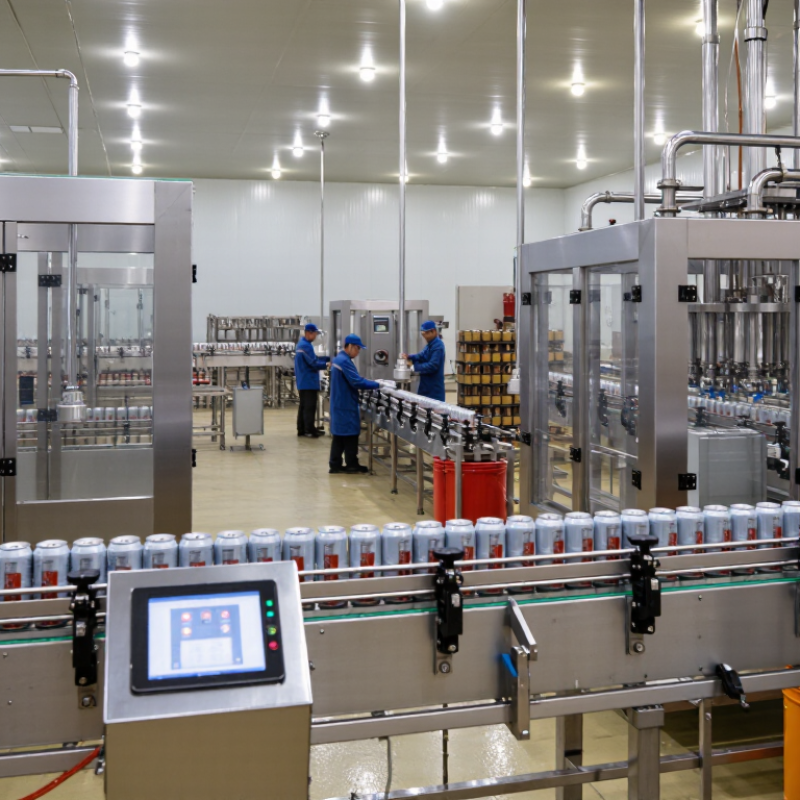
| Rotary Can Filler | High-volume beverage cans, commonly 200–500 mL | Multiple filling valves operate continuously around a rotating carousel. | Approximately 100–1,500 cans/minute | Typically around ±1–2% with correct setup | Beer, soft drinks, sparkling water and high-volume liquid products | Cans enter through an infeed conveyor, are lifted to individual valves, filled during carousel rotation, and discharged to the seamer. | Offers high throughput, but changeovers, maintenance and valve synchronization are more complex. |
| Inline Can Filler | Small to medium production formats; commonly 100 mL–5 L | Rows of cans stop or move beneath a fixed bank of filling nozzles. | Approximately 10–120 cans/minute | About ±0.5–3%, depending on filling technology | Food, beverage, chemical and household-liquid applications | A conveyor spaces the cans, sensors confirm their position, and several nozzles fill one row before the cans continue to the next station. | Flexible and accessible for cleaning, but generally less compact and slower than a rotary system at very high output. |