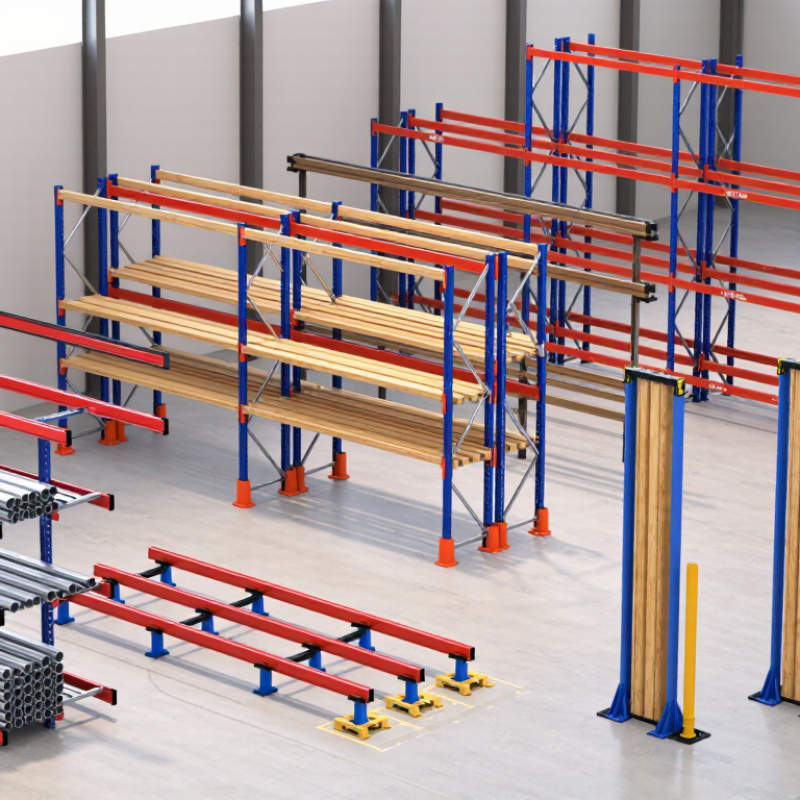
| Single-sided cantilever | Storage along walls or at the edge of a storage area. | Arms project from one side of the upright columns; requires less aisle frontage than a back-to-back layout. | Confirm the floor can support the rack and its loads. Install anchors and any required bracing to the approved rack design. | Check column plumb, anchors, braces, and arms for impact damage or loosening. |
| Double-sided cantilever | Central warehouse rows where access is needed from both sides. | Arms extend from both faces of the columns, increasing storage access from a shared row. | Keep the rack configuration and load plan balanced on both sides as specified by the rack design; protect aisles for handling equipment. | Inspect both faces of each row, including connections, bracing, anchors, and areas exposed to equipment contact. |
| Light-duty cantilever | Relatively light, long items such as trim, small tubing, and narrow boards. | Typically uses a lighter rack construction; arm spacing and length should match the stored material. | Use only within the capacity shown on the rack’s load documentation. Support long items across enough arms to prevent excessive sagging. | Look for bent arms, damaged connectors, missing pins or retainers, and changes to the load signage. |
| Heavy-duty cantilever | Heavy or bulky materials such as steel sections, large pipes, and timber packs. | Designed for higher loads when engineered for the application; actual capacity varies with the rack design and loading arrangement. | Have the rack configuration, floor conditions, anchors, and load ratings confirmed for the intended loads before use. Do not estimate capacity by appearance. | Arrange prompt assessment of impact damage, deformation, loose connections, or anchor movement by a qualified person. |
| Structural-steel cantilever | Applications requiring a rack system engineered around demanding loads or operating conditions. | Built from structural steel components; configuration and capacity depend on the selected design and component specifications. | Follow the approved drawings and component specifications. Do not mix components or modify the rack without design approval. | Inspect welds, bolted connections, braces, columns, and protective coatings; document damage and repairs. |
| Roll-formed cantilever | Warehouse storage where a compatible modular rack configuration meets the load requirements. | Uses formed steel components; arm positions may be adjustable on compatible systems. | Verify that uprights, arms, braces, and connectors are designed to work together. Reposition arms only as permitted by the rack instructions. | Check formed members for dents, twisting, corrosion, and damaged connection points; replace only with approved compatible parts. |
| Outdoor cantilever | Covered yards or exposed storage areas for weather-tolerant long materials. | May use corrosion-resistant finishes and weather-suitable components; outdoor suitability depends on site exposure and design. | Account for the site’s foundation, drainage, corrosion exposure, and applicable environmental loads. Use a design approved for the location. | Check regularly for rust, coating damage, standing water, anchor deterioration, and effects of weather exposure. |