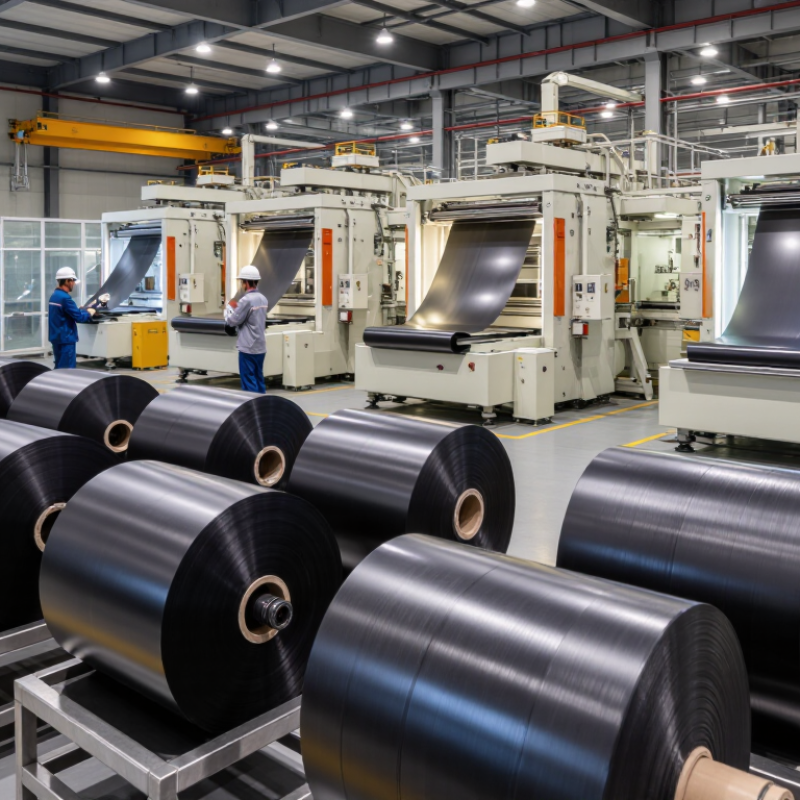
| Common product forms | Carbon fiber products include prepreg laminates, fabric-reinforced parts, pultruded profiles, filament-wound tubes and pressure vessels, and molded components. | The appropriate form depends on part geometry, required strength, production volume, and whether the design needs continuous fibers in specific directions. |
| Reinforcement materials | Carbon fiber is supplied as continuous tow, woven or stitched fabric, and chopped fiber. Tow size and fiber grade vary by application. | Continuous fibers are suited to load-bearing parts; chopped fibers are more compatible with compound molding and complex shapes. |
| Matrix materials | Thermoset epoxy is widely used in structural composites. Other thermoset and thermoplastic matrices are also used, depending on processing and service requirements. | Matrix selection affects cure or forming conditions, toughness, chemical resistance, operating temperature, and repair options. |
| Typical manufacturing processes | Common processes include hand lay-up, vacuum bagging, autoclave curing, compression molding, resin transfer molding (RTM), pultrusion, and filament winding. | Autoclave processing can produce high-quality laminates; pultrusion suits constant cross-sections; filament winding suits tubular and vessel-shaped parts. |
| Fiber orientation | Unidirectional laminates place most fibers along one direction, while woven fabrics provide reinforcement in intersecting directions. Multiaxial lay-ups combine plies at different angles. | Orientation and stacking sequence are selected to match the expected load paths. A part’s performance cannot be inferred from fiber content alone. |
| Material density | Carbon fiber density is commonly around 1.75–1.95 g/cm³. Many carbon-fiber/epoxy laminates are approximately 1.5–1.6 g/cm³, depending on fiber and resin content. | Actual component weight depends on laminate design, resin content, voids, inserts, coatings, and hardware. |
| Mechanical properties | Carbon fiber grades vary substantially. Standard-modulus fibers commonly have tensile moduli around 230–250 GPa; higher-modulus grades are available. Fiber values are not the same as finished-laminate properties. | Finished-part strength and stiffness depend on fiber grade, orientation, lay-up, cure quality, geometry, and test method. Request laminate or component test data for design decisions. |
| Quality considerations | Key checks can include fiber orientation, dimensions, surface finish, laminate thickness, voids, cure condition, and mechanical properties. | Inspection methods may include visual checks, dimensional measurement, ultrasonic testing, and destructive testing, selected according to part requirements. |
| Testing references | ISO 527-4 and ISO 527-5 cover tensile properties of fiber-reinforced plastic composites. ASTM D3039/D3039M is a common tensile-test method for polymer-matrix composite materials. | Test results are meaningful when the specimen preparation, conditioning, orientation, and test method are reported alongside the values. |
| Supplier evaluation | For a China-based manufacturer, buyers commonly review process capability, material traceability, inspection records, sample results, production capacity, and export documentation. | Confirm that the supplier’s equipment and process match the part design, and agree on acceptance criteria and documentation before production. |