| Interior Size | Cats need enough room to turn around, dig, cover waste, and adopt a comfortable posture. | Choose a box approximately 1.5 times the cat’s body length, measured from the nose to the base of the tail, whenever space allows. | Large cats, senior cats, and cats that dislike confined spaces. | Larger boxes require more floor space and more litter. | Very High |
| Entry Height and Opening | A low entry improves access, while a sufficiently wide opening reduces hesitation and accidental mess. | Use a low-front design for kittens, elderly cats, or cats with limited mobility. Avoid narrow openings that restrict shoulder movement. | Kittens, senior cats, overweight cats, and cats with joint problems. | Very low sides may allow more litter to be kicked out. | Very High |
| Sidewall Height | Higher walls help contain urine spray and scattered litter, especially for cats that dig vigorously. | Select higher sides while keeping the entrance easy to access. A removable lower entry panel can provide a useful compromise. | High-peeing cats, active diggers, and households with hard flooring. | High-sided boxes can be difficult for mobility-limited cats to enter. | High |
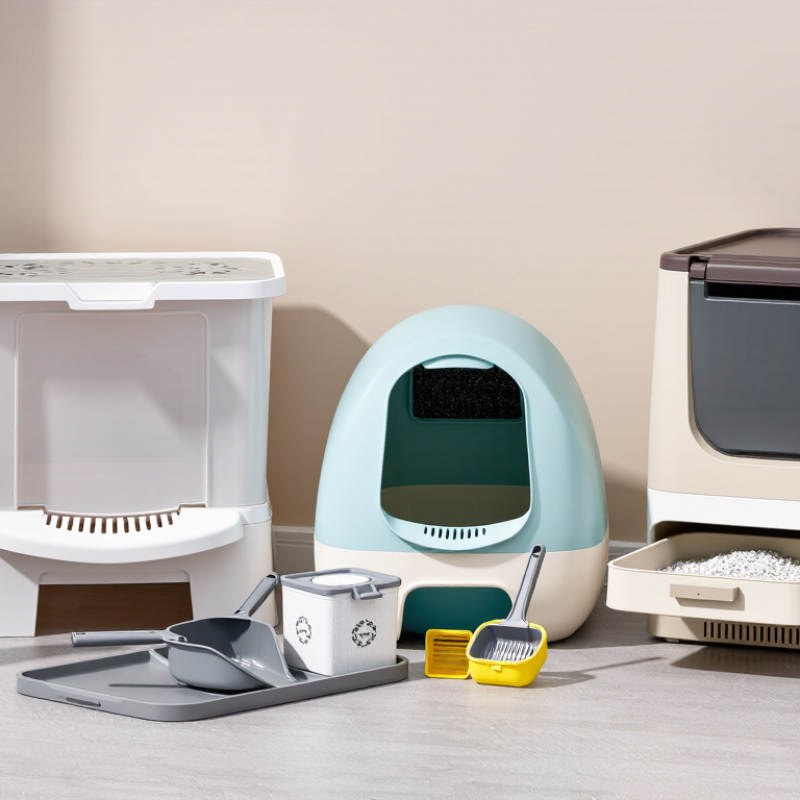
| Box Type | Open, covered, top-entry, sifting, and automated designs offer different balances of accessibility, odor control, cleaning effort, and cost. | Start with an open or semi-open design unless the cat already accepts enclosed spaces. Choose top-entry only when the cat can comfortably jump and climb. | Open designs suit most cats; covered designs suit homes needing more privacy; automated designs suit owners seeking convenience. | More enclosed or mechanical designs may be harder to inspect, clean, or accept. | High |
| Material and Surface | Smooth, non-porous surfaces resist odor absorption and are easier to wash than heavily textured surfaces. | Look for durable plastic with rounded corners, minimal seams, and a surface that can tolerate routine washing. | All households, especially multi-cat homes. | Very light plastic may slide, flex, or crack more easily. | High |
| Odor Management | Odor control depends primarily on prompt waste removal, adequate ventilation, litter type, and box cleanliness. | Prioritize easy daily scooping and washable parts. A replaceable carbon filter may reduce odor but cannot replace cleaning. | Small apartments, odor-sensitive households, and multi-cat homes. | Sealed covers may reduce airflow and some cats may avoid strongly scented environments. | High |
| Cleaning and Waste Removal | Simple maintenance encourages consistent hygiene and helps owners notice changes in urine or stool. | The box should allow easy scooping, emptying, washing, and drying without inaccessible cavities. | Busy owners, multi-cat homes, and first-time cat owners. | Sifting or automatic mechanisms can reduce routine work but add parts that need inspection. | Very High |
| Stability and Spill Control | A stable base prevents tipping, sliding, and litter spills when the cat enters, exits, or digs. | Prefer a wide footprint, non-slip feet, a secure frame, and a compatible litter mat placed outside the entrance. | Energetic cats, tiled floors, and homes with children or other pets. | A wider or heavier design is less convenient to move. | High |
| Noise and Moving Parts | Unexpected noise can discourage use, particularly in cautious or newly adopted cats. | For powered models, check operating noise, manual-use capability, safety sensors, and whether the mechanism can be disabled. | Noise-sensitive cats and households where the box is near sleeping areas. | Mechanical convenience may introduce noise, maintenance, and additional failure points. | Medium to High |
| Power and Voltage Compatibility | Powered boxes may not work safely with every country’s electrical supply or plug format. | Confirm the rated voltage, frequency, plug type, adapter requirements, warranty coverage, and local replacement-part availability before purchase. | International buyers considering automated or sensor-equipped models. | Non-powered boxes avoid electrical compatibility issues but provide fewer automated functions. | Very High for Powered Models |
| Litter Compatibility | Some sifting and automated systems work only with particular litter textures, clumping behavior, or pellet sizes. | Check the acceptable litter type and particle size. Verify that the selected litter is safe for the cat and supported by the box design. | Owners with an established litter preference or limited local availability. | Restricted litter choices can increase running costs or make supplies harder to source internationally. | High |
| Multi-Cat Capacity | Multiple cats increase usage, waste volume, odor, and the risk of competition over access. | Provide one box per cat plus one additional box where possible, place them in separate accessible locations, and choose large boxes that are easy to clean. | Homes with two or more cats. | More boxes require more space, litter, and maintenance. | Very High |
| Replacement Parts and After-Sales Support | Filters, liners, sensors, power adapters, seals, and moving components may need replacement during the product’s life. | For international purchases, verify spare-part availability, return procedures, warranty duration, customer support language, and shipping costs. | Global buyers, remote households, and purchasers of powered products. | Products with more support infrastructure may have a higher initial purchase price. | High |
| Shipping Size and Total Cost | A large box can incur higher international shipping, import duties, storage, and return costs. | Compare the delivered cost, package dimensions, local taxes, customs treatment, return shipping, and ongoing consumables—not only the advertised price. | International buyers and customers in regions with limited local pet-product distribution. | Compact products may compromise interior room or spill protection. | High |