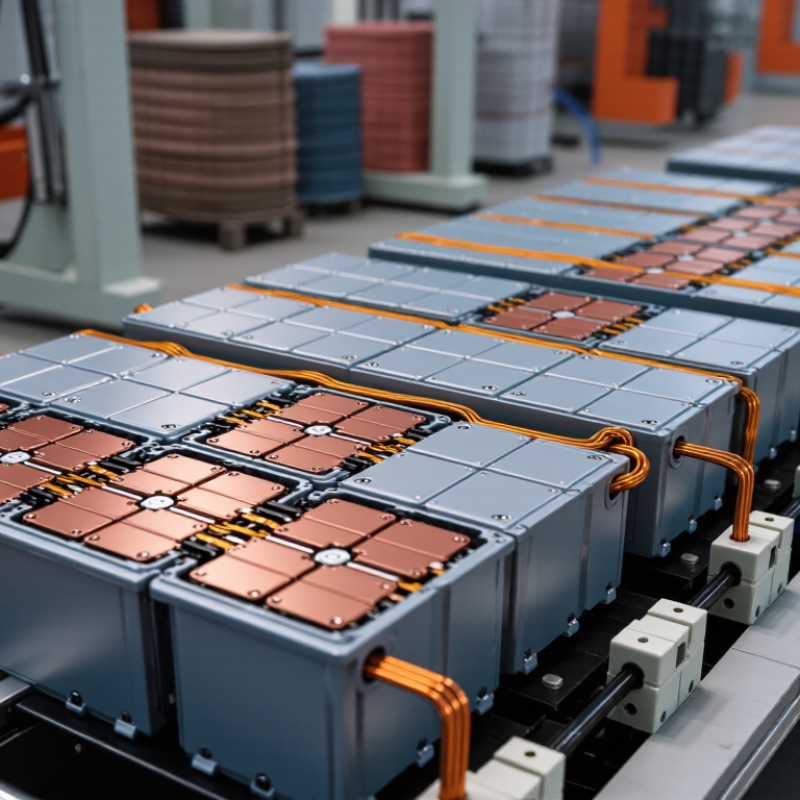
| 1. Automotive high-volume integrator | Designed for repeat production of battery interconnects, including stamped conductors, insulation components, and assembly operations. May support automated inspection and traceability. | Request a current IATF 16949 certificate if automotive quality-system approval is required, plus ISO 9001 scope, process-control plans, and product-specific validation records. A certificate should be checked for the relevant production site and scope. | Automotive battery packs and other high-volume vehicle programs in the regions served by the supplier. | Programs needing production scalability, controlled processes, and automotive supplier documentation. | Confirm approved materials, change-control procedures, traceability level, annual capacity, tooling ownership, and launch support. |
| 2. Precision stamping specialist | Focuses on stamped copper or aluminum conductors, formed tabs, and repeatable geometries. Part complexity and achievable tolerances depend on the material, thickness, tooling, and design. | Request a documented quality system, inspection methods, material certificates, and capability studies for critical dimensions. ISO 9001 is a quality-management-system standard; it does not by itself certify a particular part. | Battery modules, vehicle electronics, industrial power assemblies, and other applications requiring formed conductive parts. | Designs with high part counts or detailed stamped features. | Review sample parts, burr limits, dimensional reports, plating controls, tool-maintenance plans, and production scrap controls. |
| 3. Laminated busbar specialist | Builds stacked conductive layers separated by insulation, an approach used in applications where compact routing and controlled electrical spacing are important. Construction options depend on the design and operating conditions. | Request insulation-material specifications, dielectric test methods, and test reports for the finished assembly. IEC 60664-1 addresses insulation coordination for low-voltage systems; confirm its applicability to the product and application rather than treating it as a general manufacturer certificate. | EV power distribution, inverters, battery systems, and industrial power electronics. | Assemblies with space constraints or multiple conductors routed in a compact stack. | Check working voltage, clearances and creepage distances, temperature limits, insulation compatibility, and validation under actual operating conditions. |
| 4. Flexible copper interconnect manufacturer | May produce flexible copper links or formed connections for locations where movement, assembly access, or vibration accommodation is part of the design. Flexibility is product- and geometry-dependent. | Request conductor-material and plating documentation, joining-process qualifications, resistance measurements, and mechanical or thermal test results relevant to the application. | Battery packs, power electronics, industrial equipment, and selected charging-system assemblies. | Connections where a rigid conductor is difficult to package or may transfer unwanted mechanical loads. | Verify current rating, temperature rise, bend or fatigue performance where relevant, joint design, corrosion protection, and assembly instructions. |
| 5. aluminum busbar and lightweighting specialist | Works with aluminum conductors and associated joining or surface-treatment processes. Aluminum can reduce conductor mass, but the design must account for conductivity, joint behavior, and material compatibility. | Request alloy and temper identification, incoming-material records, joining-process controls, and corrosion or thermal test data. Ask how dissimilar-metal connections are designed and protected. | Vehicle battery systems, energy storage, industrial distribution, and other weight- or cost-sensitive power applications. | Projects assessing aluminum conductors as an alternative to copper. | Compare the complete assembly—not material price alone—including conductor dimensions, joint resistance, connector compatibility, and lifecycle performance. |
| 6. Battery-pack interconnect and assembly specialist | Can combine conductors with sensing, insulation, connectors, or other pack-level features, depending on its design and assembly scope. Integration depth varies by supplier. | Request site-specific quality-system documentation, electrical test records, traceability samples, and evidence that safety-critical characteristics are controlled. ISO 14001 concerns environmental management and is separate from product safety or automotive quality certification. | EV battery packs, stationary energy storage, and battery-module assembly programs. | Buyers seeking a more integrated interconnect assembly rather than a standalone metal part. | Clarify design responsibility, interfaces with cells and battery-management systems, end-of-line testing, data retention, and responsibility for sub-suppliers. |
| 7. Regional custom busbar fabricator | Typically supports application-specific fabrication and smaller or more varied production runs. Available processes may include cutting, bending, drilling, plating, insulation, or assembly; confirm the actual in-house scope. | Request the quality-system certificate and scope for the manufacturing site, material traceability, inspection records, and any customer-specific approvals. Confirm whether special processes are performed in-house or subcontracted. | Regional EV supply chains, industrial power distribution, charging equipment, and prototype or service programs. | Buyers prioritizing local engineering support, shorter supply routes, or lower-volume customization. | Check capacity at the required volume, subcontractor controls, lead-time assumptions, export capability, and continuity plans for critical materials. |