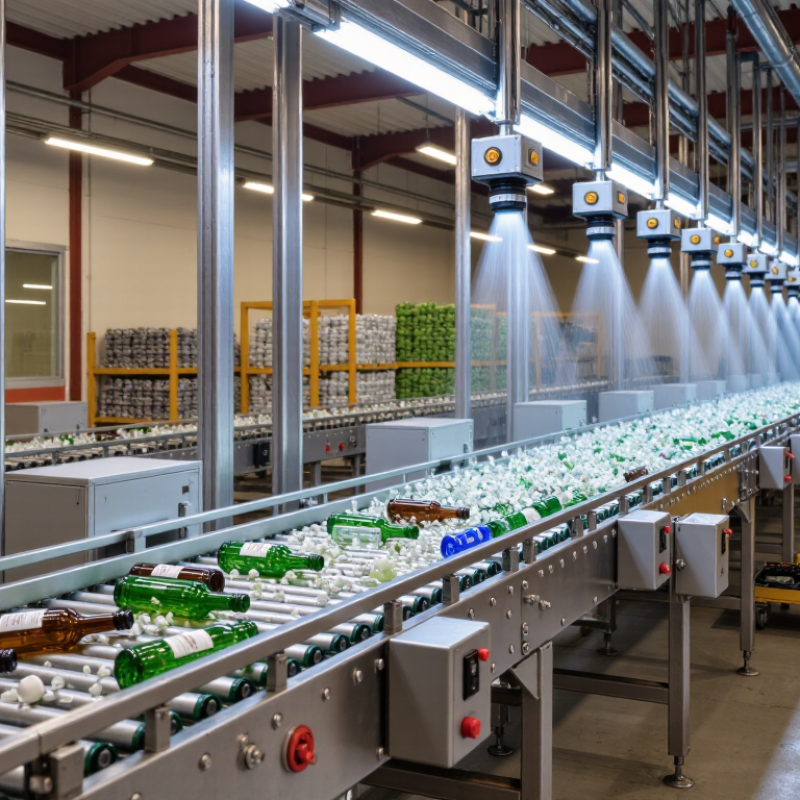
| 1 | Optical Color Sorter | Glass cullet by visible color, commonly clear, green, and amber. | Visible-light cameras classify pieces; air jets eject material selected for removal. | Facilities producing color-separated cullet for remelting or other color-sensitive uses. | Results depend on clean, well-presented material. Labels, dirt, coatings, and overlapping pieces can affect detection. | Confirm the accepted particle-size range, color categories, detection accuracy on your sample, and air-compressor requirements. |
| 2 | Ceramic, Stone, and Porcelain Sorter | Ceramics, stones, and porcelain (CSP) mixed into glass cullet. | Camera- or sensor-based detection identifies objects with properties that differ from glass; ejection is commonly pneumatic. | Glass recycling lines where CSP contamination must be reduced before cullet is sold or remelted. | Small, partially hidden, or visually similar contaminants can be harder to detect; performance varies with feed condition and particle size. | Ask for a test using representative feed and define the target contaminant size and acceptable residual level. |
| 3 | Sensor-Based Non-Glass Contaminant Sorter | Selected non-glass materials, such as certain plastics or other identifiable contaminants in a glass stream. | Depending on the application, sensors may use near-infrared, visible imaging, or a combination of detection methods. | Facilities needing an additional cleaning stage for non-glass items not adequately removed by screens or manual picking. | One sensor does not identify every material. Dark, dirty, layered, or overlapping objects may reduce sorting effectiveness. | Verify which specific contaminants the sensor can distinguish and whether the system is designed for your glass fraction and feed size. |
| 4 | Magnetic Separator | Ferrous metals, including iron and steel pieces, from a glass stream. | A permanent magnet or electromagnet attracts ferrous material as the feed passes the separation zone. | As a protective and cleaning stage for removing ferrous metal before downstream equipment or cullet processing. | Does not remove non-ferrous metals such as aluminum, and performance depends on material presentation and separator placement. | Check belt or chute configuration, magnet strength and working distance, cleaning method, and the expected metal load. |
| 5 | Eddy-Current Separator | Conductive non-ferrous metals, particularly aluminum, from suitable mixed-material streams. | A rotating magnetic field induces currents in conductive metals, creating a force that separates them from the main flow. | Lines where non-ferrous metal contamination remains after screening and ferrous-metal removal. | It is not a glass color sorter and is generally most useful when the feed is presented as a suitable, reasonably even layer. | Confirm the minimum recoverable metal size, rotor and belt configuration, feed-layer requirements, and compatibility with your stream. |
| 6 | Vibrating or Trommel Screen | Material by particle size; separates undersize and oversize fractions rather than identifying glass by color or composition. | Screen openings retain or pass particles according to their size and the selected screen arrangement. | Pre-sorting and size classification to create more consistent feed for optical or other downstream equipment. | Does not distinguish glass from contaminants of similar size. Wet, sticky, or irregular feed may reduce screening efficiency. | Choose screen openings based on the required product fractions, and assess throughput, blinding risk, maintenance, and dust control. |
| 7 | Air Classifier or Aspiration System | Lightweight material, such as paper, film, and other low-density material, from heavier glass fragments. | Controlled airflow carries lighter fractions away from heavier material; collection equipment captures the separated light fraction. | Pre-cleaning or polishing stages where lightweight contaminants are present in the glass feed. | Separation is based mainly on aerodynamic behavior, not material identity; dust and very small glass fragments require attention. | Review airflow adjustment, dust collection, fire and housekeeping requirements, and the expected amount of lightweight material. |