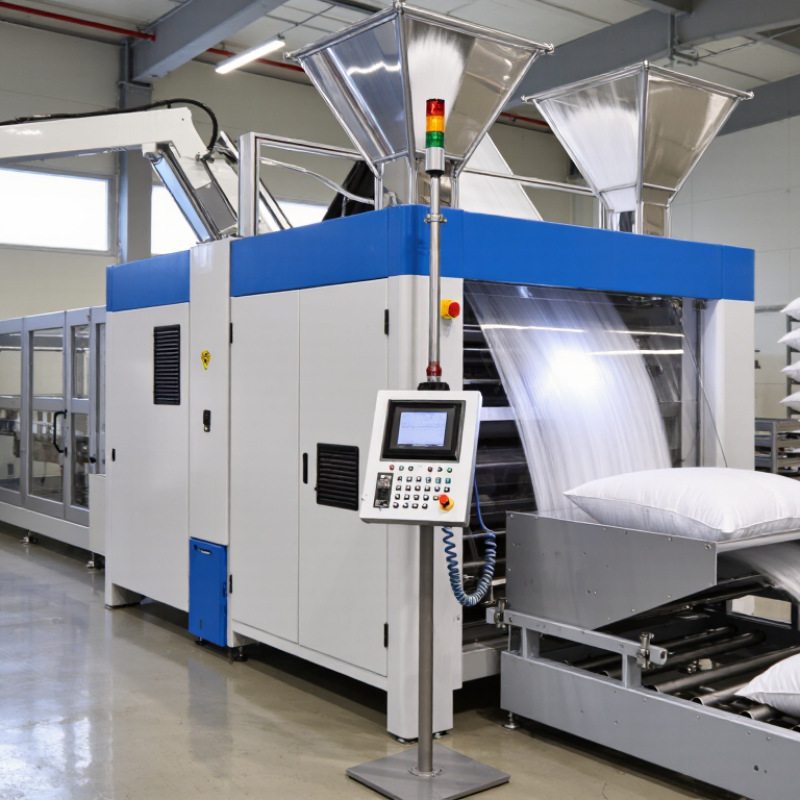
Buyers comparing seven polyester fiber pillow filling machines for sale should start with the required output and fiber type. Textile Exchange’s Materials Market Report 2024 estimates that global fiber production reached 124 million tonnes in 2023, with polyester representing about 57 percent. This scale makes consistent fiber handling important, but it does not mean every workshop needs a full production line.
A bale opener loosens compressed fiber.
A carding-and-feeding unit separates clumps.
A pneumatic stuffer blows fiber into pillow shells.
A vacuum-assisted feeder moves fiber through enclosed ducts.
A weighing filler controls the target fill weight.
A multi-head filler serves several stations.
An integrated line connects opening, conveying, weighing, and filling equipment.
Compare adjustable airflow, feed speed, filling accuracy, and cleaning access before buying. Ask for a trial using your own fiber; recycled polyester can behave differently from fresh fiber. Check whether operators can clear a blockage without dismantling half the machine.
Small details matter. A high-speed unit may look attractive, yet uneven fill can mean rework and lumpy corners.
The report describes the wider fiber market, not pillow-machine performance, so treat its figures as context rather than a machine guarantee.