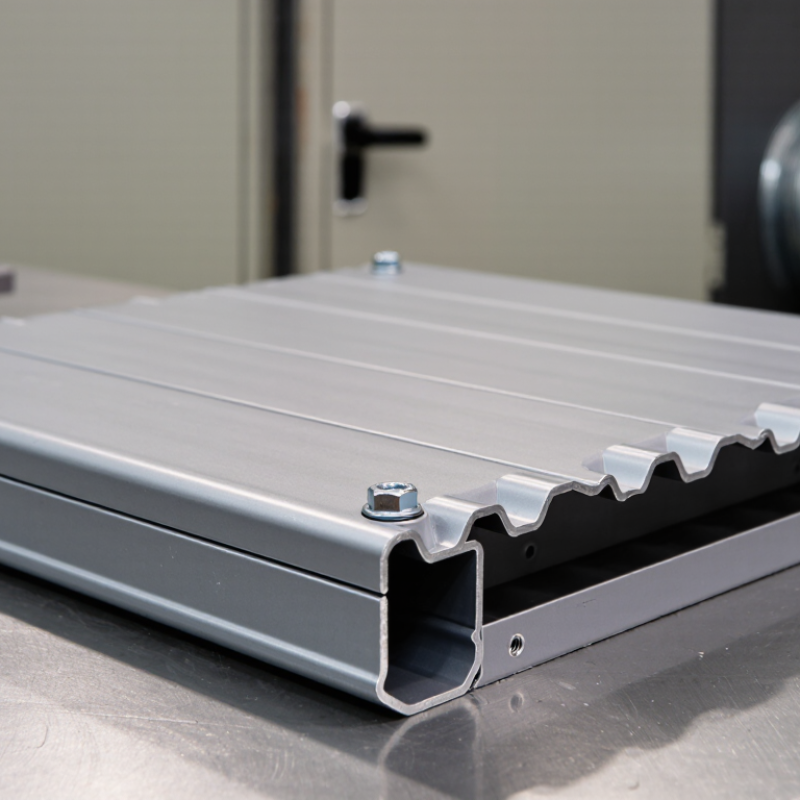
| Flat single-skin panel | One sheet with flat surfaces; often made from galvanized or coated steel, or aluminum. A practical sheet thickness depends on panel size, supports, and design loads. | Lowest stiffness of the options shown when unsupported. Large flat spans can flex or oil-can; close-spaced supports or formed edges can improve performance. | Usually low material use and a simple profile. Aluminum weighs less than steel for the same volume, but material choice and thickness affect total weight. | Can shed rain on a suitably sloped, well-sealed cover. Flat areas may hold water if drainage is poor; joints and fasteners need appropriate sealing. | Small covers with frequent support, protected equipment, or designs where a simple, low-profile surface is preferred. |
| Shallow pan with turned-down edges | Single sheet formed into a shallow tray, commonly with perimeter flanges or returns. | Formed edges increase edge stiffness compared with a plain flat sheet. The center may still need support if the panel is wide or carries significant load. | Generally light to moderate. Edge forming adds stiffness without requiring a second full sheet. | Raised edges can help control runoff at the perimeter, but they do not replace a drainage plan. Corners and seams need careful detailing to prevent leaks. | Equipment enclosures and cabinets where a neat perimeter, moderate stiffness, and a single-piece cover are useful. |
| Ribbed or corrugated panel | One sheet formed with repeated ribs or waves; commonly supplied in coated steel or aluminum. | Ribs improve stiffness in the direction of the profile compared with a flat sheet of the same material and thickness. Performance depends on rib shape, span, and support spacing. | Often provides useful stiffness with relatively little material. Profile depth and sheet thickness affect both weight and capacity. | Profiles can direct water toward the eaves when installed with the correct slope. Side laps, end laps, and fasteners are common potential leak paths. | Canopies, sheds, and larger covers where a lightweight profiled sheet and straightforward rain shedding are priorities. |
| Panel with underside stiffeners | A sheet-metal skin reinforced with attached channels, ribs, or formed stiffeners underneath. | Stiffeners can reduce deflection and increase load capacity when properly sized and spaced. Their attachment and the panel-to-frame connections are important to performance. | Heavier than an unstiffened single skin, but can avoid using a thicker sheet across the entire panel. | The outer skin can provide a continuous rain barrier if seams and penetrations are sealed. Stiffener attachment details should not create water traps or corrosion-prone crevices. | Wider covers, access panels, or applications requiring a flatter appearance with greater rigidity than a plain sheet. |
| Double-skin insulated panel | Two metal facings separated by an insulating core; joints are designed to connect adjacent panels. | The bonded panel can act as a sandwich structure, with performance depending on facing thickness, core properties, panel span, and joint design. | Uses more material than a single skin, but provides insulation in the same assembly. It is not automatically lighter than a single-skin cover. | Can provide good protection when the panel joints, perimeter, penetrations, and flashings are correctly detailed. The core itself does not make poorly sealed joints weather-tight. | Enclosures or buildings where thermal insulation and a finished interior surface are required along with a weather-resistant roof panel. |