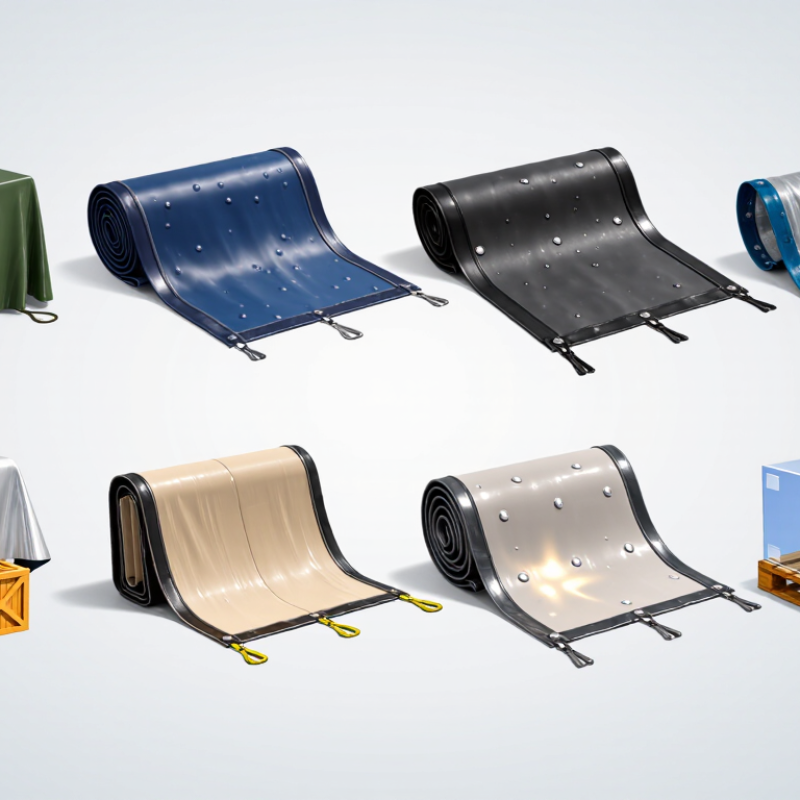
| 1 | PVC-Coated Polyester Tarp | Polyester fabric with PVC coating; commonly about 650–900 g/m². | Waterproof when seams are properly welded or sealed; generally strong abrasion and tear resistance. | Long-haul road, port, and intermodal moves carrying machinery, palletized goods, or other exposed freight. | Heavier and bulkier to handle than lightweight polyethylene tarps; performance varies by fabric and seam quality. |
| 2 | Reinforced Polyethylene (PE) Tarp | Woven PE scrim laminated with PE film; commonly about 150–250 g/m². | Water-resistant to waterproof depending on lamination, edge construction, and seam condition; UV resistance depends on stabilizers. | General-purpose freight, temporary outdoor cover, and shorter or moderate-duration transport. | Can wear or tear sooner than heavier coated-fabric options under repeated abrasion or high wind. |
| 3 | Heavy-Duty Lumber Tarp | Coated polyester or laminated woven fabric, often about 600–900 g/m², with drop flaps on some designs. | Designed to shed rain and road spray when correctly positioned and secured; UV and abrasion resistance depend on specification. | Loads of lumber or other long, irregular freight on open-deck routes where side and end coverage is needed. | Large flaps and high fabric weight make it harder to handle; correct sizing and securement are essential. |
| 4 | Steel Tarp | Heavy coated polyester or laminated fabric, typically around 600–900 g/m²; may include reinforced corners or flap sections. | Provides a weather cover for exposed metal loads; puncture resistance depends on reinforcement and contact points. | Flatbed freight such as steel products, pipes, or other dense loads with edges that require careful padding. | Sharp corners can cut or abrade the cover; use edge protection and follow proper load-securement practices. |
| 5 | Machinery Tarp | Coated polyester or heavy laminated fabric, commonly about 500–900 g/m²; custom shapes may include reinforced tie-down areas. | Good rain and dust protection when fitted closely; openings and seams can still allow water entry. | Irregular equipment, agricultural machinery, and industrial freight traveling on open trailers or exposed routes. | Custom sizing and securement take time; a poorly fitted cover can flap, abrade, or collect water. |
| 6 | Laminated Woven Polypropylene (PP) Tarp | Woven PP fabric with a laminated surface; commonly about 120–250 g/m². | Repels rain when the laminate and seams remain intact; UV durability depends on treatment and exposure duration. | Light-to-medium freight, temporary storage, and routes where a relatively low-cost cover is needed. | Laminate damage, seam leakage, or prolonged sun exposure can reduce service life. |
| 7 | Breathable Canvas Tarp | Cotton or cotton-blend canvas, often about 300–500 g/m²; some versions have a water-repellent treatment. | Breathes more than coated plastics; treated versions can resist light rain but should not be assumed waterproof. | Freight that benefits from reduced condensation, or dry-weather transport where airflow matters. | Can absorb water and become heavy; less suitable for prolonged heavy rain unless an appropriate waterproof system is used. |
| 8 | Cargo Mesh Tarp | Knitted or woven synthetic mesh, commonly about 180–350 g/m²; openness varies by design. | Allows airflow and may help contain loose material, but does not provide a waterproof barrier. | Loads such as aggregate, debris, or other freight requiring airflow or containment rather than rain protection. | Unsuitable as the sole cover for goods vulnerable to rain, dust, or moisture. |
| 9 | Vented Freight Tarp | Coated or laminated synthetic fabric with designed vents or breathable panels; weight varies by construction. | Offers partial weather protection while allowing some air exchange; vent placement and design affect water exposure. | Freight that needs airflow during transport, provided the cargo can tolerate limited exposure to humidity or spray. | Ventilation reduces moisture buildup but can also admit wind-driven rain or dust; check suitability for the cargo. |
| 10 | Insulated Cargo Tarp | Multi-layer construction with an insulating core and protective outer faces; weight and insulation performance vary widely. | Can slow heat transfer and help moderate temperature swings; it is not a substitute for validated temperature-controlled transport. | Short-duration protection for temperature-sensitive freight during loading, unloading, or transit between controlled spaces. | Effectiveness depends on fit, exposure time, ambient conditions, and the full transport system; verify performance for the cargo. |