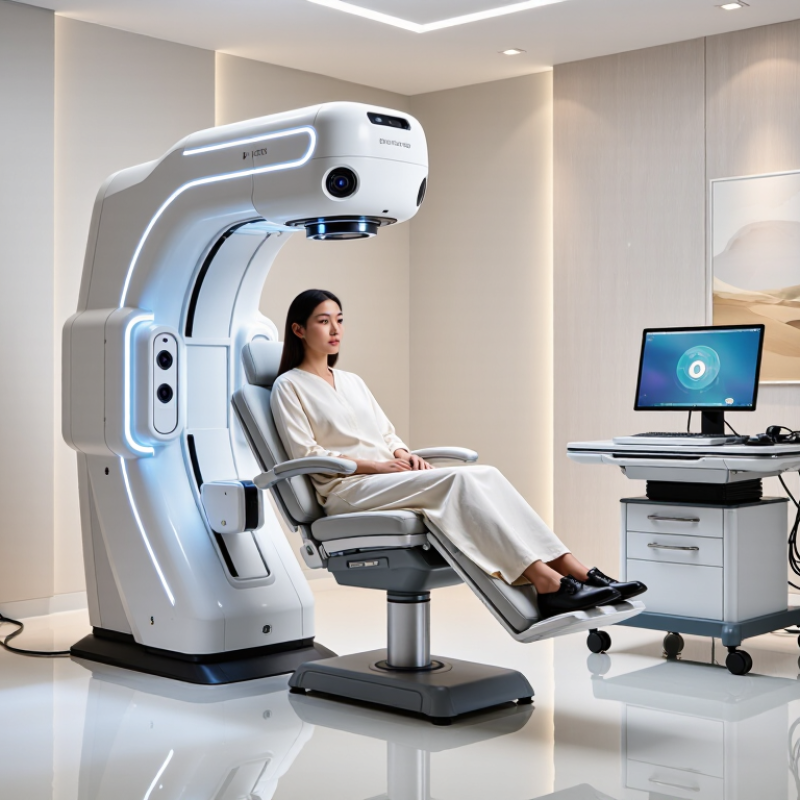
| 1 | Standardized RGB Imaging System | General facial analysis and visual comparison | A calibrated visible-light camera records high-resolution facial images under controlled illumination. | Visible wrinkles, pores, pigmentation appearance, redness, blemishes, uneven tone, and facial texture. | 10–30 seconds | Consistent camera distance, fixed lighting, neutral expression, and accurate color calibration improve repeatability. | Cannot directly measure hydration, sebum, pH, or deeper pigmentation without additional sensors. | Suitable for clinics, salons, retailers, and teleconsultation support. |
| 2 | Cross-Polarized Imaging System | Redness, vascular appearance, and surface reflection reduction | Cross-polarized light suppresses surface glare so the camera can record subsurface color variations more clearly. | Redness distribution, irritation appearance, vascular visibility, and uneven complexion. | 15–40 seconds | Polarizer quality, illumination uniformity, camera exposure, and skin preparation affect results. | Results are optical indicators rather than a medical diagnosis; skin tone and lighting can influence interpretation. | Useful for aesthetic practices and standardized before-and-after documentation. |
| 3 | UV Fluorescence Imaging System | Oil-related fluorescence and surface residue screening | Ultraviolet illumination causes certain skin components and residues to fluoresce, which are recorded by a camera. | Sebum-rich areas, some follicular materials, surface residue, and selected pigmentation patterns. | 15–45 seconds | UV wavelength, camera sensitivity, room darkness, cosmetics, and cleansing status are important variables. | Fluorescence is not specific to one skin condition and should not be treated as a definitive diagnosis. | Appropriate where visual education and cosmetic consultation are important. |
| 4 | 3D Facial Imaging System | Facial contour, volume, and wrinkle-depth tracking | Multiple cameras or structured light capture facial geometry and generate a three-dimensional surface model. | Facial symmetry, contour changes, skin surface relief, folds, and approximate wrinkle depth or volume variation. | 20–90 seconds | Head positioning, facial movement, scanning resolution, calibration, and software registration determine repeatability. | Higher purchase cost, larger equipment footprint, and sensitivity to movement or hair obstruction. | Best for dermatology, aesthetic medicine, research, and treatment progress measurement. |
| 5 | Dermoscopy Imaging System | Magnified examination of lesions and localized skin structures | Magnified polarized or non-polarized illumination reveals detailed structures that are difficult to see with the naked eye. | Pigment patterns, lesion borders, vascular structures, scaling, and other localized features requiring professional review. | 30 seconds–3 minutes | Image quality, magnification, lesion selection, clinician training, and clinical history are essential. | Requires qualified professional interpretation and is not a substitute for histopathology or medical diagnosis. | Suitable for medical clinics and professional skin-screening environments. |
| 6 | Corneometer-Type Hydration Meter | Quantitative comparison of stratum-corneum hydration | A capacitive sensor detects changes in the dielectric properties of the outer skin layer. | Relative surface hydration and changes after cleansing, moisturizing, or treatment. | 5–15 seconds per measurement point | Probe pressure, measurement location, temperature, humidity, cleansing products, and acclimatization affect readings. | Measures relative hydration near the surface and does not represent whole-skin water content. | Practical for cosmetic testing, salons, clinics, and product demonstrations. |
| 7 | Sebumeter-Type Oil Measurement Device | Surface sebum mapping and oiliness comparison | A transparent absorbent strip or cassette collects surface lipids, and optical analysis estimates the amount deposited. | Relative sebum level on the forehead, nose, cheeks, chin, or other selected areas. | 30–60 seconds per area | Time since washing, cosmetics, sweating, pressure, sampling area, and room conditions influence results. | Only measures removable surface oil at the tested location and time; it does not measure sebaceous gland activity directly. | Good for personalized skincare consultations and formulation demonstrations. |
| 8 | Skin Surface pH Meter | Acid-mantle and product-compatibility evaluation | A flat electrode or specialized probe measures hydrogen-ion activity at the skin surface. | Surface pH trends and changes associated with cleansing, products, or barrier-related routines. | 10–30 seconds per area | Calibration, electrode hydration, water quality, residue, contact pressure, and environmental conditions are critical. | Surface pH varies by body site and time; it cannot independently diagnose barrier disorders. | Useful for laboratories, professional clinics, and cosmetic product testing. |
| 9 | Cutometer-Type Elasticity Tester | Mechanical skin firmness and elasticity measurement | Controlled negative pressure draws skin into a probe aperture while optical or mechanical sensors record deformation and recovery. | Firmness, extensibility, immediate distension, residual deformation, and elastic recovery. | 1–5 minutes per test area | Probe seal, suction pressure, test duration, anatomical site, operator technique, and repeated measurements affect results. | Usually tests small areas and requires standardized protocols for meaningful comparisons. | Recommended for research, professional clinics, and anti-aging treatment evaluation. |
| 10 | Multi-Sensor Skin Analyzer | Combined consultation using imaging and contact measurements | Integrates camera imaging with selected probes for hydration, sebum, pH, temperature, or elasticity. | A broader skin profile covering visible appearance and selected physiological surface indicators. | 3–10 minutes | Each sensor requires its own calibration, operating procedure, maintenance schedule, and reference standard. | More functions do not automatically mean higher accuracy; results from different sensors are not always directly comparable. | Versatile for clinics, beauty centers, retailers, training facilities, and distributors. |