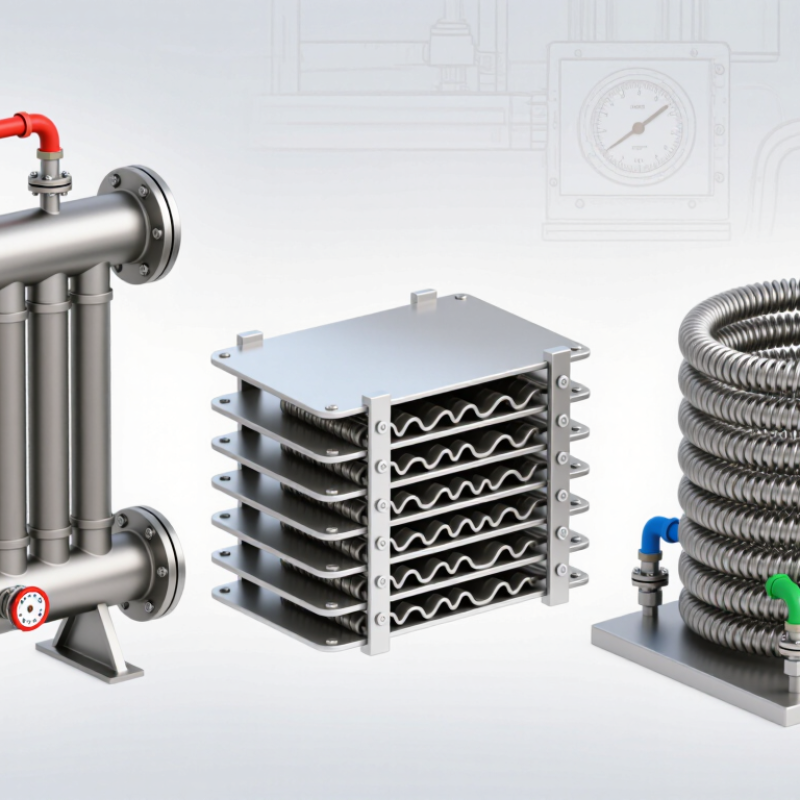
| Shell-and-tube | One fluid flows through tubes; the other flows through the surrounding shell. Designs may use straight or U-tubes and fixed or removable tube bundles. | Carbon steel pressure-vessel plate or pipe for shells; carbon steel, 304/316L stainless steel, or duplex stainless steel for tubes, as required by the fluids. | Adaptable to a wide range of duties; can be designed for substantial pressure and temperature; tube bundles can be accessible for inspection or cleaning, depending on construction. | Check tube-side and shell-side fouling, corrosion allowance, vibration, thermal expansion, bundle-removal clearance, and the applicable pressure-vessel code. | Process plants, power and utility systems, oil and gas services, and duties where robust construction or mechanical cleaning is important. |
| Gasketed plate-and-frame | Thin, corrugated plates are clamped in a frame, with gaskets directing alternating fluid channels. | Common plate materials include 304L or 316L stainless steel; duplex stainless steel may be considered for more demanding chloride-containing services. Frame material is selected separately. | High heat-transfer area in a compact footprint; close temperature approaches are often achievable; the unit can usually be opened for inspection and cleaning. | Confirm gasket compatibility, fluid cleanliness, pressure and temperature limits, and allowable pressure drop. Gaskets can limit operating conditions and require periodic replacement. | Water heating and cooling, HVAC, food and beverage processes, and clean liquid-to-liquid services within the selected gasket and design limits. |
| Welded plate | Corrugated plates are joined by welding rather than relying on conventional plate-channel gaskets; exact construction varies by design. | Typically stainless steel or duplex stainless steel selected for the process fluid; material grade and weld procedure should be verified for the service. | Compact plate geometry can provide efficient heat transfer while avoiding process-side gasket limitations in some designs. | Opening and mechanical cleaning may be difficult or impossible, depending on construction. Confirm inspection, repair, cleaning, and allowable pressure and temperature with the supplier. | Selected chemical, process, and utility duties where a compact design is desired and the fluid is compatible with the welded construction. |
| Spiral plate | Two fluids flow through separate spiral passages formed by metal plates; available flow arrangements depend on the design. | Carbon steel or stainless steel, including 316L, may be used according to corrosion requirements and process conditions. | A single passage can support flow through certain fouling or viscous fluids; the spiral path can promote mixing and heat transfer. | Assess solids size and concentration, cleanability, pressure drop, corrosion, and access for maintenance. Suitability depends on passage geometry and the specific fluid. | Some wastewater, sludge, viscous-liquid, and process services where fouling behavior makes conventional narrow passages less suitable. |
| Air-cooled finned-tube | Process fluid flows inside tubes; external fins increase the air-side heat-transfer surface. Fans may move ambient air across the bundle. | Tube material may be carbon steel, stainless steel, or another alloy selected for the process fluid; fin and structural materials are selected for the environment and design. | Rejects or supplies heat using air rather than a cooling-water circuit; can reduce cooling-water demand and associated water-treatment needs. | Performance varies with ambient temperature, airflow, fan power, recirculation, noise limits, and site conditions. Verify capacity at the design ambient temperature. | Remote or water-constrained sites and process cooling duties where air is an acceptable heat sink. |