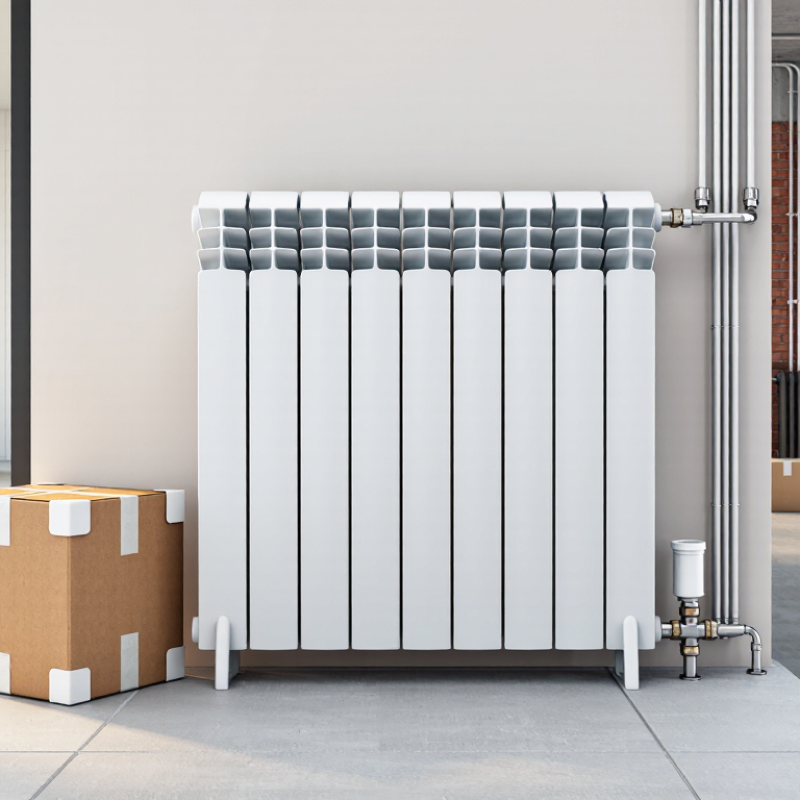
For global buyers, the best steel panel radiator is rarely the cheapest unit on a quotation. In supplier evaluations, I check panel thickness, weld consistency, coating adhesion, valve compatibility, and test documentation. Ask for heat-output data at the intended temperature difference, not only a catalog headline. Request samples from the same production line. A neat sample can hide unstable batch control. That matters. Confirm steel grade, corrosion protection, packaging, and replacement-part availability. The supplier should explain tolerances clearly. Vague answers deserve a lower score.
Total cost begins after purchase order approval. Add tooling, inspection, inland transport, ocean freight, insurance, duties, storage, installation, and possible returns. A radiator with a lower factory price may cost more when damaged cartons arrive in a remote warehouse. I compare landed cost per delivered watt, not price per piece. Use a spreadsheet with conservative freight and exchange-rate assumptions. Recheck it. Also calculate labor for brackets, air bleeding, and commissioning. Some buyers overlook incompatible thermostatic valves, then pay for adapters and delays. Local standards and pressure requirements must be verified before shipment.
Best-use recommendations depend on the building, climate, and maintenance skill. Compact double-panel models suit bedrooms, offices, and moderate spaces needing steady output. Higher-output configurations work better in colder rooms, but they demand stronger wall supports and careful airflow clearance. For humid coastal projects, coating quality and storage conditions deserve extra attention. For public or rental buildings, choose a supplier with traceable batch records and responsive technical support. I would not approve a supplier from price alone. One weakness remains: long-term corrosion performance is difficult to judge from a short sample test. Independent inspection helps, yet it also adds cost. That trade-off should be documented.