| Linear Weighing Packing Machine | Uses two or more weighing heads to discharge a preset target weight, usually through timed or controlled feeding. | Rice, grains, seeds, pulses, sugar, snacks, frozen products and other relatively free-flowing materials. | Approximately 10 g to 5 kg per package, depending on the feeder and hopper configuration. | About 10 to 40 bags per minute. | Commonly within approximately ±0.3% to ±1%, depending on product characteristics and target weight. | Pillow bags, gusseted bags, and premade bags when integrated with the appropriate bagging system. | Simple structure, comparatively low cost, easy operation and suitable for small to medium production volumes. | Generally slower and less flexible than multihead systems when high speed or many target combinations are required. |
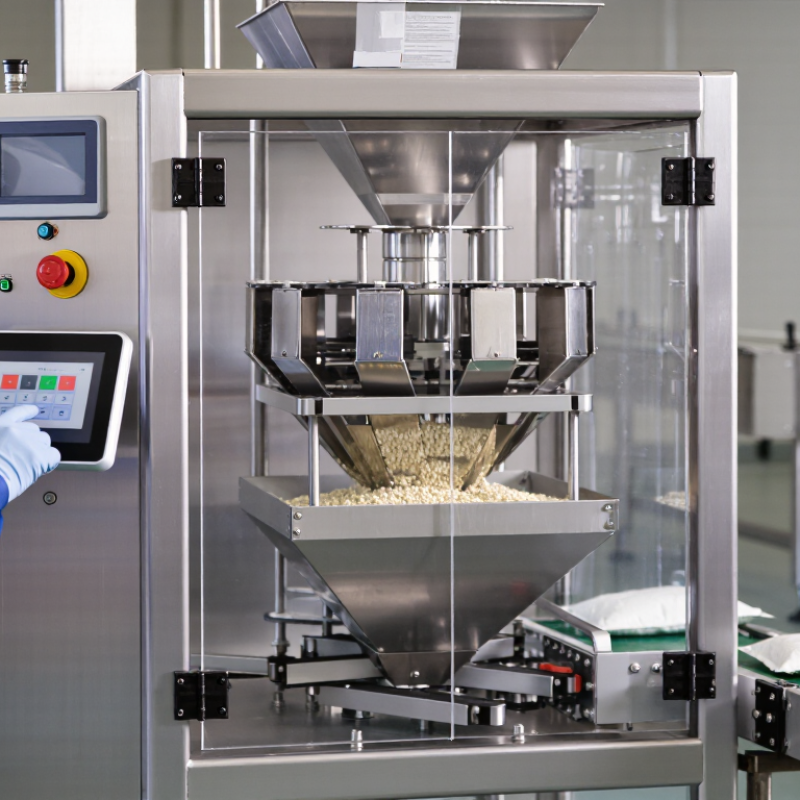
| Multihead Weighing Packing Machine | Uses multiple weigh hoppers and selects the combination closest to the target weight before discharge. | Snacks, nuts, confectionery, dried fruit, frozen foods, irregular pieces and mixed products. | Approximately 10 g to 3 kg per package, with some configurations supporting larger target weights. | About 30 to 120 weighments per minute; actual bag output depends on the packing machine and product. | Often approximately ±0.1% to ±0.5% under stable product and operating conditions. | Pillow bags, gusseted bags, quad-seal bags, premade pouches and other flexible packaging formats. | High speed, good combination accuracy, flexible product handling and reduced giveaway when correctly configured. | Higher purchase cost, more complex controls and greater sensitivity to sticky, dusty or inconsistent products. |
| Net Weighing Packing Machine | Measures a complete batch in a weigh hopper and then releases the batch into the package. | Granules, pellets, grains, fertilizer, feed, powders with suitable flow properties and other bulk materials. | Approximately 5 kg to 50 kg per package; larger capacities are possible with customized equipment. | About 5 to 25 bags per minute, depending on product, target weight and bag handling. | Commonly approximately ±0.2% to ±0.5% of the target weight when properly calibrated. | Open-mouth bags, valve bags and heavy-duty woven or laminated bags. | Good control of the product weight before filling and suitable for medium and large sacks. | Requires a separate or integrated bag-clamping and bag-sealing system; not ideal for very delicate products. |
| Gross Weighing Packing Machine | The product is weighed directly in the bag while the bag is held by the filling mechanism. | Powders, granules, building materials, animal feed, chemicals and products requiring larger bag sizes. | Approximately 10 kg to 50 kg per package; industrial systems may support higher capacities. | About 4 to 20 bags per minute. | Commonly approximately ±0.2% to ±0.5%, subject to material flow and bag stability. | Open-mouth bags, valve bags, paper sacks, woven bags and laminated industrial bags. | Compact material flow, suitable for larger sacks and fewer product transfers during filling. | Bag movement, vibration and changes in bag tare can affect weighing performance. |
| Auger Weighing Packing Machine | A servo-controlled or motor-driven screw feeds a measured quantity of powder into a container or bag. | Flour, milk powder, spices, coffee powder, pharmaceutical powders and other controlled-flow powders. | Approximately 1 g to 5 kg per package, depending on screw diameter and hopper design. | About 10 to 60 bags per minute. | Often approximately ±0.5% to ±1%, with performance affected by powder density and flowability. | Pillow bags, sachets, stick packs, premade pouches, cans and jars. | Suitable for dusty powders and provides controlled, repeatable feeding. | Product density, moisture and powder bridging can affect the actual weight and filling consistency. |
| Volumetric Cup Weighing Machine | Uses adjustable measuring cups to portion products by volume, with the volume correlated to an expected weight. | Free-flowing grains, rice, seeds, beans, sugar and similar products with relatively stable bulk density. | Approximately 10 g to 2 kg per package, depending on cup volume and machine configuration. | About 20 to 80 bags per minute. | Typically approximately ±1% to ±3%, depending on bulk-density consistency. | Pillow bags, gusseted bags and small premade bags. | Simple operation, high throughput potential and relatively low equipment cost. | It is volume-based rather than continuously weight-based, so density changes can create weight variation. |
| Combination Weighing Packing Line | Combines a weighing system with feeding, bag forming or premade-pouch handling, sealing, coding and inspection equipment. | Food, agricultural products, chemicals, pet food, hardware and other products requiring an integrated packaging process. | Commonly 10 g to 50 kg, depending on the selected weighing module and bagging equipment. | About 15 to 100 packages per minute, depending on the complete line design. | Determined by the selected weigher; commonly approximately ±0.1% to ±1%. | Pillow bags, gusseted bags, quad-seal bags, premade pouches, open-mouth bags and valve bags. | Reduces manual handling, improves process consistency and can include metal detection, checkweighing and data recording. | Higher installation cost, greater footprint and more complex commissioning and maintenance requirements. |