| Starting Leaf | Tencha, a shade-grown tea leaf processed without final rolling | Tencha has a flat, leaf-like structure that is suitable for grinding into a fine powder. |
| Shading Period | Approximately 20–30 days before harvest is common for high-quality shaded tea | Reduced sunlight can increase chlorophyll and support a more vivid green color and savory umami character. |
| Harvest Material | Usually young spring leaves and buds, although harvest standards vary | Younger leaves generally produce a softer texture and more delicate flavor than mature leaves. |
| Steaming | Fresh leaves are commonly steamed briefly after harvest | Steaming helps prevent oxidation and preserves the tea’s green color and fresh vegetal notes. |
| Drying and Leaf Preparation | The leaves are dried and sorted; stems and veins are removed to create tencha | Removing tougher plant parts improves the powder’s smoothness and reduces coarse fibers. |
| Stone-Milling | Traditional granite mills grind tencha slowly into a fine powder | Slow milling helps limit heat buildup and produces the characteristic fine texture of traditionally made matcha. |
| Particle Texture | Very fine powder, commonly around 10–20 micrometres for traditionally milled matcha | Small particles disperse more evenly when whisked, although matcha naturally remains a suspension rather than a true solution. |
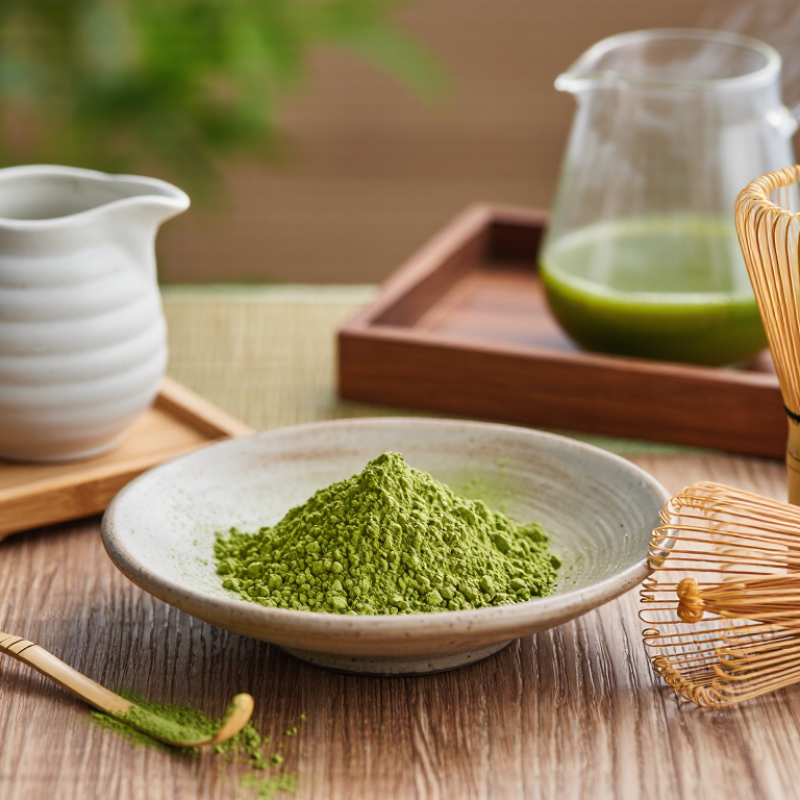
| Color | Bright or deep green, depending on cultivar, shading, harvest, and processing | Color is a useful visual quality indicator, but it should not be used alone to judge flavor or freshness. |
| Typical Flavor | Umami, grassy, vegetal, mildly sweet, and sometimes slightly bitter | Shade-grown leaves can retain more theanine, contributing to a savory taste and rounded mouthfeel. |
| Meaning of “Ceremonial” | A market term generally associated with matcha intended for drinking plain | The term is not a universally regulated legal grade, so origin, harvest details, freshness, and taste should also be evaluated. |
| Traditional Serving | About 1–2 g of matcha whisked with 60–70 mL of hot water | A bamboo whisk helps suspend the powder and create a fine layer of foam. |
| Water Temperature | Approximately 70–80°C; boiling water is generally avoided | Slightly cooler water can reduce harsh bitterness and better preserve delicate aromas. |
| Whisking Method | Sift the powder, add water, then whisk rapidly in a “W” or “M” motion | Sifting reduces clumps, while rapid whisking creates a smoother and more aerated drink. |
| Common Modern Uses | Straight whisked tea, lattes, smoothies, desserts, and savory recipes | Drinking it plain highlights quality, while milk, sweeteners, and food ingredients create a milder flavor profile. |
| Caffeine | Contains caffeine; the amount varies with serving size, cultivar, harvest, and preparation | Because the powdered leaf is consumed rather than infused and discarded, matcha can provide more caffeine than some steeped teas. |
| Storage | Store airtight, away from light, heat, moisture, and strong odors; refrigerate after opening if well sealed | Matcha is sensitive to oxygen, light, heat, and moisture, which can dull its color and fresh aroma. |
| Freshness Indicators | Vivid green color, fresh vegetal aroma, and a smooth, balanced taste | A dull yellow-green appearance, stale smell, or pronounced harshness may indicate age or poor storage. |