China Best CNC Machining Services for Global Buyers

China has become a major destination for buyers seeking dependable Cnc Machining services. Its manufacturing network combines modern equipment, skilled technicians, and competitive production costs. From a prototype housing to a stainless-steel aerospace bracket, Chinese suppliers can support varied project requirements. However, a low quotation does not automatically indicate good value.

Reliable CNC machining begins with clear engineering communication. Buyers should share 3D models, technical drawings, material grades, tolerances, surface finishes, and expected quantities. A qualified supplier should review these details before production. That review may reveal an overlooked wall thickness, an unrealistic tolerance, or a difficult tool path. Small corrections early can prevent expensive delays later.

Dr. David A. Dornfeld, a respected manufacturing systems researcher, has emphasized that “precision is created by controlling the process, not by measuring the final part alone.” This principle matters when selecting a Chinese machining partner. Buyers should examine equipment capability, inspection methods, operator experience, and quality records. CMM reports, first-article inspections, and traceable material certificates provide useful evidence. Photos are helpful, but they are not proof.

There is no perfect supplier.

Even experienced buyers can miss risks. Communication across time zones may slow decisions. Packaging may also deserve more attention than expected. A strong supplier explains limitations honestly and suggests practical improvements. This guide explores how global buyers can compare Chinese CNC machining companies, verify their capabilities, and build a more reliable sourcing process. The goal is not simply lower cost. It is consistent quality, predictable delivery, and fewer unpleasant surprises.

China Best CNC Machining Services for Global Buyers

China CNC Machining Processes, Materials, and ISO 2768 Tolerances

China Best CNC Machining Services for Global Buyers

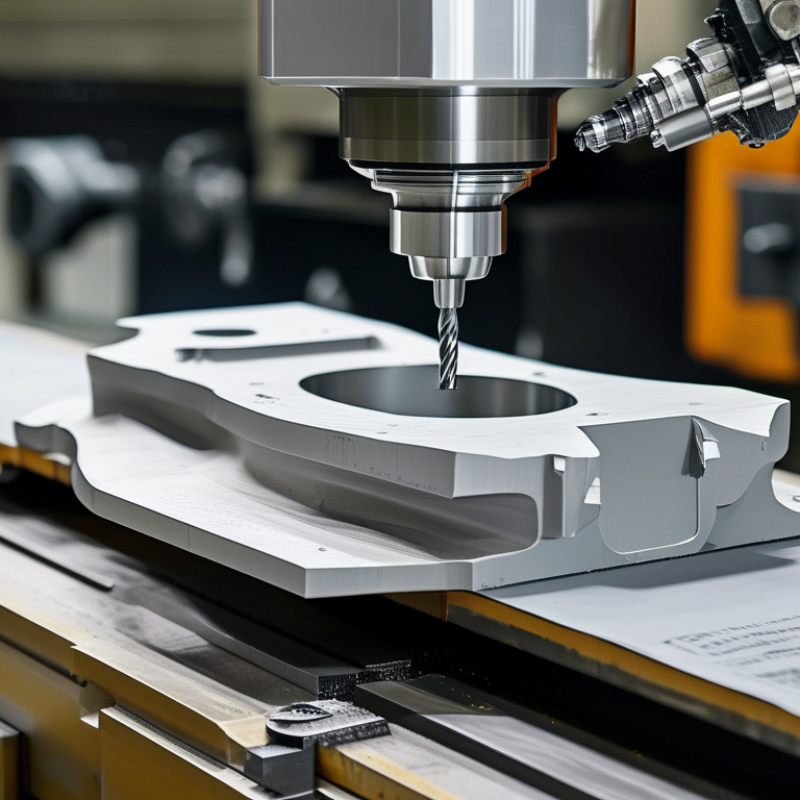
China’s CNC machining capacity supports prototypes, replacement parts, and repeat production. Milling, turning, drilling, and five-axis machining handle different geometries. Aluminum 6061 suits lightweight housings, while stainless steel 304 offers stronger corrosion resistance. POM works well for low-friction components. Titanium remains useful where strength and low weight justify higher cost. Process choice changes tool wear, cycle time, burr formation, and surface finish.

ISO 2768 provides general tolerances when drawings lack individual limits. ISO 2768-1 defines classes f, m, c, and v for linear and angular dimensions. ISO 2768-2 covers selected geometric tolerances. The common mK designation is not a universal promise of precision. Critical holes, bearing seats, and sealing faces need specific tolerances. A practical drawing may state ±0.10 mm for general dimensions, then tighten one bore to ±0.02 mm.

Automation is also reshaping production. The International Federation of Robotics reported 541,302 industrial robots installed worldwide in 2023. This growth supports consistent machining, but automation cannot correct unclear drawings. Shop-floor inspection still finds mismatched datums, sharp internal corners, and unrealistic finish demands. Those mistakes cost more than expected. Buyers should request material certificates, first-article measurements, and inspection records. A useful quality plan includes CMM checks for critical features and visual checks for burrs. Surface roughness, heat treatment, and packing requirements deserve equal attention.

3-, 4-, and 5-Axis CNC Machining for Complex Global Components

China Best CNC Machining Services for Global Buyers

3-, 4-, and 5-axis CNC machining supports complex global components with fewer setups. A 3-axis machine handles plates, brackets, housings, and straightforward prismatic parts. Four-axis machining adds rotary positioning around the workpiece. This reduces repeated clamping and improves feature alignment. Five-axis machining reaches angled surfaces, deep cavities, and curved aerospace-style geometries. It can also shorten cutting paths. Small details matter.

According to the International Federation of Robotics’ World Robotics 2024 report, 541,302 industrial robots were installed worldwide in 2023. This expanding automation base increases demand for accurate fixtures, end-effectors, sensor mounts, and replacement parts. UNIDO’s World Manufacturing Production report recorded global manufacturing growth of 1.8% year-on-year in the first quarter of 2024. Buyers therefore need flexible machining capacity, not only low quotations.

Experienced suppliers should confirm datum strategy, tool access, material condition, and inspection points before cutting metal. A five-axis machine is not automatically better. Some components remain more economical on three or four axes. That judgment requires engineering experience. Dimensional reports, calibrated equipment, and traceable inspection records make overseas purchasing more reliable. Still, no process is flawless. Thin walls may distort. Deep pockets may show tool marks. A careful supplier should disclose these risks, suggest realistic tolerances, and revise the design when necessary. Clear drawings, sample approval, and controlled revision files prevent expensive misunderstandings.

China Best CNC Machining Services for Global Buyers - 3-, 4-, and 5-Axis CNC Machining for Complex Global Components

Machining Capability Best Suited For Typical Dimensional Tolerance Typical Surface Finish Common Materials Typical Production Range Typical Lead-Time Range
3-Axis CNC Machining Prismatic parts, plates, brackets, housings, and prototypes with accessible features Approximately ±0.05 mm to ±0.10 mm, depending on material, geometry, and inspection requirements Approximately Ra 1.6–3.2 µm after standard milling Aluminum, stainless steel, carbon steel, brass, copper, engineering plastics Prototype to low- and medium-volume production Approximately 5–15 business days after drawing approval
4-Axis CNC Machining Components requiring indexed machining around multiple sides, radial holes, and cylindrical features Approximately ±0.03 mm to ±0.08 mm, subject to part size and production setup Approximately Ra 0.8–3.2 µm with suitable tooling and finishing passes Aluminum alloys, stainless steel, tool steel, brass, bronze, plastics Complex prototypes and low- to medium-volume components Approximately 7–18 business days after design and process review
5-Axis CNC Machining Impellers, aerospace-style parts, medical components, molds, curved surfaces, and deep or angled features Approximately ±0.01 mm to ±0.05 mm for suitable geometries and controlled processes Approximately Ra 0.4–1.6 µm with fine finishing operations Aluminum, titanium, stainless steel, nickel alloys, tool steel, engineering plastics High-complexity prototypes and small- to medium-batch production Approximately 10–25 business days after technical approval
CNC Turning Shafts, pins, bushings, threaded parts, fittings, and rotational components Approximately ±0.02 mm to ±0.08 mm, depending on diameter and tolerance class Approximately Ra 0.8–3.2 µm after standard turning Aluminum, stainless steel, carbon steel, brass, bronze, plastics Prototype, replacement parts, and small- to high-volume production Approximately 5–15 business days after order confirmation
Inspection and Quality Control Dimensional verification, first-article inspection, and batch quality checks for export components Inspection scope defined by the engineering drawing, tolerance notes, and agreed control plan Surface roughness measurement available when specified by the drawing or purchase order Applicable to metal and engineering-plastic components Sampling inspection or 100% inspection according to project requirements Inspection records typically available before shipment when requested
Post-Machining Finishing Parts requiring improved corrosion resistance, appearance, wear resistance, or surface uniformity Final dimensions should account for coating or plating thickness where applicable Anodizing, passivation, electroless nickel, powder coating, polishing, brushing, and bead blasting Aluminum, stainless steel, carbon steel, copper alloys, and selected plastics Prototype and production parts with specified cosmetic or functional finishes Usually adds approximately 3–10 business days, depending on the finish

Note: The values shown are typical industry ranges for planning purposes. Actual tolerances, surface finishes, material availability, production quantities, and lead times depend on part geometry, technical drawings, material grade, inspection requirements, finishing processes, and order volume.

Quality Assurance Through ISO 9001, CMM Inspection, and Traceability

China Best CNC Machining Services for Global Buyers

Quality assurance begins before cutting metal. Experienced machining teams review drawings, tolerances, surface finishes, and material requirements with engineers. They also confirm inspection methods before production starts. This prevents small misunderstandings from becoming expensive rework. ISO 9001 supports controlled procedures, documented changes, and consistent process monitoring. However, certification alone does not guarantee perfect parts. Daily discipline still matters.

CMM inspection provides measurable evidence for critical dimensions, hole positions, and geometric tolerances. A coordinate measuring machine can compare finished parts with the approved digital model. Inspection reports should identify measuring equipment, calibration status, actual values, and acceptance limits. Traceability connects each part to material certificates, production batches, operators, and inspection records. A visible batch code can save hours when investigating a dimensional issue. That practical detail is often overlooked.

Tips: Request a sample inspection report before ordering. Confirm which dimensions receive CMM measurement. Ask how nonconforming parts are separated and corrected. Keep revision-controlled drawings in every communication. Do not accept vague promises. Clear evidence is stronger.

Reliable suppliers should explain their quality risks honestly, including measurement limitations or occasional process variation. A thoughtful buyer can ask for first-article inspection, material verification, and photographs of marked parts. These steps create accountability across borders. Some reports may look complete yet lack useful context. Review the details carefully.

China CNC Machining Quality Assurance Structure for Global Buyers

The chart shows the number of major subclauses in each ISO 9001:2015 requirement group. CMM inspection supports measurement and performance evaluation, while material and process traceability support controlled operations and documented evidence. The figures describe the ISO structure, not the performance of any individual supplier.

CNC Pricing, MOQ, Lead Times, and Incoterms for Global Buyers

For global buyers, CNC pricing depends on more than machine hours. Material grade, tolerances, surface finish, programming, inspection, and packaging all affect the quote. Grand View Research estimated the global CNC machine market at about USD 83.9 billion in 2023, with continued growth expected through 2030. That growth increases capacity, but it does not guarantee lower part prices.

MOQ is often negotiable. One prototype may cost more because setup and programming are spread across a single part. A repeat order of 50 or 500 pieces can reduce the unit price substantially. Ask for a tiered quotation. Request tooling, inspection, and packaging costs separately. Details matter. A very low quote may hide weak material control or limited inspection, so buyers should request material certificates, sample reports, and measurable tolerance records.

Lead times commonly include engineering review, material purchasing, machining, finishing, inspection, and shipping. A supplier promising five days may mean machining only. Confirm the full calendar timeline in writing. For delivery terms, ICC Incoterms 2020 defines responsibilities clearly. EXW can leave export handling with the buyer, while FCA often provides a cleaner handover for international shipments. DAP generally leaves import clearance and duties to the buyer; DDP places more responsibility on the seller. This sounds simple, but misunderstandings remain common. Recheck the named place, customs responsibility, insurance, and payment schedule before approval.

Supplier Evaluation: Capacity, Certifications, Compliance, and Export Risks

China Best CNC Machining Services for Global Buyers

Supplier Evaluation: Capacity, Certifications, Compliance, and Export Risks

A capable CNC supplier should show more than polished samples. Ask for machine lists, working envelopes, tolerance records, and recent production photos. A reliable factory can explain how it handles aluminum, stainless steel, engineering plastics, and difficult surface finishes. Request a trial batch before approving regular production. Ten inspected parts reveal more than one perfect sample.

Certifications deserve careful checking. Confirm the certificate number, issuing body, scope, and expiry date. Quality systems matter, but certificates do not replace process evidence. Review inspection plans, calibration records, material certificates, and nonconformance reports. If a supplier cannot explain a failed batch, caution is reasonable. I have found that honest answers often matter more than impressive documents.

Export compliance requires equal attention. Verify product classification, origin records, packaging standards, and shipping documents before production begins. Ask who controls export paperwork and how customs changes are monitored. Check whether the supplier can protect technical drawings through access controls and signed confidentiality terms. Currency, lead-time, and transport estimates should include realistic delays. Some quotations look attractive because inspection, tooling, or replacement costs are missing. A written responsibility matrix can prevent expensive misunderstandings. No supplier file is perfect. The weak point may appear after the first shipment.

Top