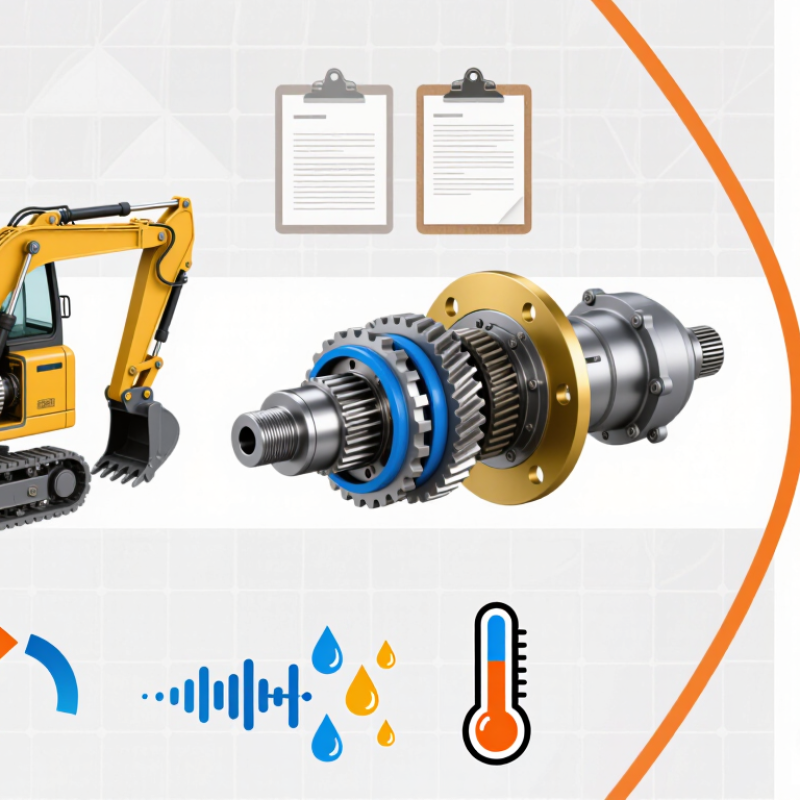
| Application Compatibility | 15% | Whether the mini final drive matches the machine type, installation space, operating cycle, travel speed, and load profile. | The supplier confirms compatibility using machine drawings, mounting dimensions, hydraulic data, and duty-cycle requirements before quotation. | Dimension drawings, interface drawings, hydraulic circuit information, and a completed technical questionnaire. | Compare every mounting, port, shaft, and performance requirement against the original equipment specifications. |
| Rated Torque and Load Capacity | 15% | Continuous torque, peak torque, starting torque, radial load, axial load, and allowable duty cycle. | Continuous and peak ratings are stated separately, with operating limits and service conditions clearly defined. | Technical datasheet, torque-speed curves, load tables, and calculation results for the intended application. | Check that the selected unit has adequate safety margin for starting, climbing, impact, and intermittent overload conditions. |
| Hydraulic Performance | 12% | Displacement, rated pressure, peak pressure, permissible flow, speed range, and drain-line requirements. | All pressure and flow values are stated in consistent units, with continuous and intermittent limits identified. | Performance curves, pressure-flow tables, efficiency data, and installation instructions. | Verify that the drive remains within the hydraulic motor manufacturer's limits at the machine's maximum pump flow and pressure. |
| Gearbox and Bearing Design | 10% | Reduction ratio, gear material, heat treatment, bearing arrangement, lubrication method, and sealing design. | The supplier provides a defined gear ratio, lubricant specification, bearing-load limits, and seal configuration. | Cross-sectional drawing, bill of materials, gear-treatment records, lubricant instructions, and bearing-load calculations. | Review whether the gearbox design is appropriate for shock loads, frequent reversing, submerged contamination, and continuous travel. |
| Manufacturing Quality System | 10% | Process control for machining, heat treatment, assembly, cleanliness, traceability, and nonconforming-product handling. | Documented procedures exist for incoming inspection, in-process inspection, final inspection, and corrective action. | Quality manual, process flow chart, inspection plan, calibration records, and sample nonconformance reports. | Request a remote or on-site audit and confirm that inspection records can be traced to individual production lots. |
| Testing and Final Inspection | 12% | Pressure testing, leakage testing, rotation testing, noise or vibration checks, and output-performance verification. | Each finished unit or defined production lot is tested according to documented limits before shipment. | Factory acceptance test form, test-equipment calibration certificates, pressure-hold records, and inspection checklist. | Include test requirements in the purchase order and require test records to be supplied with each shipment or batch. |
| Materials and Traceability | 8% | Material grades for gears, housings, shafts, fasteners, seals, and critical heat-treated components. | Critical materials and heat-treatment batches are traceable from incoming material to finished-product serial or lot number. | Material certificates, heat-treatment reports, hardness records, and production-lot identification. | Randomly select a finished unit and trace its major components back to inspection and material records. |
| Customization and Engineering Support | 6% | Ability to modify mounting interfaces, ports, shaft dimensions, displacement, ratios, sensors, and paint or coating requirements. | Engineering changes are reviewed, documented, approved, and reflected in controlled drawings before production. | Engineering change procedure, revised drawings, prototype approval records, and application-calculation samples. | Submit a controlled technical specification and assess the supplier's response time and revision accuracy. |
| Export Documentation and Compliance | 5% | Commercial invoice, packing list, certificate of origin, export packaging, product labeling, and destination-market requirements. | Documentation is complete, consistent with the shipment, and suitable for customs clearance in the destination country. | Sample shipping documents, packaging specifications, labels, customs classification information, and compliance declarations where applicable. | Have the freight forwarder or customs broker review the document set before the first shipment. |
| Lead Time and Production Capacity | 4% | Sample lead time, standard-product lead time, customized-product lead time, monthly capacity, and production scheduling. | The supplier provides written lead-time commitments and identifies capacity constraints before accepting the order. | Production schedule, capacity statement, sample order plan, and agreed delivery milestones. | Use a written delivery schedule with approval, production, inspection, packing, and dispatch milestones. |
| Warranty and After-Sales Support | 3% | Warranty duration, exclusions, response time, failure-analysis process, replacement parts, and technical communication. | Warranty terms are written, measurable, and supported by a defined root-cause and corrective-action process. | Warranty policy, service-response procedure, spare-parts list, and failure-analysis report template. | Agree on claim-response time, evidence requirements, replacement procedure, and responsibility for transport costs. |
| Commercial and Total Cost | 0% | Unit price, tooling, packaging, freight, duties, spare parts, maintenance, and expected service life. | The quotation separates product price from tooling, logistics, taxes, testing, packaging, and other applicable charges. | Itemized quotation, payment terms, packaging dimensions, spare-parts pricing, and total landed-cost estimate. | Compare suppliers using total landed cost and lifecycle cost rather than unit price alone. |
| Recommended screening rule: request documented evidence for every critical technical requirement, use a weighted score for comparison, and approve a production sample or first-article inspection before placing a large-volume order. Technical limits must always be confirmed against the specific final-drive model and the machine manufacturer's requirements. |