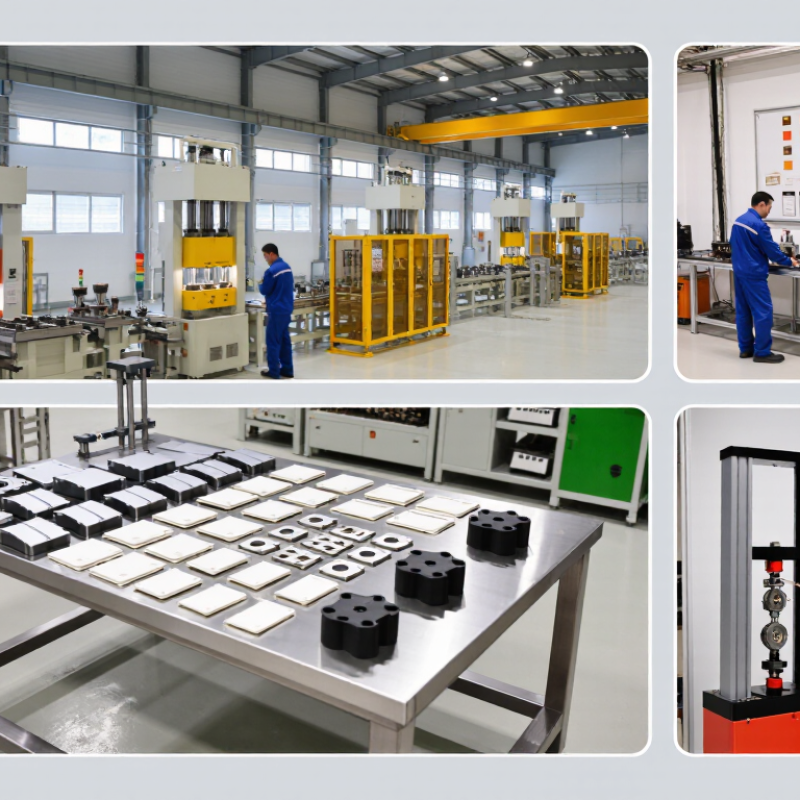
| Material Compatibility | The supplier must process the specified thermoset compound, such as phenolic, epoxy, melamine, or glass-fiber-reinforced molding compound. | Documented experience with the exact material grade and reinforcement system required for the part. | Material datasheet, processing history, batch traceability records, and approved sample parts. | Critical | Material selection directly affects strength, heat resistance, electrical insulation, shrinkage, and dimensional stability. |
| Dimensional Capability | The supplier must consistently meet the drawing tolerances for critical dimensions, flatness, concentricity, and hole location. | Capability should be demonstrated against the approved drawing; a process capability target of Cpk ≥ 1.33 is commonly used for critical characteristics when sufficient production data is available. | FAI report, dimensional inspection report, control plan, gauge list, and statistical process data. | Critical | Stable dimensions reduce assembly problems, rework, leakage, vibration, and field failures. |
| Press Capacity and Part Size | Available molding presses must provide enough closing force, daylight, platen area, and stroke for the selected mold and part geometry. | The required press tonnage should be calculated from projected cavity area, molding pressure, safety factor, and mold layout rather than selected by part weight alone. | Press list, technical specifications, machine utilization data, and a documented tonnage calculation. | Critical | Insufficient capacity can cause flash, incomplete filling, mold damage, and inconsistent part quality. |
| Mold and Tooling Engineering | The supplier should be able to design or manufacture compression molds suitable for the compound, geometry, expected life, and production volume. | The tooling plan should define steel selection, cavity layout, venting, ejector design, shrinkage allowance, maintenance intervals, and spare components. | Mold-flow or filling analysis where applicable, 2D/3D tooling drawings, mold trial records, and maintenance instructions. | Critical | Well-designed tooling improves cycle consistency, reduces flash, and lowers long-term maintenance costs. |
| Production Volume and Scalability | The supplier must support the required annual volume and accommodate future demand increases without compromising delivery or quality. | Capacity should be evaluated using available machine hours, cavity count, cycle time, planned utilization, downtime allowance, and backup equipment. | Capacity calculation, monthly output records, production schedule, and contingency plan for peak demand. | High | Actual available capacity is more meaningful than a nominal maximum output figure. |
| Cycle-Time Control | The molding cycle must remain stable across loading, compression, curing, cooling, demolding, and post-processing stages. | The supplier should define approved process windows for temperature, pressure, cure time, and demolding conditions. | Process parameter sheets, machine data logs, first-off approval records, and reaction plans for out-of-control conditions. | High | Controlled cycle times improve productivity and help prevent under-cured, over-cured, warped, or cracked parts. |
| Quality Management | The supplier should operate a documented quality system covering incoming materials, molding, trimming, inspection, nonconformance control, and shipment release. | An independently certified quality management system, such as ISO 9001, is a useful baseline; industry-specific requirements may need additional controls. | Valid certificate, quality manual, internal audit records, corrective-action reports, and inspection procedures. | Critical | A documented system provides repeatability, traceability, and a formal method for preventing recurring defects. |
| Inspection and Test Equipment | The supplier must have suitable equipment for dimensional, visual, mechanical, thermal, electrical, or application-specific testing. | Measurement equipment should be calibrated at defined intervals and suitable for the accuracy required by the drawing and specifications. | Equipment register, calibration certificates, measurement system analysis, and sample inspection reports. | High | Reliable measurement prevents false acceptance, false rejection, and disputes over product conformity. |
| Surface Finish and Post-Processing | The supplier must control flash removal, deburring, drilling, machining, coating, marking, and other finishing operations. | Acceptance limits should be defined by drawings, visual standards, reference samples, or measurable surface requirements. | Limit samples, work instructions, inspection criteria, and records for secondary operations. | High | Consistent finishing is essential for safe handling, fit, appearance, sealing, and downstream assembly. |
| Lead Time and Delivery Reliability | The supplier must meet tooling, sample, pilot-run, and recurring production deadlines. | A realistic schedule should separate tooling lead time, first-article approval, pilot production, and mass-production lead time. | Milestone schedule, historical on-time delivery data, production planning process, and escalation procedure. | High | Predictable delivery supports inventory planning and prevents production-line interruptions. |
| Traceability and Documentation | Each production lot should be traceable to material batch, tooling, machine, process parameters, inspection results, and shipment date. | Lot-level traceability should be maintained for the period required by the customer, regulatory environment, and product risk level. | Lot labels, batch records, inspection reports, certificates of conformity, and document-retention policy. | High | Traceability enables faster containment and root-cause analysis if a quality issue occurs. |
| Total Cost of Ownership | The quotation should include tooling, material, molding, trimming, inspection, packaging, logistics, maintenance, and potential rework costs. | The lowest unit price is not necessarily the lowest total cost; compare yield, tool life, scrap rate, lead time, and warranty exposure. | Transparent quotation, cost breakdown, scrap assumptions, tooling-maintenance terms, and change-order policy. | Medium | Lifecycle cost provides a more accurate basis for supplier selection than piece price alone. |
| Communication and Engineering Support | The supplier should provide timely technical feedback on manufacturability, tolerances, draft, inserts, venting, and material selection. | A formal engineering review should be completed before tooling release, with all design changes documented and approved. | DFM review, engineering change records, response-time commitments, and assigned technical contact. | High | Early engineering input can prevent avoidable tooling revisions and production delays. |
| Compliance and Supply-Chain Risk | The supplier should meet applicable material, environmental, product-safety, export, packaging, and customer-specific requirements. | Compliance should be assessed according to the destination market and end-use application; evidence must relate to the actual supplied material and process. | Material declarations, test reports, compliance statements, business-continuity plan, and supplier-risk assessment. | Critical | Compliance failures can cause shipment holds, redesigns, recalls, or market-access restrictions. |