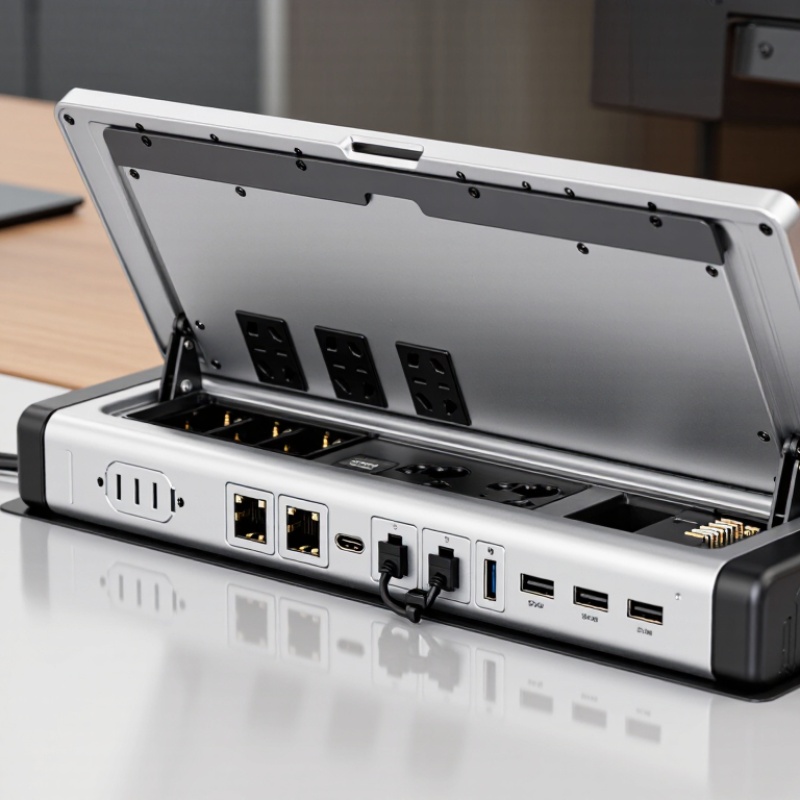
| Product Definition | A desktop outlet is a compact electrical access unit installed on or inside a desk, worktop, conference table, kitchen island, or similar horizontal surface. | Pop-up outlets, clamp-on units, grommet outlets, under-desk power modules, and recessed tabletop power boxes. | Space efficiency, easy cable access, stable installation, safe operation, and compatibility with local wiring systems. | Product classification based on installation function and end use. |
| Electrical Supply | Mainland China commonly uses a nominal single-phase supply of 220 V at 50 Hz for household and general commercial applications. | AC power sockets, switched sockets, multi-outlet modules, and integrated power-and-data units. | Rated voltage and current must match the installation circuit, connected load, and applicable product marking. | Chinese electrical supply practice and applicable socket standards. |
| Socket Configuration | Common configurations combine Chinese-standard two-pole or three-pole socket functions with optional universal or international configurations for commercial projects. | Two-pole outlets, three-pole outlets, combined socket panels, and mixed power/data panels. | Correct plug compatibility, sufficient outlet quantity, child-safety options where required, and clear labeling. | GB/T 2099 series and related plug-and-socket requirements. |
| USB Charging | USB charging is an integrated convenience function rather than a substitute for the AC outlet. Actual output depends on the installed charging module. | USB-A, USB-C, and combined USB charging modules, with or without AC sockets. | Output power, port protocol, thermal protection, over-current protection, and replaceability of the charging module. | USB output must be verified from the product nameplate and test documentation. |
| Installation Type | Installation is determined by desk construction, available clearance, cable routing, and required access direction. | Surface-mounted, recessed, flip-top, pop-up, clamp-mounted, and under-desk products. | Cut-out dimensions, mounting depth, fixing method, cable length, and maintenance access. | Project drawings and installation instructions are required for custom furniture. |
| Primary Application | Demand is concentrated in office furniture, meeting rooms, education facilities, hospitality spaces, residential workstations, and commercial interiors. | Desk power modules, conference-table boxes, training-room outlets, reception-desk units, and home-office outlets. | Aesthetic integration, frequent-use durability, quick access, and coordinated furniture installation. | End-use segmentation for commercial and residential projects. |
| Material and Housing | Typical housings use aluminum alloy, steel, engineering plastics, or combinations of metal and flame-retardant polymer components. | Metal recessed boxes, polymer outlet frames, brushed or coated surface panels, and modular internal assemblies. | Mechanical strength, heat resistance, corrosion resistance, surface finish, and cleaning compatibility. | Material selection must correspond to the intended environment and safety testing. |
| Safety and Protection | Relevant safety considerations include grounding, insulation, protection against electric shock, temperature rise, overload conditions, and mechanical stability. | Grounded sockets, safety shutters, switches, surge-protection modules, resettable protection devices, and protected cable entries. | Documented testing, traceable components, correct installation, and clear rated-load information. | GB/T 2099 series, GB/T 4208, and project-specific electrical requirements. |
| Ingress Protection | Indoor desk outlets are generally selected according to the environmental exposure of the installation; an IP rating should not be assumed without test evidence. | Standard indoor units and higher-protection products for locations with dust, splash, or more demanding cleaning conditions. | Verified IP code, sealed cable entry, drainage design where applicable, and suitability for the installation environment. | GB/T 4208-2017 enclosure protection classification. |
| Customization Scope | Customization is common for project-based procurement and furniture integration rather than for every standard retail product. | Cut-out size, outlet combination, panel finish, cable length, logo-free labeling, data ports, and mounting method. | Approved drawings, samples, bill of materials, inspection criteria, and repeatability between production batches. | Common procurement practice for furniture and interior-fit-out projects. |
| Procurement Channels | Products are purchased through electrical distributors, furniture manufacturers, interior contractors, project integrators, online channels, and direct factory sourcing. | Standard catalog products, project-configured products, OEM/ODM assemblies, and replacement modules. | Lead time, minimum order quantity, sample approval, packaging, after-sales support, and documentation. | Channel structure reflects B2B project and replacement demand. |
| Compliance Documentation | Depending on product category and intended market, procurement may require Chinese conformity documentation, test reports, declarations, wiring diagrams, and installation instructions. | AC socket assemblies, power modules, USB charging modules, cables, switches, and protection components. | Verification of applicable certification, rated values, test scope, factory quality controls, and product traceability. | Applicable Chinese compulsory certification and product-standard requirements must be checked by category. |
| 2025 Market Boundary | The market includes desktop-installed power access products and integrated desk power modules sold for mainland China projects or supplied from China for export. | Includes AC desktop outlets and integrated charging/data units; excludes ordinary wall sockets, extension cords without desk installation, and unrelated household appliances. | Use a clear product definition when comparing supplier quotations, production capacity, or market estimates. | Scope definition for industry research; no company or brand-level data included. |