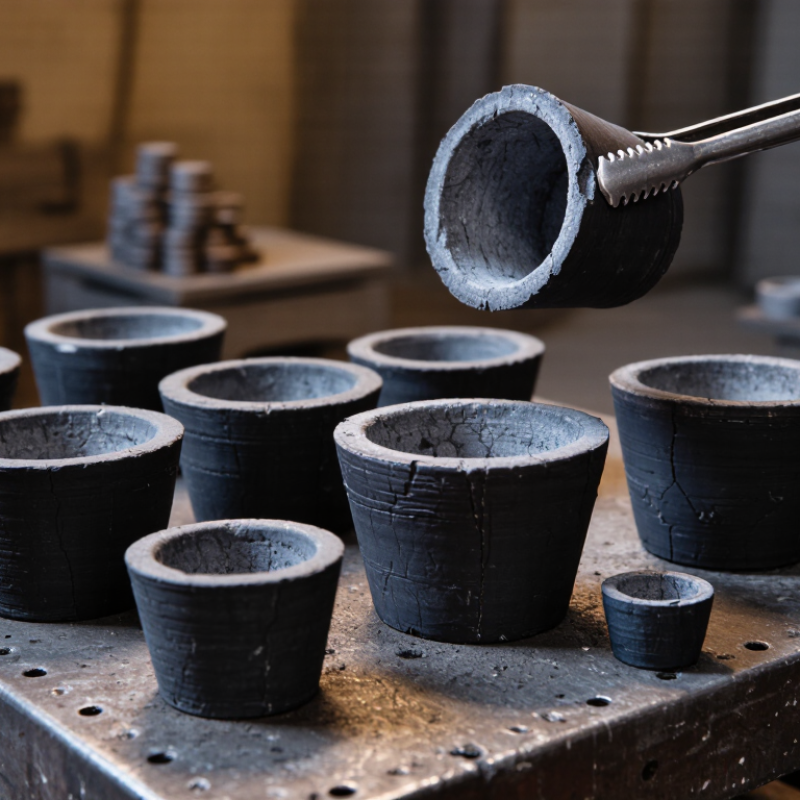
Choosing a graphite clay crucible requires more than comparing prices. In practical foundry work, material consistency often determines service life. Inspect the crucible surface under bright light. It should appear dense, even, and free from deep cracks, soft spots, or loose particles. Small marks may be harmless, but open pores can absorb molten metal and weaken the wall.
Check the stated graphite content, clay composition, maximum working temperature, and recommended heating rate. Reliable suppliers should provide test data, dimensional tolerances, and batch inspection records. Ask how the crucible handles repeated heating and cooling. A good crucible should resist thermal shock without severe swelling or edge damage. Its wall thickness should remain consistent, especially near the base and pouring lip.
Performance testing is more useful than impressive certificates alone. Weigh a sample, measure its dimensions, and compare both values across several pieces. Heat it gradually in a controlled furnace, then inspect the surface after cooling. I have seen crucibles that performed well once but deteriorated after several cycles. That result is easy to overlook. No test is perfect. Humidity, furnace design, fuel quality, and operator habits also affect service life. A trustworthy supplier discusses these limits honestly instead of promising unrealistic durability. Performance records from similar applications offer stronger evidence than general advertising claims.