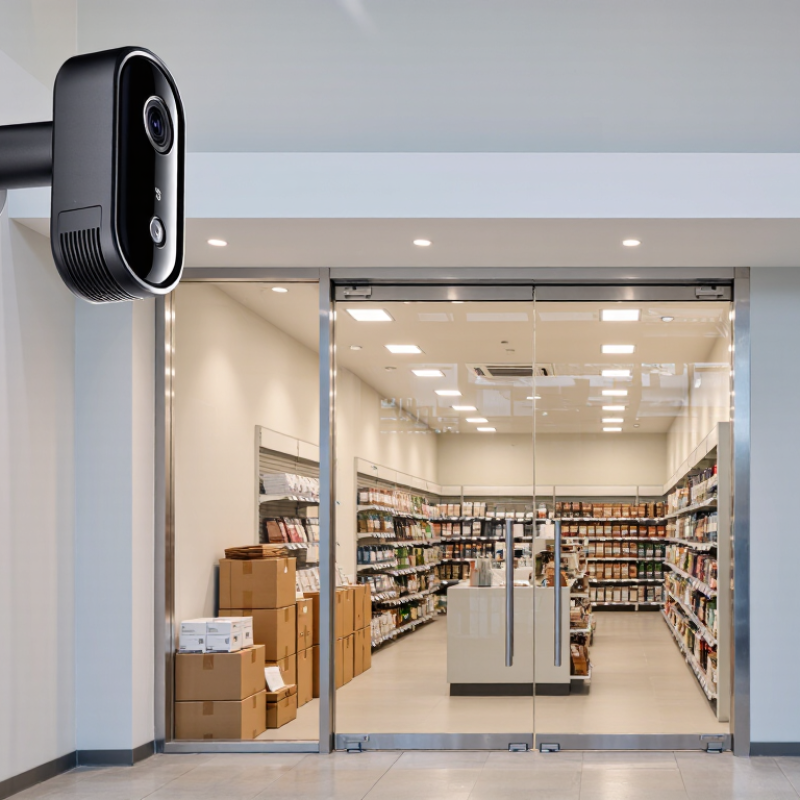
| Public-place video systems | The Regulations on the Administration of Public Security Video Image Information Systems took effect on April 1, 2025. They govern public-security video systems installed in public places for public safety. | Before installing a camera in a public place, check whether the installation is permitted and necessary for public safety, and follow the applicable installation, notice, operation, and record-management requirements. |
| Personal information and notice | Under the Personal Information Protection Law (PIPL), identifiable video images may be personal information. PIPL Article 26 requires public-place image collection or identification equipment to be necessary for public security, compliant with relevant state rules, and accompanied by prominent signs. | Use visible notices where required. For other camera uses that process personal information, identify a lawful basis, explain the processing as required, and collect no more information than necessary. |
| Purpose limitation | PIPL Article 26 restricts the use of images and identification information collected in public places to maintaining public security, unless a separate legal basis, such as the required individual consent, applies. | Do not repurpose security footage for unrelated monitoring, publicity, profiling, or other uses without checking that a lawful basis and required safeguards apply. |
| Private spaces and privacy | The Civil Code protects privacy and prohibits unauthorized conduct such as filming or viewing private activities or spaces. Places where people reasonably expect privacy require particular care. | Do not aim cameras into bedrooms, bathrooms, changing areas, or other private spaces. Avoid capturing neighboring homes or private activities; use privacy masks or reposition the camera where appropriate. |
| Retention and deletion | PIPL requires personal information to be retained only for the shortest period necessary to achieve the stated purpose, unless another law or regulation provides otherwise. Specific retention rules may apply to public-security video systems. | Set a documented retention period based on the security purpose and applicable rules. Automatically delete or overwrite footage when it is no longer needed, while preserving material where legally required. |
| Security and access control | PIPL requires appropriate measures to protect personal information, including controls suited to the processing risk. Video footage can expose personal and sensitive details. | Choose a camera with strong account authentication, access permissions, secure storage, and supported security updates. Restrict footage access to authorized people and keep access records where appropriate. |
| Responsible device selection | Camera features do not replace legal compliance. Audio recording, facial recognition, cloud storage, and remote access may create additional privacy or data-protection risks. | For ordinary security needs, prefer a clearly disclosed camera with a limited field of view, encrypted storage, configurable retention, and audio or biometric functions disabled unless genuinely necessary and legally justified. |