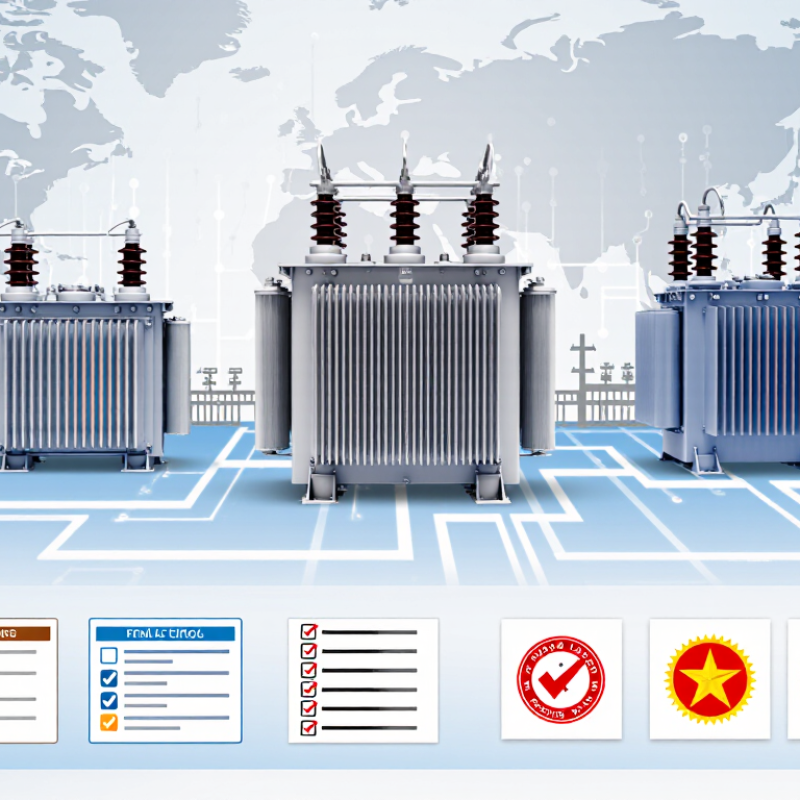
| Distribution transformer manufacturers | Oil-immersed and dry-type distribution transformers | Common Chinese distribution classes include 10 kV and 20 kV; secondary voltage and ratings depend on the project and destination grid. | Commercial buildings, factories, utilities, and local distribution networks | Rated frequency, primary and secondary voltages, vector group, impedance, cooling, losses, and local utility requirements |
| Power transformer manufacturers | Three-phase transformers for transmission substations and large industrial systems | Often designed for high-voltage networks, including 110 kV and above; capacity and configuration are project-specific. | Grid substations, power plants, and major industrial facilities | Design capability for the specified voltage level, short-circuit withstand, insulation coordination, factory testing, and reference projects |
| Dry-type transformer manufacturers | Cast-resin and other air-cooled three-phase transformers | Commonly used in medium-voltage distribution applications; ratings, enclosure, and cooling arrangement vary by design. | Indoor installations, buildings, transport facilities, and locations where oil-filled equipment is unsuitable | Insulation system, temperature rise, enclosure protection, ventilation, fire-safety requirements, and applicable dry-type standards |
| Renewable-energy and project-oriented suppliers | Three-phase step-up transformers and packaged substation solutions | Configured to match the generator, inverter, collection system, and grid connection; there is no single universal rating. | Solar and wind projects, energy storage systems, and grid interconnections | Harmonic performance, duty cycle, inverter interface, environmental conditions, monitoring, and grid-code compliance |
| Special-purpose transformer manufacturers | Rectifier, furnace, traction, grounding, and other application-specific transformers | Electrical characteristics are tailored to the load and operating profile rather than a standard general-purpose specification. | Metallurgy, electrochemical processes, rail systems, and industrial power conversion | Load profile, duty cycle, harmonic content, cooling, insulation, protection scheme, and acceptance-test scope |
| Component and system suppliers | Transformer cores, windings, bushings, tap changers, enclosures, and integrated substations | Components are selected to suit the transformer design; system suppliers may coordinate equipment from multiple manufacturers. | Transformer production, retrofit work, and turnkey electrical projects | Responsibility boundaries, component traceability, interface drawings, warranty coverage, and spare-parts support |
| Testing and compliance across the industry | Design verification, routine tests, type tests, and project-specific inspections | Requirements depend on the product, contract, destination market, and purchaser’s technical specification. | All transformer categories | Confirm the applicable IEC or national standards, test reports for the proposed design, independent inspection needs, and export-market approvals. |