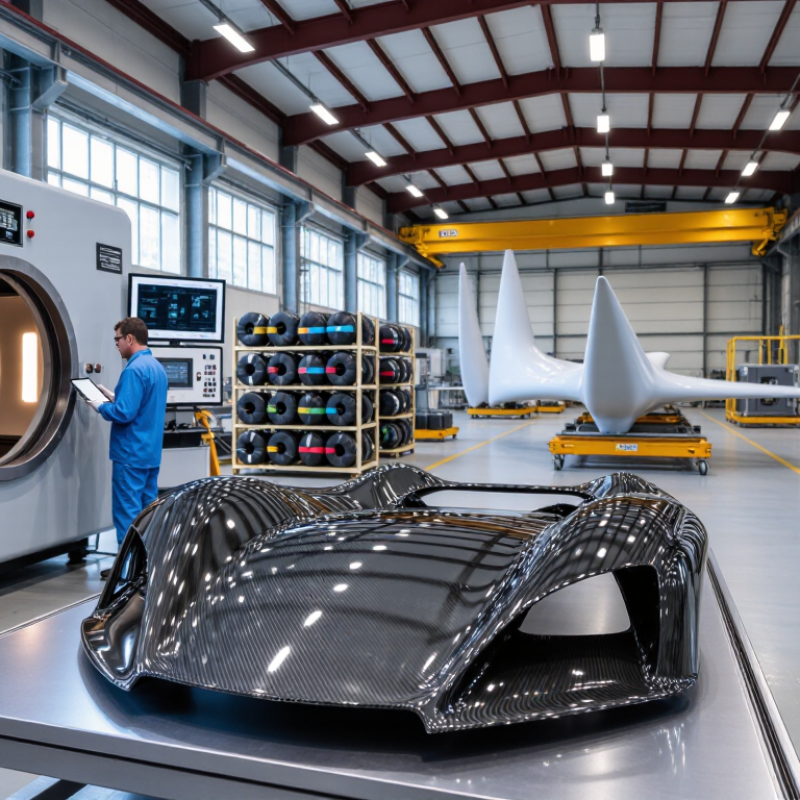
China’s top ten carbon fiber component suppliers differ sharply in technology, capacity, and application focus. Some operate high-temperature carbonization lines, while others specialize in molding finished components. Their technical strength depends on fiber grade, resin control, curing accuracy, and production consistency.
Aerospace-oriented suppliers usually emphasize autoclave molding, non-destructive testing, and strict batch traceability. Automotive suppliers often invest in rapid compression molding and automated cutting to reduce cycle times. Wind-energy producers require wide fabrics, stable resin systems, and large molds. Hydrogen storage applications demand careful filament winding, liner bonding, and pressure testing. Sporting-goods manufacturers may prioritize surface finish and lightweight designs over extreme certification requirements.
Capacity figures need careful interpretation. A factory may report fiber output, not finished component output. These are not equal. Large annual capacity can still hide bottlenecks in tooling, inspection, or skilled labor. Reliable buyers should review recent delivery records, process qualifications, test reports, and corrective-action history. Independent laboratory verification adds confidence, especially for safety-critical parts.
Technology is only one measure. Practical experience matters. A supplier with smaller equipment may provide tighter process control and faster engineering changes. However, limited redundancy can create delivery risks. The comparison is therefore imperfect, and published specifications should not replace an on-site audit. Performance data, application evidence, and transparent quality records reveal more than impressive production figures.