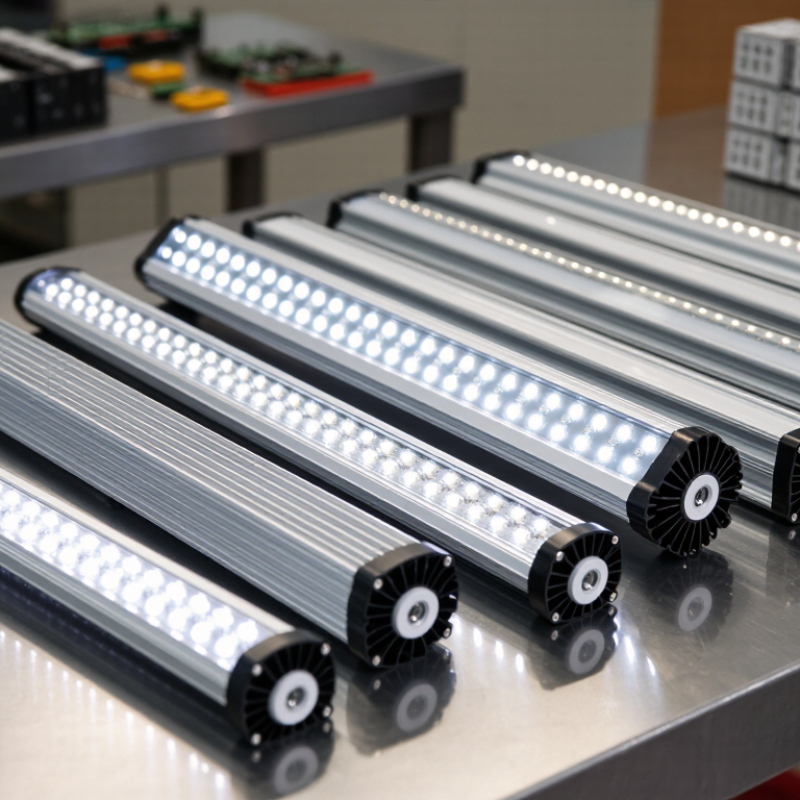
| LED arrangement and drive level | LED count, package type, spacing, and operating current vary by bar size and intended use. | More LEDs or higher drive current can increase light output, but output does not rise indefinitely with current. | Higher current can increase heat and reduce electrical efficiency; stable output depends on the LED and driver design. | LED count, total input power, measured output, and whether the lumen figure is raw LED output or output from the complete fixture. |
| Reflectors and lenses | Reflector cups, TIR optics, and lens shapes can be configured for spot, flood, or combination beams. | Optics direct light into a chosen area. A narrow beam can produce greater center-beam intensity without necessarily having more total lumens. | Spot beams favor distance; flood beams cover a wider nearby area. Combination beams balance the two. | Beam-angle information, candela or lux data, and any beam-distance figure with its measurement method stated. |
| Thermal management | Aluminum housings and heat sinks conduct heat away from LED components; fin area and airflow affect cooling. | Good heat management helps maintain output during extended operation. Excess heat can cause thermal dimming or shorten component life. | Mounting position, ambient temperature, and airflow can affect operating temperature and sustained performance. | Housing material, thermal-protection details, operating-temperature range, and output data after warm-up if available. |
| Electrical system and driver | Vehicle light bars are commonly designed for 12 V or 24 V systems; some models accept a wider DC input range. | Driver efficiency influences how much electrical power becomes LED light rather than heat. | Voltage protection and regulated current help support reliable operation as vehicle voltage changes. | Specified input-voltage range, current draw, rated power, reverse-polarity protection, and over-temperature protection. |
| Color temperature | Many white auxiliary LED lights use a cool-white appearance, often specified in the approximate 5,000–6,500 K range. | Color temperature describes the appearance of white light; it is not a measurement of brightness. | Perceived contrast can vary with surroundings, weather, and observer preference. A higher Kelvin value does not automatically mean greater visibility. | Correlated color temperature (CCT), color consistency, and whether the light is white, amber, or dual-color. |
| Sealing and environmental protection | Gaskets, sealed connectors, and housing construction help protect against dust and water; protection levels vary by product. | Sealing does not directly increase lumen output, but it can help preserve performance when the light is used in harsh conditions. | Ingress protection depends on the complete assembly and test conditions, including connectors and installation. | Declared IP rating, test standard, connector protection, and installation instructions. |
| Lens clarity and durability | Light bars use transparent covers made from materials such as polycarbonate or glass, depending on the design. | A clean, clear optical surface supports light transmission; scratches, dirt, or yellowing can reduce usable output. | Impact resistance, UV exposure, and cleaning practices affect long-term optical condition. | Lens material, UV-resistance information, impact rating if provided, and replacement or service options. |
| Measured output and test method | Output may be reported as theoretical LED lumens, measured fixture lumens, lux at a stated distance, or candela. | These values describe different aspects of light and should not be treated as interchangeable. | Comparable results require consistent test conditions, including distance, beam alignment, and measurement method. | Test method, measurement conditions, and whether figures apply to the LEDs alone or the finished light bar. |
| Note: Design choices and published specifications vary by product. Compare complete-fixture measurements and test conditions rather than relying on LED count or an unqualified “lumens” figure alone. |