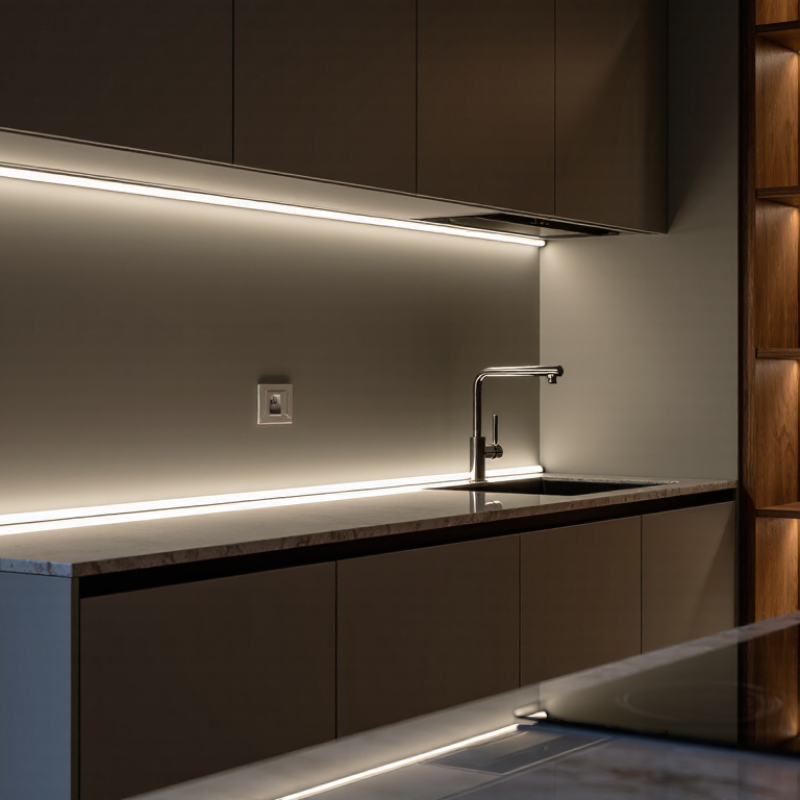
| Kitchen counters and task lighting | Choose a suitable white color temperature, commonly 3000K–4000K. A CRI of 90 or higher can help food and surface colors look more natural. | Consider a dimmable 24V COB strip with continuous-looking light and output matched to the required brightness. Check the product’s stated lumens per meter and watts per meter. | For a dry, indoor installation, IP20 is generally suitable when the strip is protected from water and grease. | Install in an aluminum channel to help dissipate heat and protect the strip. Keep it away from direct water exposure; use an appropriate splash-resistant product where needed. |
| Living rooms, shelves, and accent lighting | Warm white around 2700K–3000K is often selected for a relaxed atmosphere. Dimming helps adjust brightness for different activities. | Choose a strip with a compatible dimmer and power supply. Select output based on whether the light is decorative, indirect, or intended to illuminate a surface. | IP20 is typically adequate for dry indoor areas. | Check that the strip, dimmer, and power supply use compatible voltage and control methods. Conceal the strip from direct view if glare is a concern. |
| Bathrooms and other damp indoor areas | Select color temperature and brightness according to the task and the room’s existing lighting. | Use a strip and connection system with an ingress-protection rating appropriate to the specific location. Sealed products may be harder to cut or reconnect than uncoated strips. | IP-rated protection must suit exposure. Requirements can vary by bathroom zone and local electrical regulations. | Do not assume a strip’s rating applies to cut ends, connectors, or power supplies. Follow the product instructions and local electrical code; use a qualified installer where required. |
| Outdoor eaves, covered patios, and exterior features | Choose a color temperature that suits the intended appearance and check that the strip’s output is adequate for the viewing distance. | Select a product specifically rated for outdoor use, with compatible sealed connectors and an outdoor-suitable power supply. | Consider rain, humidity, dust, temperature changes, and possible UV exposure. The required IP rating depends on the actual exposure and installation details. | Protect connections and cut ends as specified by the manufacturer. Provide drainage where appropriate and avoid placing a sealed strip in a location that traps heat. |
| Display cabinets and close-up feature lighting | For accurate color appearance, look for a CRI of 90 or higher. Select CCT to complement the displayed objects and surrounding finishes. | COB construction can provide a more continuous line of light than widely spaced visible LED packages, especially when viewed close up. | Dry indoor conditions generally suit IP20 products, provided they are protected from contact and physical damage. | Check the strip width against the channel and available cabinet space. Test for glare, reflections, and color appearance before installing the full run. |
| Long, continuous runs along coves or ceilings | Choose CCT and brightness for the room’s intended use; consistent specifications across the full run help maintain a uniform appearance. | 24V strips are commonly used for longer runs than comparable 12V strips, but the permitted run length depends on the specific product and installation. | Match the protection rating to the area. Indoor coves are often dry locations, but concealed spaces may still accumulate heat. | Observe the manufacturer’s maximum run length. For longer installations, plan power-feed points to limit voltage drop and brightness variation; use correctly sized wiring. |
| Small projects, short runs, and compact installations | Choose output and CCT for the task; avoid selecting by watts alone because brightness and efficiency vary by product. | 12V or 24V may be suitable. Confirm the strip’s voltage before selecting a power supply, controller, or connector. | Use the appropriate rating for dry, damp, or exposed conditions. | Cut only at the marked cut points. Confirm polarity and connector compatibility, and leave access to the power supply for maintenance. |
| Installations where heat management matters | Set brightness to the required level rather than running the strip at full output unnecessarily. | Compare the stated watts per meter with the intended channel and mounting surface. Higher-power strips generally require more careful thermal planning. | Enclosed spaces and warm environments can reduce heat dissipation and may affect product life. | Use an aluminum channel when recommended, follow the product’s operating-temperature limits, and do not cover the strip with insulation unless the product is approved for that use. |