How to Choose a 7.5KW Belt Driven Screw Air Compressor
Choosing a 7.5KW Belt-Driven Screw Air Compressor involves more than matching a motor rating to a workshop’s needs. The compressor must supply enough air at the pressure your tools require, without running constantly or struggling during peak demand. Check each tool’s stated airflow and pressure requirements, then compare them with the compressor’s rated delivery. Pay attention to the rating conditions; figures from different manufacturers may not be directly comparable.
Look at the whole installation. A compact unit may fit beside a workbench, but it still needs clearance for cooling and routine service. Belt tension, alignment, and replacement intervals affect maintenance, while a receiver tank can help manage short bursts of demand. Small details matter. Ask about sound levels, filtration, controls, warranty terms, and access to local service. A quiet room can make a modest noise difference feel large.
Your operating pattern matters, too. A compressor serving intermittent hand tools may suit a different setup than one supplying several machines throughout a shift. Confirm that the duty cycle and ambient-temperature limits match your conditions. Don’t rely on the product name alone. Review the manufacturer’s technical data and discuss unusual demand with a qualified supplier. I would also leave room for uncertainty: actual air use can vary with tool wear, leaks, and changing workloads. A careful comparison helps identify a dependable fit, rather than simply the lowest purchase price.
Understand How a 7.5 kW Belt-Driven Screw Compressor Works
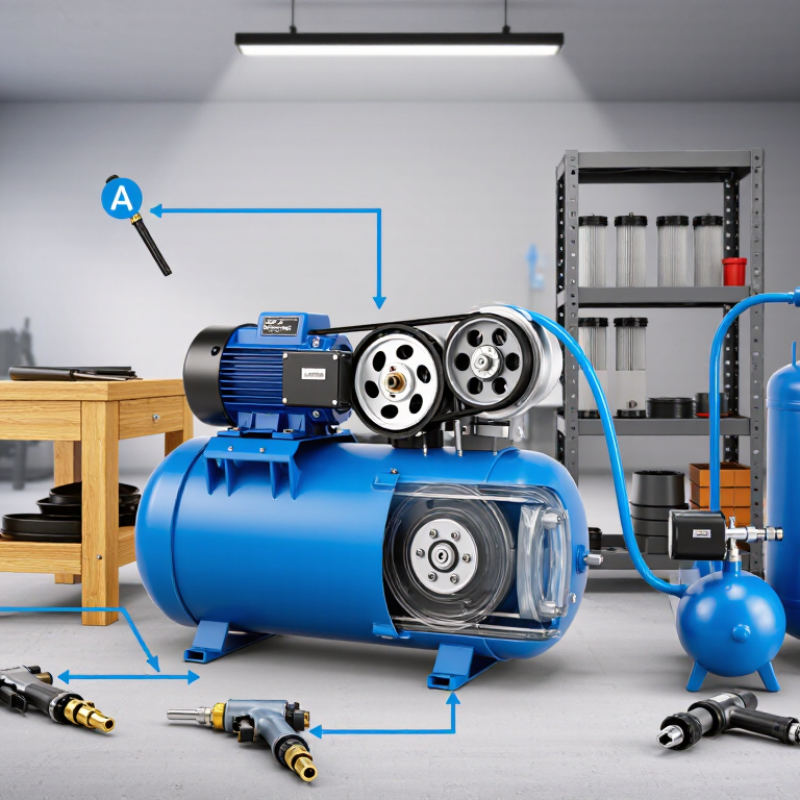
A 7.5 kW belt-driven screw compressor converts motor rotation into a steady flow of compressed air. The motor turns a belt, which drives two meshing screw rotors inside the airend. As air moves along the rotors, its volume decreases and pressure rises. In oil-injected models, oil helps seal, cool, and lubricate the compression chamber; a separator removes most of it before air leaves the machine. The process is continuous. Unlike a typical piston compressor, it does not rely on repeated intake and discharge strokes.
The belt and pulley ratio set airend speed, so belt tension and alignment affect operation. A loose belt may slip, heat up, and reduce delivered air. Check these during routine service. A 7.5 kW rating describes motor power, not the airflow available at a chosen pressure; compare tested free-air delivery and pressure conditions before selecting a unit. The U.S. Department of Energy’s Improving Compressed Air System Performance sourcebook notes that compressed air can account for about 10% of industrial electricity use, while leaks may waste 20–30% of compressor output. Small losses add up. In practice, demand changes, leaks, and pressure drops can make the right size less obvious than the nameplate suggests.
Determine the Required Airflow and Operating Pressure
A 7.5 kW belt-driven screw compressor should be selected by its delivered airflow, not its motor rating alone. List every tool that may run at the same time, then check each tool’s air consumption and duty cycle. A spray gun and an impact wrench can have very different demand patterns. Add a sensible reserve, but avoid sizing from every tool’s maximum rating if they will not operate together.
Check airflow stated as free air delivery at the pressure you need. Then compare that figure with your calculated demand. Operating pressure matters at the tool, not just at the compressor outlet. Long pipe runs, narrow hoses, filters, and regulators can cause pressure loss. Measure or estimate these losses, especially when equipment sits far from the compressor. A common planning mistake is to choose a high pressure setting to compensate for a restricted line. It may waste energy and still leave the tool short of air.
Tips: Record pressure while the busiest tool is working. Check the compressor’s performance data at that pressure, and confirm the figures with a qualified supplier. Keep a small operating margin. It is easy to underestimate simultaneous demand, and honestly, initial estimates are not always tidy.
How to Choose a 7.5KW Belt Driven Screw Air Compressor - Determine the Required Airflow and Operating Pressure | Selection factor | Typical value or method | How to use it |
| Airflow at 7 bar(g) | Approximately 0.95–1.15 m³/min (about 34–41 cfm) | Indicative range for this power class; confirm the compressor’s stated free air delivery (FAD) at the required pressure. |
| Airflow at 8 bar(g) | Approximately 0.85–1.05 m³/min (about 30–37 cfm) | Higher discharge pressure generally reduces delivered airflow. Use the performance figure at the intended working pressure. |
| Airflow at 10 bar(g) | Approximately 0.70–0.90 m³/min (about 25–32 cfm) | Check that the selected model is rated for 10 bar(g); do not assume a 7–8 bar model can provide this pressure. |
| Required operating pressure | Use the highest pressure required at the point of use, then account for pressure losses in filters, dryers, regulators, and piping. | Measure pressure while equipment is running. Avoid setting the compressor pressure higher than necessary. |
| Total airflow demand | Add the air consumption of equipment that operates at the same time, using each tool’s rated consumption at its specified pressure. | Use simultaneous demand rather than adding the ratings of tools that are never used together. |
| Example demand check | Three tools using 0.20 m³/min each at the same time require 0.60 m³/min before allowance for leaks or future demand. | Compare the adjusted demand with the compressor’s FAD at the selected pressure, not its displacement or motor rating. |
| Capacity allowance | A preliminary allowance of about 10–20% may be used for uncertainty or modest future growth. | Base the final allowance on measured demand, leakage, operating patterns, and any planned expansion. |
| Air treatment and distribution | Filters, dryers, hoses, and undersized piping can reduce pressure or restrict flow. | Size these components for the required flow and pressure, and include their pressure drop in the system design. |
| Final verification | Compare the compressor’s certified FAD curve at the required pressure with the calculated demand. | The airflow ranges above are indicative only; actual output varies by model, pressure, ambient conditions, and test method. |
Pressure is shown as gauge pressure (bar(g)); airflow is approximate free air delivery. Confirm final sizing against the manufacturer’s performance data and the site’s measured air demand.
Compare Compressor Components and Configuration Options
How to Choose a 7.5KW Belt Driven Screw Air Compressor
Compare the airend, motor, belt system, and cooling arrangement before choosing a configuration. A 7.5 kW rating describes motor input, not the air volume delivered at your working pressure. Check the manufacturer’s stated free air delivery at the pressure you need. A workshop running a spray gun and an impact wrench may need more airflow than the motor rating alone suggests.
Belt drive allows the motor and airend to use different pulley sizes, but belt tension and alignment need periodic checks. A direct-coupled layout has fewer belt-related adjustments, though it may cost more. Look at cooling too: a well-sized fan and clear ventilation space help manage heat during long runs. Check the sound. Some models include an air receiver, while others are supplied as a compressor package only; compare the footprint and installation needs. Oil-injected airends are common, but applications needing cleaner air may require extra filtration or a different treatment setup. Don’t assume the included filter is enough. Match the control system to your demand: a fixed-speed unit can suit steady use, while variable-speed control may help with fluctuating demand. There is no perfect configuration. Even a carefully sized unit can disappoint if piping is narrow or leaks are ignored. Ask for duty-cycle limits, electrical requirements, and service intervals in writing.
How to Choose a 7.5 kW Belt-Driven Screw Air Compressor
Ideal minimum compression power rises with discharge pressure for a fixed free-air delivery of 1.0 m³/min.
How to read this chart: The bars show calculated isothermal compression power at 1.0 m³/min intake flow and 20°C, using 1.013 bar absolute inlet pressure. The line marks the motor’s nominal 7.5 kW rating. Real compressors need more power than the ideal minimum because of losses, so use verified manufacturer flow and power data when sizing a system.
Configuration checks: Compare air-end performance, belt-drive efficiency and service access, cooling capacity, motor starting method, and whether an air receiver or dryer is included. Match the rated pressure and delivered flow to the application.
Assess Installation Requirements and Operating Conditions
Before selecting a 7.5 kW belt-driven screw compressor, measure actual demand at the point of use. Record pressure during peak production, not just during quiet periods. Check the air tools, cylinder cycles, and any simultaneous users. A pressure drop at a distant tool may signal undersized piping rather than a compressor fault. Small detail. Leave room for a receiver, dryer, filters, and service access. A cramped corner can make routine belt checks awkward.
Assess the room’s heat, dust, moisture, and airflow. The U.S. Department of Energy’s Improving Compressed Air System Performance sourcebook notes that leaks can waste 20–30% of compressor output in poorly maintained systems. That wasted air can hide a sizing mistake. Walk the existing lines and listen for leaks before deciding that more capacity is needed. Check the electrical supply against the compressor’s motor nameplate, including starting requirements, and confirm the floor can support the unit without transmitting excessive vibration.
Ventilation matters. A hot enclosure may raise intake temperature and reduce operating efficiency; dusty air can load filters quickly. Plan a clear path for cooling air and keep the intake away from exhausts. Match filtration and drying to the tools’ air-quality needs, not a guess. I would leave a modest capacity margin, but not an arbitrary one; future demand is easy to overestimate. Recheck measurements after installation, because real production rarely follows the neat schedule on paper.
Evaluate Efficiency, Maintenance, and Total Ownership Cost
A 7.5 kW belt-driven screw compressor should be judged by the air it delivers at your required pressure, not motor size alone. Compare flow and specific power at the same pressure; ask for test conditions and confirm they match your workshop. The U.S. Department of Energy’s Improving Compressed Air System Performance sourcebook reports that compressed-air systems use about 10% of electricity in industrial facilities, and can reach 30% in some plants. Small efficiency differences matter over long operating hours.
Estimate ownership cost using annual running hours, measured power, electricity rates, and scheduled service. Include belts, filters, oil, separator elements, and downtime. A belt drive offers accessible routine checks, but poor alignment or tension can waste power and shorten belt life. Inspect for vibration, unusual heat, and pressure drop across filters. DOE compressed-air guidance notes that leaks can waste 20–30% of compressor output; even a small hiss near a coupling deserves attention. Real usage varies, so treat estimates as estimates.
Tips: Record loaded and unloaded pressure, then check delivered flow during a typical shift. Compare kWh per unit of air, not purchase price alone. Keep a simple maintenance log. It is easy to overlook the receiver and pipework, and that may distort the comparison.
