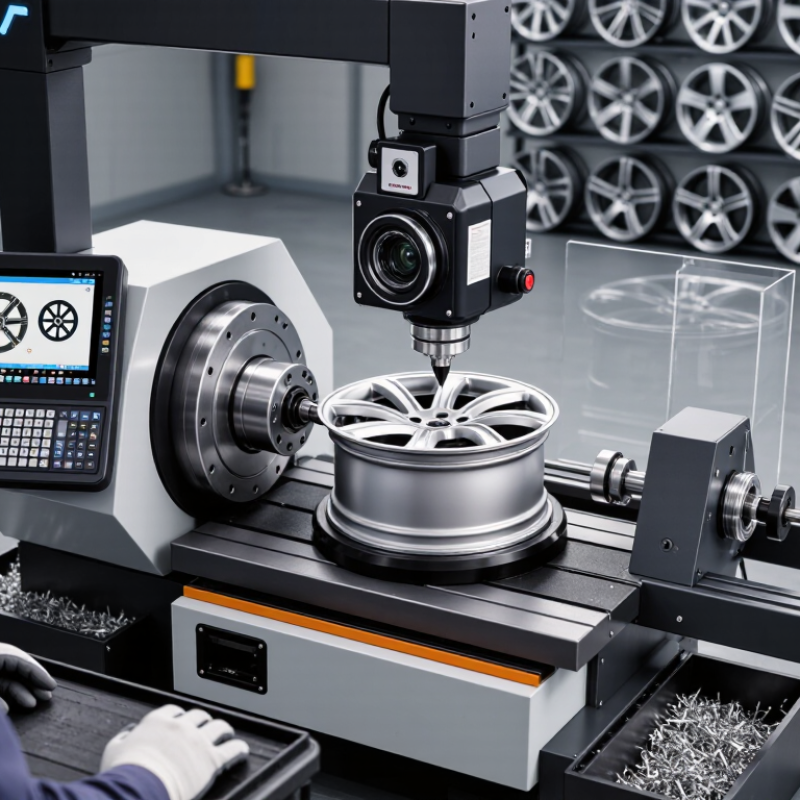
| Wheel diameter | Confirm the minimum and maximum wheel diameters the machine can mount and machine. Advertised capacity varies; some equipment covers passenger-car wheels in approximately the 13–24-inch range. | Compare the stated range with the actual wheels you handle, including your largest and smallest regular jobs. Ask whether the range depends on optional fixtures. | Essential |
| Wheel width and profile | Check supported wheel widths, rim profiles, and clearance around the lathe, probe, and cutting head. | Provide the supplier with representative wheel measurements and request a fit check, especially for unusually wide wheels or deep-dish designs. | Essential |
| Mounting and center bore | Review the clamping system, adapters, locating cones, and supported center-bore sizes. A secure, correctly centered wheel is necessary for consistent machining. | Confirm which adapters are included and whether suitable fixtures are available for the wheel types in your workload. Ask how the setup accommodates wheels without a compatible center bore. | Essential |
| Wheel condition and repair scope | Determine whether the machine is intended for cosmetic face refinishing or can also perform other specified repair operations. Diamond cutting removes material and is not appropriate for every damaged wheel. | Check the wheel and repair limits in the equipment instructions. Establish an inspection process for cracks, structural damage, prior repairs, and remaining material before machining. | Essential |
| Scanning and measurement | Check how the machine measures the wheel face and identifies the cutting path, and whether the process is automatic, manual, or a combination. | Request a demonstration using a representative wheel. Review how the operator checks the scan, sets the cutting depth, and verifies the finished surface. | High |
| Cutting tools and consumables | Confirm compatible diamond tooling, inserts, probes, and other consumables, including replacement availability and recommended inspection intervals. | Ask for the consumables list, maintenance schedule, and current lead times. Include recurring tooling costs when comparing machines. | High |
| Machine guarding | Look for effective guarding or enclosure around moving parts and a design that limits access to hazards during operation. | Inspect the machine in person or request clear photographs and documentation. Check that the operator can load and unload wheels without bypassing protective measures. | Essential |
| Emergency stop and interlocks | Check for an accessible emergency-stop function and, where fitted, interlocks that prevent hazardous operation when guards or doors are open. | Ask for the operating and safety manuals and a demonstration of the safety functions. Verify the functions during commissioning in accordance with the manufacturer’s instructions. | Essential |
| Risk and electrical documentation | Review the machine’s risk information, electrical requirements, installation instructions, and applicable conformity documentation for the intended location. | Have a qualified person check the proposed installation against local workplace-safety and electrical requirements. Standards such as ISO 12100, ISO 13850, and IEC 60204-1 may be relevant; applicability depends on the machine and jurisdiction. | Essential |
| Operator training | Check whether instruction covers setup, wheel inspection, tool selection, safe operation, routine maintenance, and job-quality checks. | Confirm training format, duration, language, and whether it is available at installation or remotely. Ask how new operators can receive refresher training. | High |
| Installation and site requirements | Confirm machine footprint, access and lifting needs, floor requirements, power supply, air supply if required, and workspace clearances. | Use the installation manual to assess the proposed site before ordering. Verify utility specifications and commissioning responsibilities in writing. | High |
| Service response and parts | Evaluate the availability of qualified service, technical assistance, and replacement parts in your region. | Request written details of support hours, response process, service coverage, parts ordering, and typical dispatch arrangements. Check whether remote diagnostics are available. | High |
| Warranty and lifecycle cost | Compare warranty coverage, exclusions, preventive-maintenance needs, tooling costs, and any software or service charges. | Review the warranty terms and itemized quotation. Compare total expected ownership costs, not just the purchase price. | High |
| Final acceptance test | Agree on how the machine’s operation, safety functions, and finished-work checks will be confirmed after installation. | Document the acceptance criteria, training completion, supplied accessories, and any outstanding issues before signing off commissioning. | High |