| Certifications | Quality management system | Valid ISO 9001 certification issued by an accredited certification body; certificate scope should cover design, manufacturing, testing, and servicing of power-conversion equipment. | Shows that production and corrective-action processes are documented and regularly audited rather than relying only on final inspection. | Required |
| Certifications | Electrical safety compliance | Applicable test reports or certificates demonstrating conformity with IEC 62109-1 and IEC 62109-2, or the safety standards required by the target market. | Addresses risks involving electric shock, fire, insulation failure, abnormal operation, and accessible hazardous energy. | Critical |
| Certifications | Power-converter safety | Assessment against IEC 62477-1 where applicable to the inverter’s power-electronic system and installation category. | Provides an additional safety framework for power electronic converter systems used in grid-connected applications. | Required |
| Grid Compliance | Electromagnetic compatibility | EMC test evidence covering relevant requirements from the IEC 61000 series, including conducted and radiated emissions and immunity testing. | Helps prevent the inverter from interfering with protection equipment, communication systems, sensors, and other power-conversion assets. | Critical |
| Grid Compliance | Country-specific grid code | A written compliance matrix mapping the inverter functions to the destination grid code, including voltage ride-through, frequency response, reactive power control, and anti-islanding requirements. | Grid-code compliance is location-specific and cannot be confirmed by a generic product brochure alone. | Critical |
| Product Design | Wind-turbine input compatibility | Documented operating limits for variable-frequency and variable-voltage turbine input, including maximum DC voltage, current, power, MPPT or control range, and overspeed protection interface. | Wind turbines have fluctuating electrical output; an inverter must remain stable during changing wind speed and turbine operating conditions. | Critical |
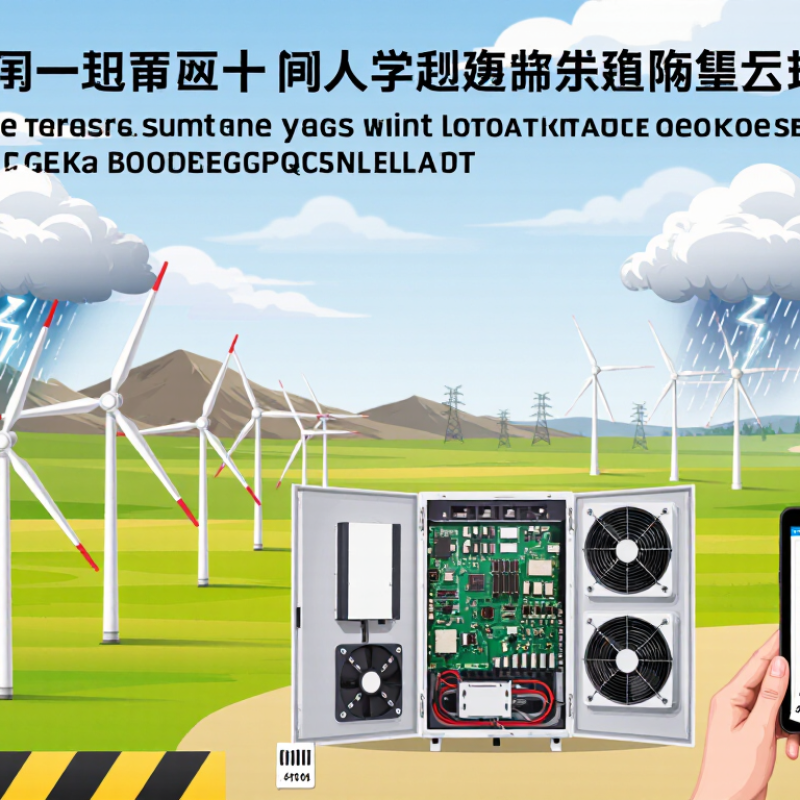
| Product Design | Environmental protection | Published enclosure rating such as IP65 or higher when required by the installation environment, supported by a valid test report; operating temperature, humidity, altitude, and corrosion limits must also be stated. | Wind sites may experience rain, dust, salt mist, temperature variation, and high humidity, all of which can accelerate insulation and electronic-component degradation. | Required |
| Quality Control | Incoming material inspection | Documented inspection plans for power semiconductors, capacitors, magnetic components, cooling fans, circuit boards, and protection devices, including traceability by lot or serial number. | Many inverter failures originate from component variation, counterfeit parts, unsuitable substitutions, or inadequate storage conditions. | Required |
| Quality Control | Production and end-of-line testing | Routine records for insulation resistance, dielectric withstand, grounding continuity, polarity, firmware version, functional operation, protection functions, and grid-simulation tests. | Confirms that every shipped unit—not only a development sample—has passed safety and functional checks. | Critical |
| Quality Control | Factory acceptance testing | Customer-approved FAT procedure with measurable pass/fail limits, calibrated instruments, test logs, and a process for handling nonconforming units. | Creates objective evidence before shipment and reduces disputes over performance, configuration, and acceptance criteria. | Recommended |
| Reliability | Thermal management | Thermal design records showing component temperature margins at rated load and maximum stated ambient temperature, plus fan, heat-sink, or liquid-cooling maintenance requirements. | Excessive temperature accelerates aging of capacitors, semiconductors, insulation, and control boards, particularly under continuous wind-farm operation. | Critical |
| Reliability | Accelerated and endurance testing | Report-defined test conditions covering load cycling, thermal cycling, humidity exposure, vibration, power interruptions, and repeated grid disturbances, with failures and corrective actions recorded. | Stress testing reveals design weaknesses that may not appear during a short nominal-power demonstration. | Required |
| Reliability | Field-performance evidence | Anonymized operating data from comparable wind installations, including installed capacity, operating period, environmental conditions, failure classification, and corrective-maintenance history. | Comparable field evidence is more useful than unsupported claims about global installations or average reliability. | Required |
| Service | Warranty and spare-parts support | Written warranty terms, exclusions, response times, recommended spare-parts list, repair procedure, and confirmed availability period for critical boards, fans, fuses, and sensors. | Serviceability directly affects downtime, energy yield, and the total cost of ownership over the project life. | Critical |
| Service | Remote monitoring and cybersecurity | Documented communication protocols, event logs, role-based access, password management, firmware-update controls, backup procedures, and vulnerability-response contacts. | Reliable monitoring improves fault diagnosis, while access controls reduce operational and cybersecurity risks. | Recommended |
| Supplier Audit | Manufacturing capability | On-site or independent audit covering engineering staff, production capacity, calibration control, environmental controls, change management, nonconformance handling, and subcontractor oversight. | Verifies that the supplier can consistently reproduce the qualified design at the required project volume. | Required |
| Commercial Review | Total cost of ownership | Compare purchase price together with efficiency at relevant operating points, auxiliary consumption, expected maintenance, replacement parts, downtime assumptions, logistics, and warranty costs. | The lowest initial price may not provide the lowest lifetime cost if efficiency, serviceability, or availability is weaker. | Required |