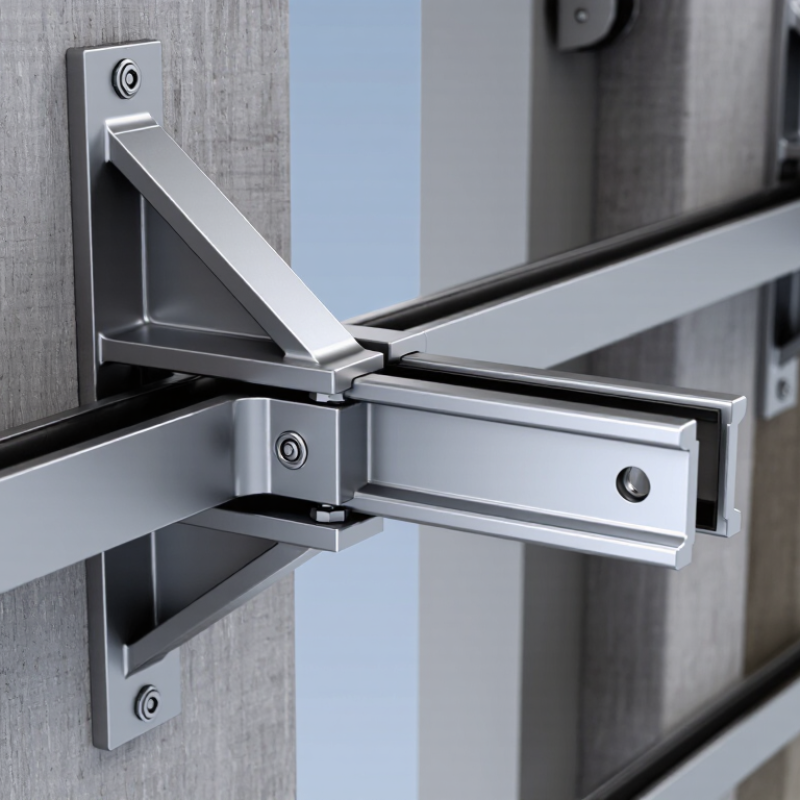
| 1. Verify applicable safety standards | Identify the elevator code and local requirements applicable to the project and installation location. | Confirm the design and installation documents address the locally adopted code, such as EN 81-20/50 or ASME A17.1/CSA B44, where applicable. Confirm requirements with the responsible elevator professional or authority having jurisdiction. | Keep code, inspection, and installation records available for future inspections and alterations. |
| 2. Confirm loads and structural support | Check that the bracket, fasteners, supporting wall or steelwork, and connections are suitable for the loads specified in the elevator design. | Use project-specific calculations and approved drawings. Do not assume a bracket is suitable based on appearance or dimensions alone. | Inspect the supporting structure and connections for damage, movement, corrosion, or other changes that could affect support. |
| 3. Check adjustability for alignment | Review whether the bracket allows the required horizontal and vertical positioning during rail installation. | Compare the adjustment range with the project drawings and installation tolerances. Ensure adjustment can be made without compromising the specified connection or support. | After alignment, verify that adjustment features and locking hardware remain secure according to the installation instructions. |
| 4. Match the bracket to the guide rail and fixing method | Confirm compatibility with the rail profile, rail clips or fasteners, bracket interface, and building-side fixing method. | Check dimensions and connection details against the approved drawings and component documentation. Avoid mixing components unless compatibility has been verified. | During inspection, look for loose, missing, damaged, or incorrectly fitted connection hardware. |
| 5. Assess material and corrosion protection | Consider the installation environment, including humidity, water exposure, cleaning chemicals, and corrosive conditions. | Verify material and protective finish are specified for the environment and are compatible with adjoining components and fasteners. | Inspect for corrosion, coating damage, or deterioration; follow the maintenance instructions for repair or replacement. |
| 6. Plan access for inspection and maintenance | Check that brackets and their fasteners can be viewed and reached safely during installation and planned inspections. | Review the shaft layout and installation sequence to identify obstructions, access constraints, and any inspection requirements. | Include bracket connections in the maintenance inspection plan and document any findings or corrective work. |
| 7. Review documentation and traceability | Confirm that the selected bracket is supported by clear product, installation, and project documentation. | Retain relevant drawings, material or finish information, installation instructions, and any required calculations or approvals. | Keep records of inspections, adjustments, repairs, and replacements with the elevator maintenance documentation. |